You can create a productive small home office by choosing furniture that serves double duty, like desks that double as dining tables. Go vertical with wall-mounted shelves to free up floor space, and position your desk near a window for natural light that boosts your mood and focus. Hide clutter with smart storage solutions, organize your cables, and layer your lighting to reduce eye strain. These strategies work together to transform even tiny spaces into comfortable, functional workspaces that inspire your best work.
Design Highlights
- Dual-purpose furniture like murphy desks and storage ottomans maximizes functionality while minimizing floor space consumption.
- Vertical storage solutions including wall-mounted shelves and pegboards free up floor space and enhance organization.
- Position desks near windows perpendicular to minimize glare while benefiting from natural light and productivity boosts.
- Under-desk baskets, drawer dividers, and floating shelves keep supplies organized and hidden from view effectively.
- Designate work zones using tall bookshelves or curtains and layer lighting to create focused, inviting workspaces.
Choose Dual-Purpose Furniture
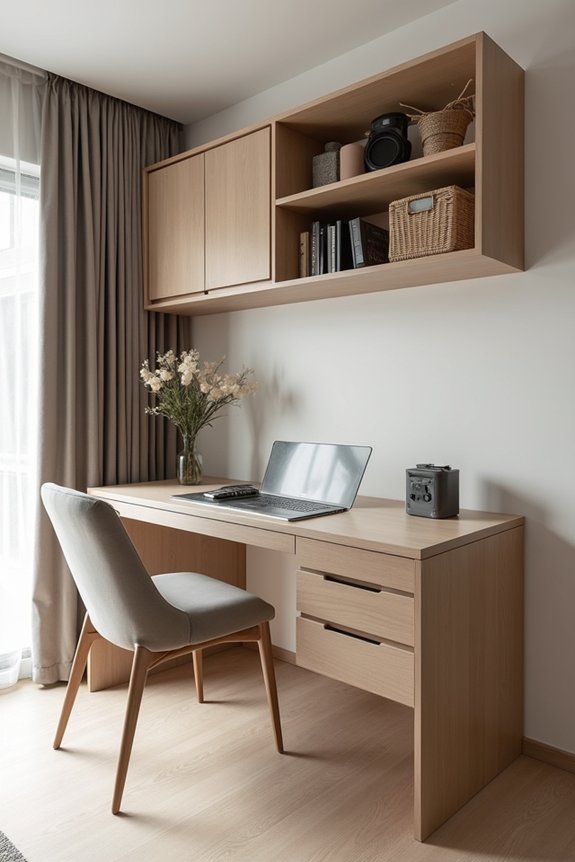
When you’re working in a small space, you’ve got to make every piece of furniture count, and dual-purpose furniture is your secret weapon for maximizing what you’ve got.
Consider a desk that doubles as a dining table, or a storage ottoman that holds supplies while providing extra seating.
Wall-mounted shelves with built-in workspace save floor space. A murphy desk folds away when you’re finished working.
Stackable and nesting organizers can fit within these dual-purpose furniture pieces to keep your supplies contained and accessible without taking up additional room.
These smart choices help you create a functional office without sacrificing your living area.
You’re building an efficient workspace that truly works for your lifestyle and needs.
Use Vertical Space to Free Up Your Floor
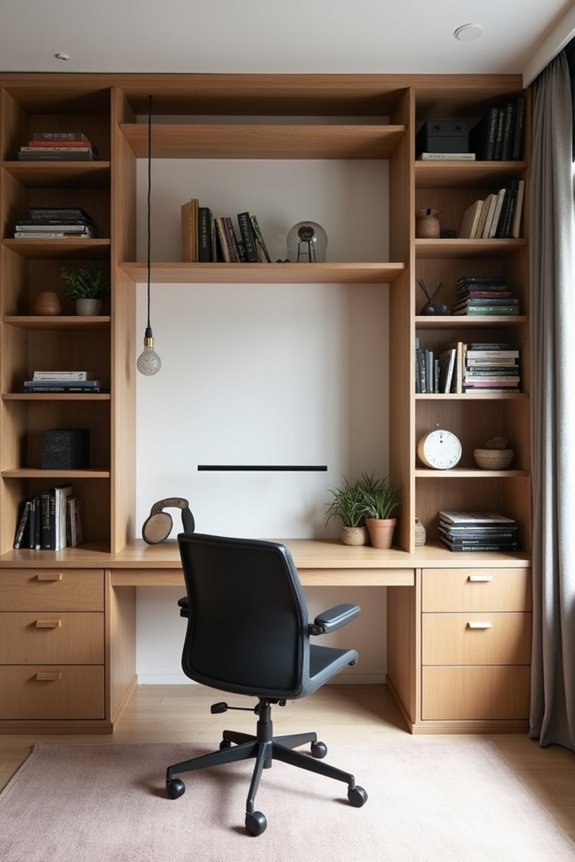
While dual-purpose furniture gives you more bang for your buck, there’s another game-changing strategy that’ll transform your small office: going vertical.
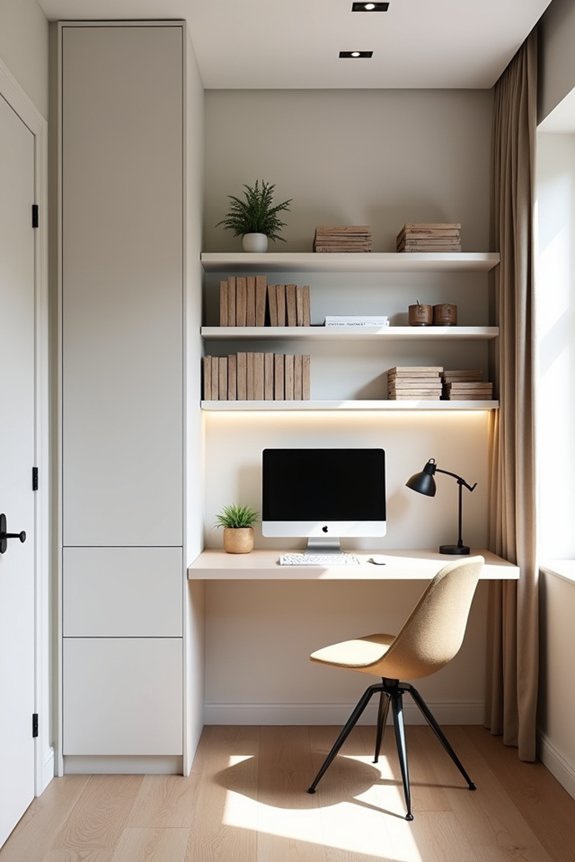
Wall-mounted shelves, floating desks, and tall bookcases draw your eyes upward, making rooms feel bigger and airier. You’ll free up precious floor space by storing supplies, files, and decorative items on walls instead of tables.
Consider pegboards for organizing tools, hanging organizers for documents, and wall hooks for headphones or bags. This approach maximizes every inch available, creating a functional workspace that breathes.
You’re not just saving space—you’re crafting an efficient, welcoming environment where productivity flourishes naturally.
Position Your Desk for Natural Light
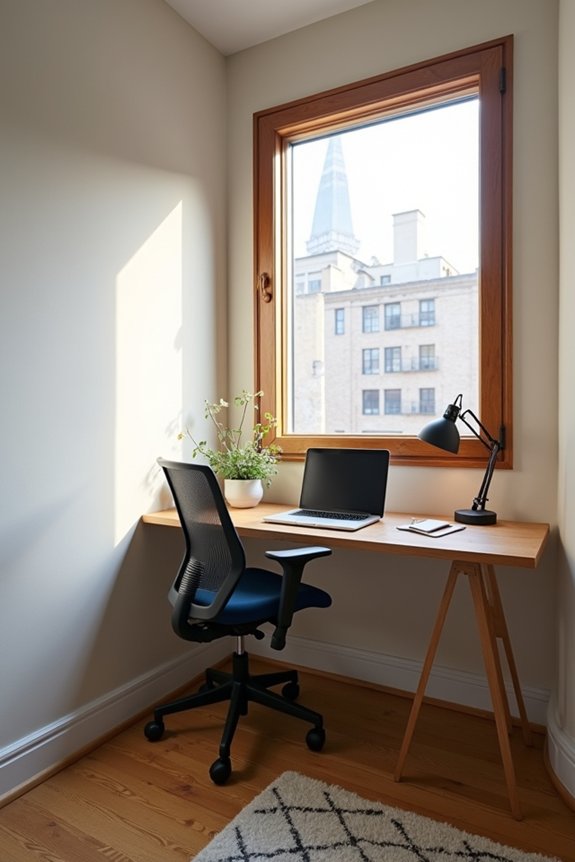
Because natural light boosts your mood, energy, and focus, positioning your desk near a window isn’t just nice—it’s essential for your small home office.
You’ll feel more energized and alert when sunlight streams across your workspace, which naturally improves productivity.
Place your desk perpendicular to the window so light hits your screen without creating glare. If you can’t face the window directly, position yourself nearby to benefit from that brightness.
You’ll notice the difference immediately—warmer afternoons, better visibility, and a genuine uplift in how you feel while working.
Natural light transforms your small space into an inviting, energizing environment.
Hide Clutter With Smart Storage
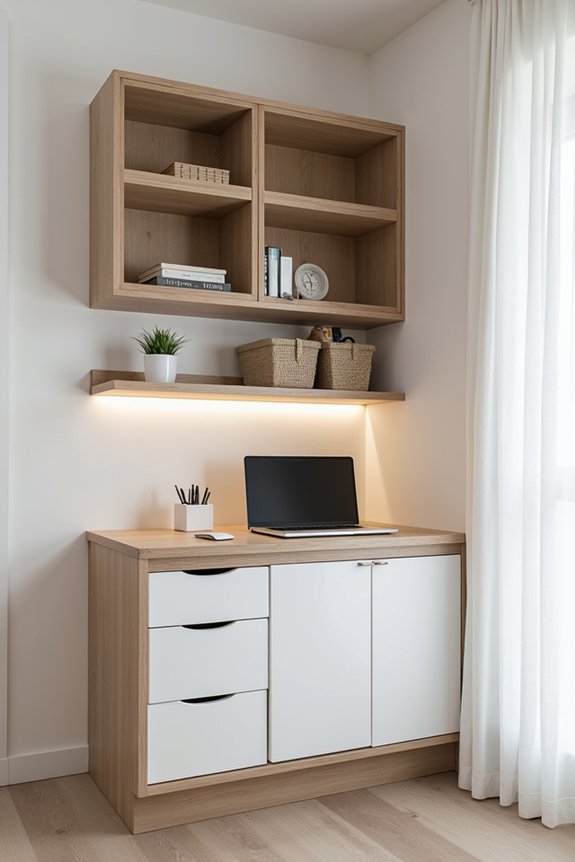
To keep your small home office feeling calm and productive, you’ve got to tackle clutter head-on with storage solutions that work as hard as you do.
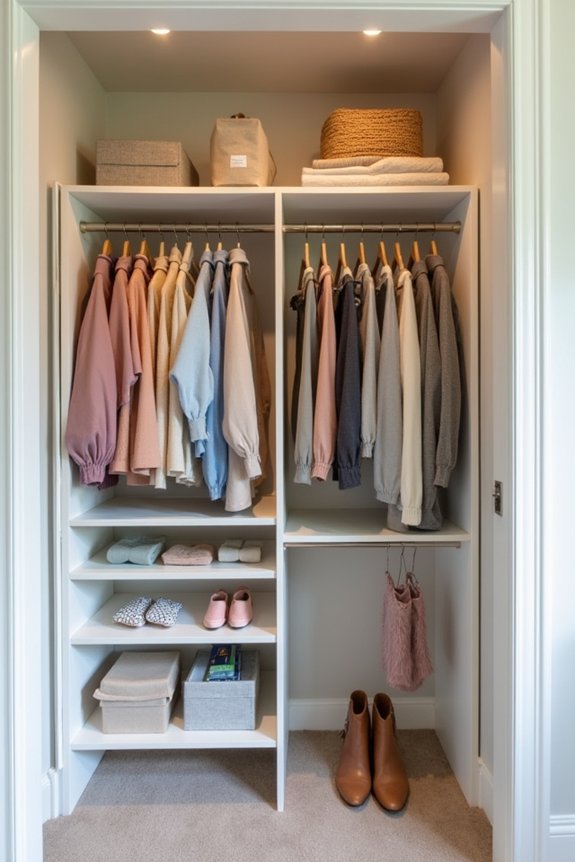
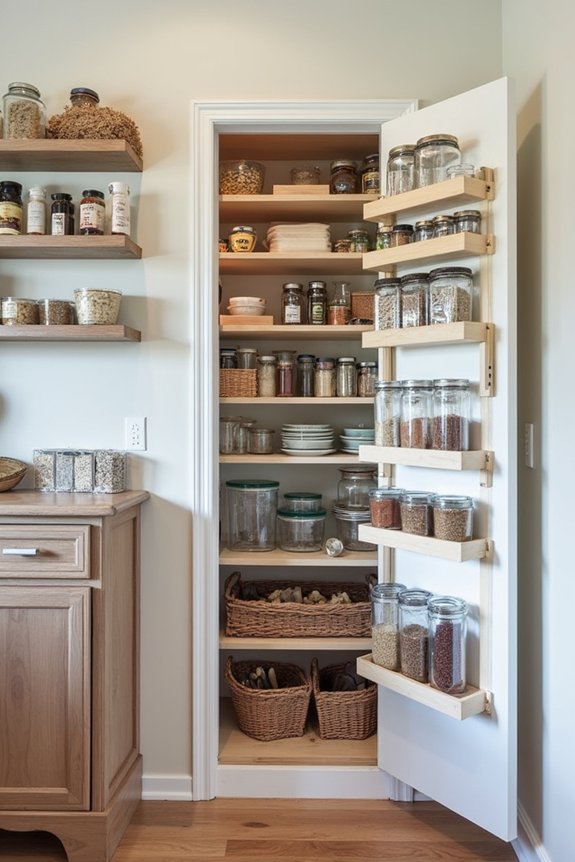
Vertical shelving units maximize your wall space, keeping supplies organized and accessible without eating into your floor area.
Drawer dividers and filing cabinets corral papers and documents neatly.
Consider under-desk storage baskets for items you use frequently but want hidden from view.
Floating shelves add style while displaying only essentials, with options like AMADA’s invisible bracket design providing a sleek appearance that doesn’t compromise on functionality.
Wall-mounted organizers keep pens, clips, and sticky notes within arm’s reach.
These smart choices transform chaos into order, helping you focus on what matters most.
Divide Your Space Without Walls
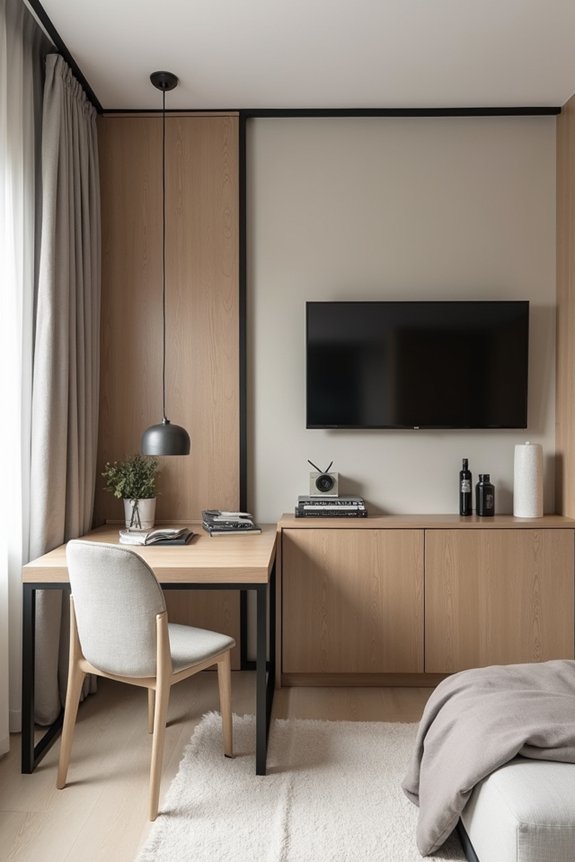
Open-concept home offices can feel overwhelming, but you don’t need permanent walls to create distinct zones that keep work separate from the rest of your life.
Try using a tall bookshelf, room divider, or curtain rod with fabric to establish boundaries that feel natural and inviting. These flexible solutions let you maintain an open feel while giving your mind a clear signal: this area is for work.
You’ll find that having visual separation genuinely helps you focus better and disconnect when you’re done. These dividers also add personality to your space, making your office feel intentionally designed rather than cramped or cluttered. Consider incorporating fall lantern decor into your dividers for warmth and seasonal ambiance that enhances your workspace.
Pick a Color That Sharpens Focus
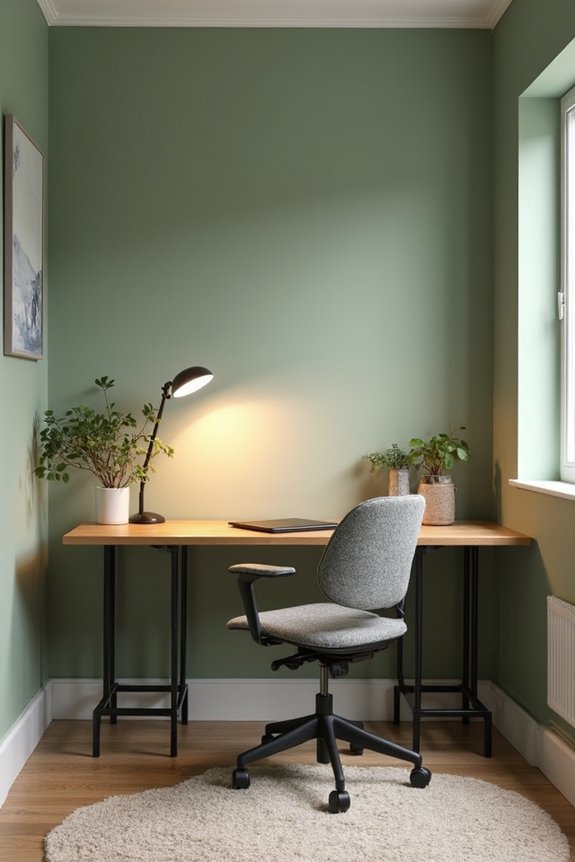
While it might seem like a small detail, the color you choose for your home office can actually make a real difference in how well you work.
Blues and greens are naturally calming, helping you stay focused without feeling stressed. Soft gray tones create a professional backdrop that won’t distract you.
Avoid bright reds or oranges, which can overstimulate your mind and drain your energy. Consider painting one accent wall instead of the entire room if you’re nervous about bold choices.
Your color selection shapes your mood, productivity, and overall comfort throughout your workday.
Organize Your Cables So They Stay Hidden
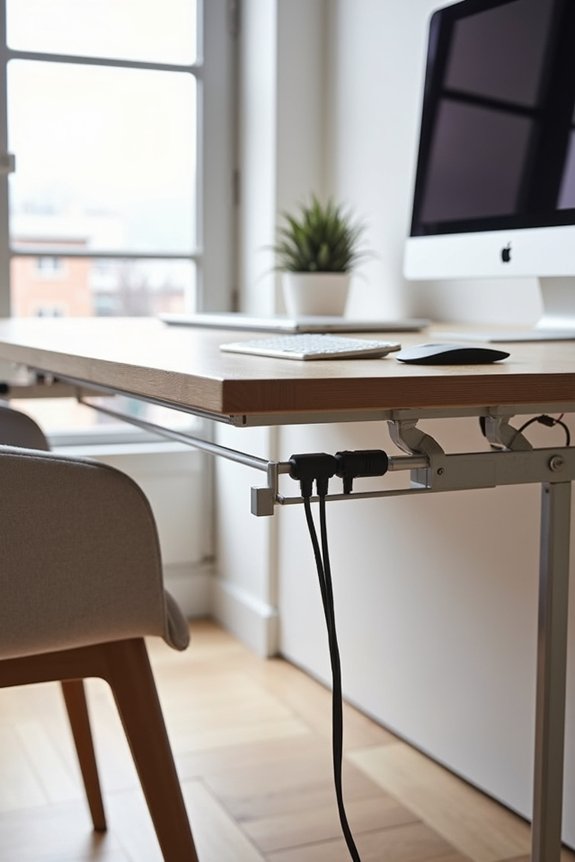
Because cables have a way of tangling into messy knots behind your desk, taking time to organize them‘ll transform your workspace from cluttered to calm.
You can use cable clips, ties, or sleeves to bundle wires together neatly. Label each cable so you’ll know exactly which one powers what device.
Consider hiding cables behind your desk or along the wall using adhesive channels. You might also try a cable box, which conceals power strips and excess cord length completely.
When your cables stay organized and hidden, you’ll enjoy a cleaner, more professional-looking space that actually inspires productivity.
Layer Your Lighting to Reduce Eye Strain
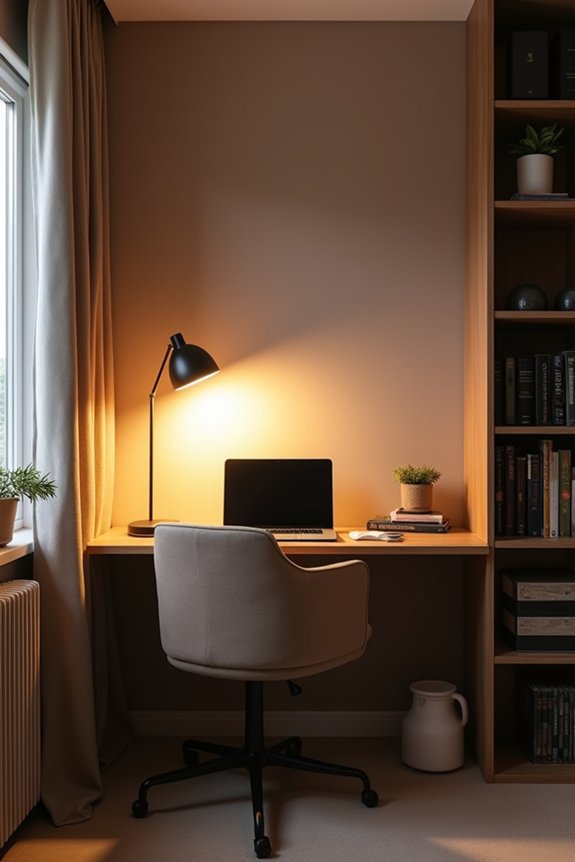
Now that your cables are tucked away and your desk looks organized, it’s time to focus on something that’ll make you feel so much better while you work: your lighting.
Layering your lighting means combining different light sources at various heights and brightness levels. Start with natural daylight from a window if you can, then add a desk lamp for focused task lighting, and include ambient lighting like a small floor lamp or wall sconce.
This combination reduces harsh shadows and eye strain, helping you stay comfortable and productive throughout your workday. You’ll notice the difference immediately.
Soundproof Your Space for Better Concentration
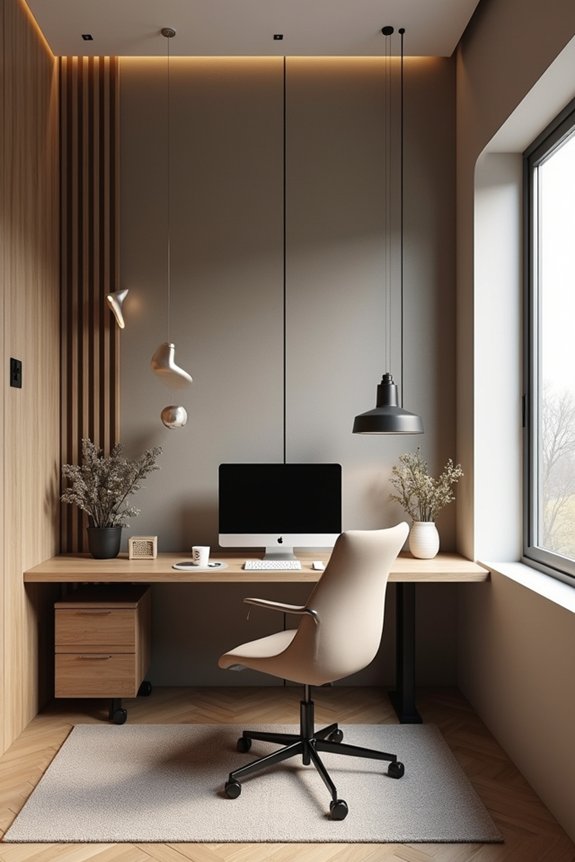
Once you’ve created the perfect lighting setup, you’ll want to tackle another challenge that can really disrupt your focus: noise.
You don’t need expensive soundproofing to make a difference. Try adding soft furnishings like rugs, curtains, and cushions that absorb sound naturally. Foam panels or acoustic tiles work wonderfully on walls, especially behind your desk.
A white noise machine or earplugs can help too. Close your door during important tasks, and consider using a “do not disturb” sign.
These simple steps create a quieter environment where you’ll concentrate better, feel calmer, and accomplish more meaningful work in your small space.
Create a Shutdown Ritual to Close Out Work
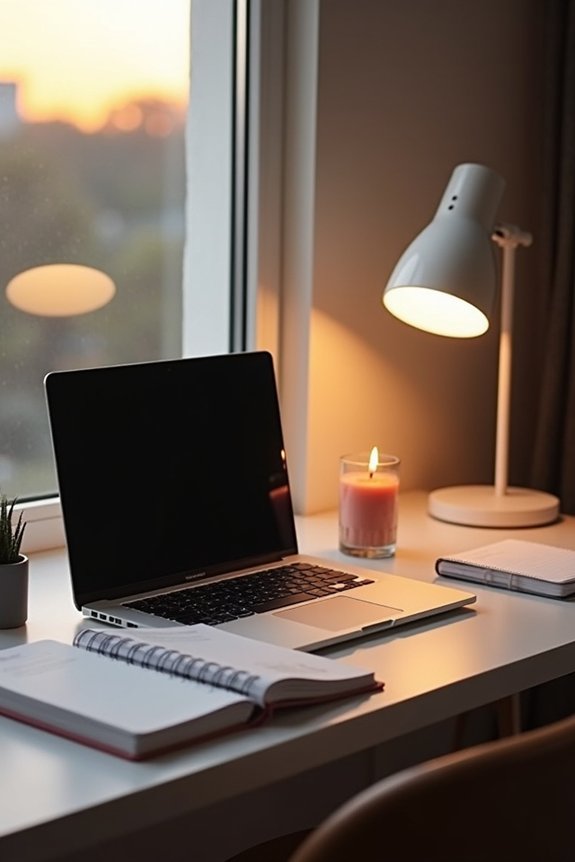
While soundproofing your space helps you stay focused during work, what you do when the workday ends matters just as much.
Create a shutdown ritual that signals your brain it’s time to disconnect. You might close your laptop, tidy your desk, or take a short walk around your home.
These simple actions help you mentally shift from work mode to personal time. A consistent ritual protects your well-being and prevents work from bleeding into your evenings.
Even five minutes of intentional closure makes a meaningful difference in your overall balance and happiness.
Frequently Asked Questions
What’s the Ideal Desk Size for a Small Home Office Space?
You’ll want a desk that’s 40-48 inches wide and 20-24 inches deep. This size gives you enough workspace without overwhelming your small office. You’ll find it easy to position against a wall or in a corner effectively.
How Much Budget Should I Allocate for a Small Home Office Setup?
You’ll want to allocate $300–$800 for a functional small home office setup. You can start with a basic desk and chair, then add storage and lighting as your budget allows. Prioritize ergonomics over aesthetics initially.
Can I Use a Small Bedroom Closet as a Home Office?
Yes, you can transform a bedroom closet into a functional workspace—studies show 16% of remote workers successfully use unconventional spaces. You’ll need to install shelving, guarantee adequate lighting, and add a small desk to maximize your cramped quarters efficiently.
What Equipment Is Essential Versus Optional for Productivity?
You’ll need a desk, chair, and reliable internet for essential productivity. A computer, lighting, and storage are critical. Optional items include monitors, ergonomic accessories, and noise-canceling headphones that enhance comfort.
How Do I Prevent Work From Affecting My Sleep Schedule?
You’ll worry your bedroom becomes an office extension, but you’re not doomed. You’ll establish a hard stop time, physically leave your workspace, and keep screens out of bed. You’ll reclaim restful sleep by creating boundaries.