
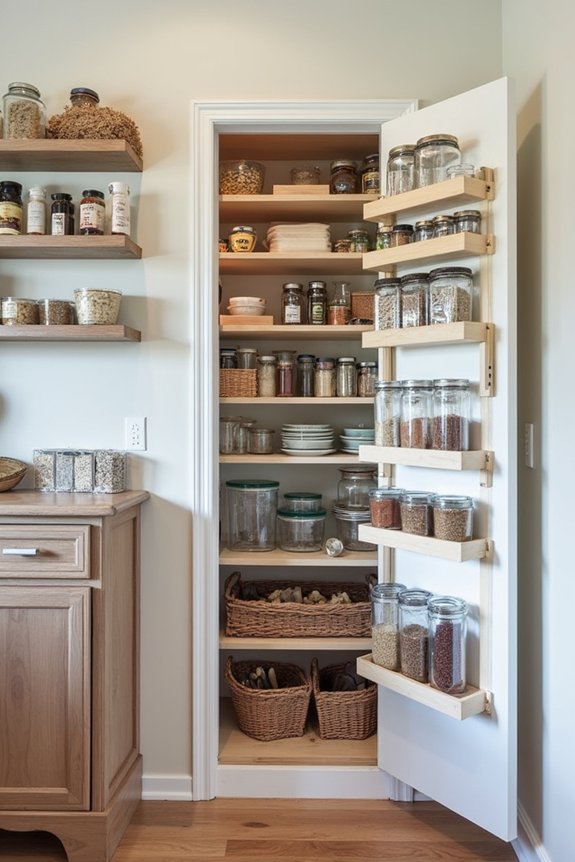
You don’t need a massive pantry to stay organized. Start by clearing out expired items and donating what you won’t use. Then install vertical shelving to maximize your walls, use clear containers so you can see everything at a glance, and mount storage on your doors for easy access. Group similar items together and label everything clearly. With these practical strategies working together, you’ll transform your small space into a functional pantry that makes meal prep easier and faster than you’d expect.
Design Highlights
- Remove expired items and donate unused products to create essential storage space in small pantries.
- Install floor-to-ceiling adjustable shelving and utilize corner space to maximize vertical storage capacity.
- Use clear labeled containers to improve visibility and prevent duplicate purchases in tight spaces.
- Mount spice racks and organizers on pantry doors to free up interior shelf real estate.
- Group items by category and place frequently used products at eye level for efficiency.
Declutter First: Remove What You Don’t Use
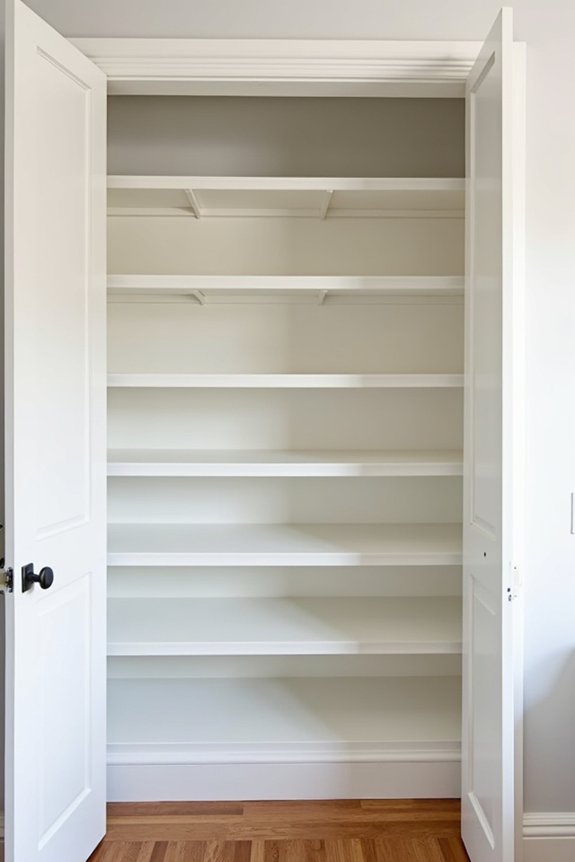
Before you invest in fancy storage solutions or reorganization systems, you’ve got to clear out the things you’re not actually using.
Take everything out of your pantry, and be honest about what you really eat. Those expired spices, forgotten canned goods, and ingredients you bought for one recipe? They’re taking up valuable space.
Donate unopened items to food banks, and toss anything past its prime. This cleaning process creates room for what matters and makes your pantry feel bigger instantly.
You’ll feel lighter too, knowing exactly what you’ve got to work with moving forward.
Install Vertical Shelving to Maximize Every Inch
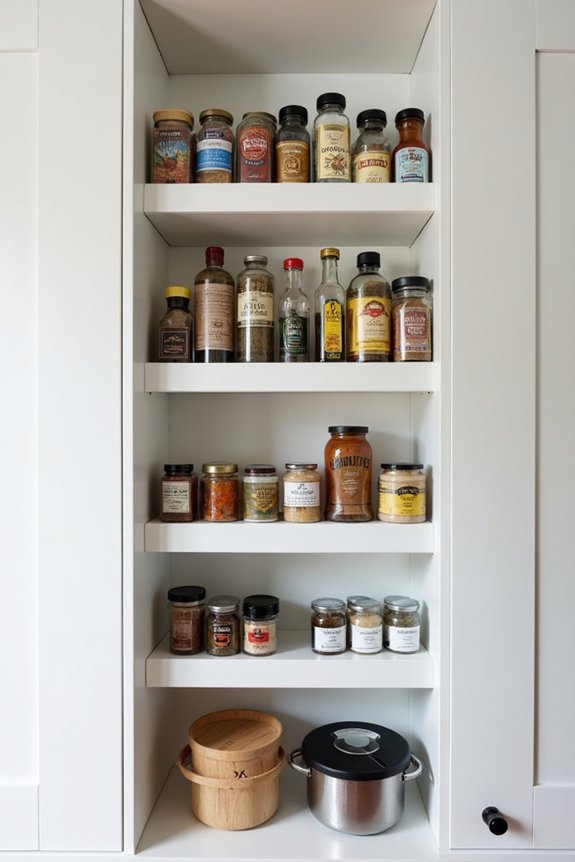
Once you’ve cleared out the clutter, it’s time to think upward—literally. Your pantry walls hold tremendous potential for storage, and vertical shelving transforms wasted space into organized zones.
By installing shelves from floor to ceiling, you’re creating multiple levels where everything finds its home. This approach keeps frequently used items at eye level while storing less-used goods higher up.
Consider these shelving solutions:
- Adjustable wire shelves that accommodate different item heights
- Floating shelves for a clean, modern appearance
- Over-the-door organizers for spices and small containers
- Corner shelving units that capture otherwise unused space
Just as weather-resistant materials protect outdoor storage solutions, selecting durable shelving materials ensures your pantry organization system lasts for years to come. You’ll be amazed how much more you can store while keeping everything accessible and visible.
Use Clear Containers to See What You Have
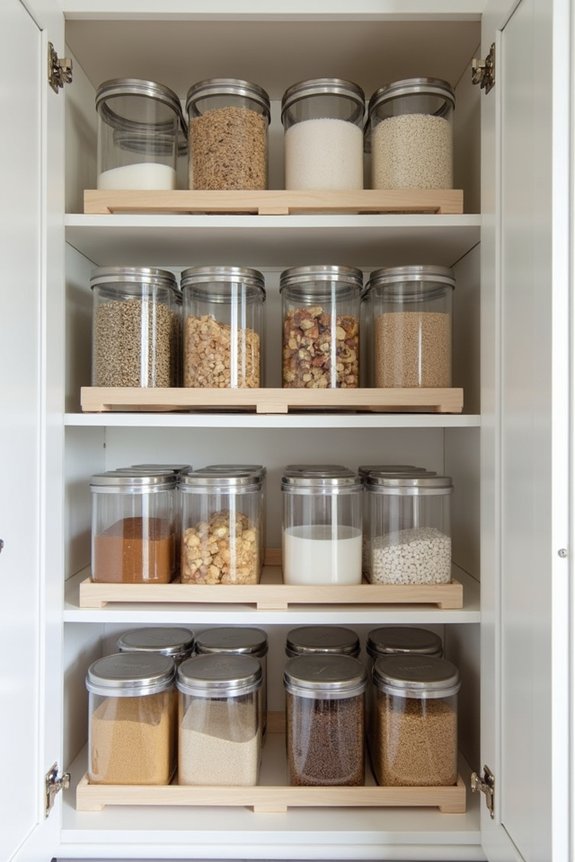
Three simple things happen when you switch to clear containers: you’ll instantly spot what you’re running low on, you’ll stop buying duplicates, and you’ll feel genuinely excited about your organized pantry.
Clear containers transform your pantry into an easy-to-read system where everything’s visible at a glance. You’ll know exactly what you have, eliminating those frustrating moments searching through cabinets.
Label each container with contents and expiration dates for extra clarity. This simple change saves you time, money, and stress while keeping your small space functional and inviting.
Add Door-Mounted Storage for Easy Access
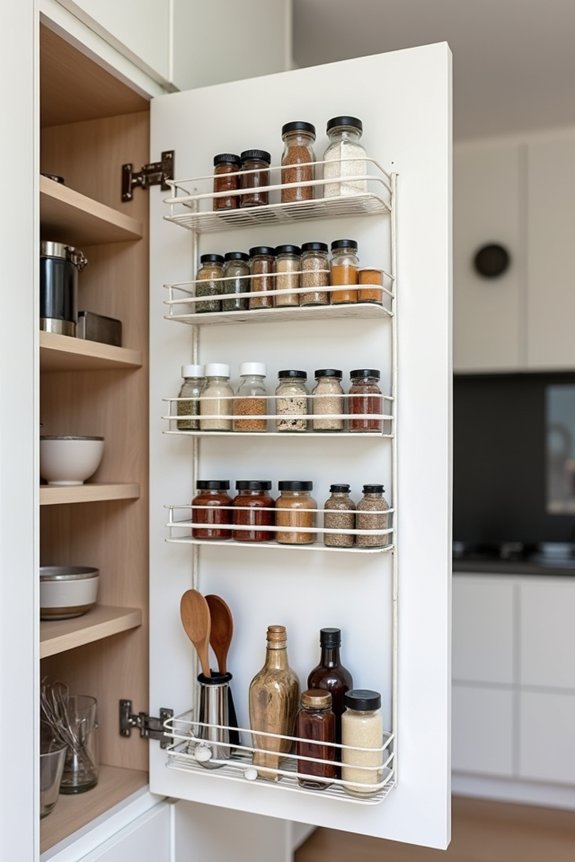
Your pantry doors are prime real estate that you’re probably overlooking right now. Transform them into functional storage by installing shelves, hooks, and organizers that hold everyday items you need quick access to.
You’ll free up interior space while keeping frequently used products within arm’s reach.
Consider adding:
- Spice racks for alphabetized seasonings
- Adhesive hooks for reusable shopping bags
- Small wire baskets for packets and pouches
- Over-the-door organizers for oils and vinegars
Door-mounted storage maximizes your pantry’s potential without requiring renovations. Over-the-door organizers with transparent bins make it easy to identify contents while keeping items visible and accessible.
You’re making smart use of vertical space while creating an organized, inviting pantry that works harder for you.
Group Items by Category and Frequency of Use
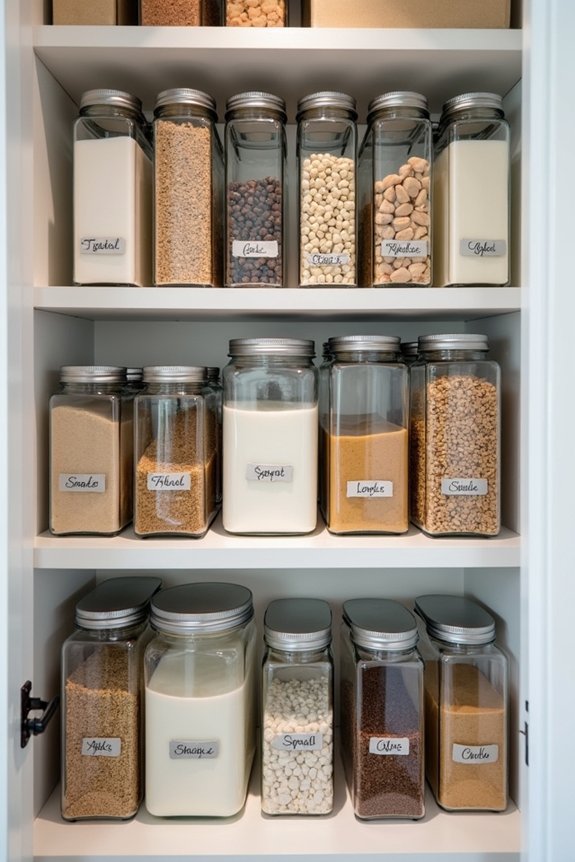
As you’re organizing your pantry, grouping similar items together makes a tremendous difference in how well you can find what you need.
Keep frequently used items at eye level where you can grab them quickly. Store baking supplies together, snacks in one spot, and canned goods in another section.
Place items you use daily toward the front, and reserve harder-to-reach spaces for occasional purchases. This system saves you time during meal prep and prevents buying duplicates.
You’ll feel more confident cooking when everything’s exactly where you expect it to be, making your kitchen feel calmer and more manageable.
Label Everything So You Can Find It
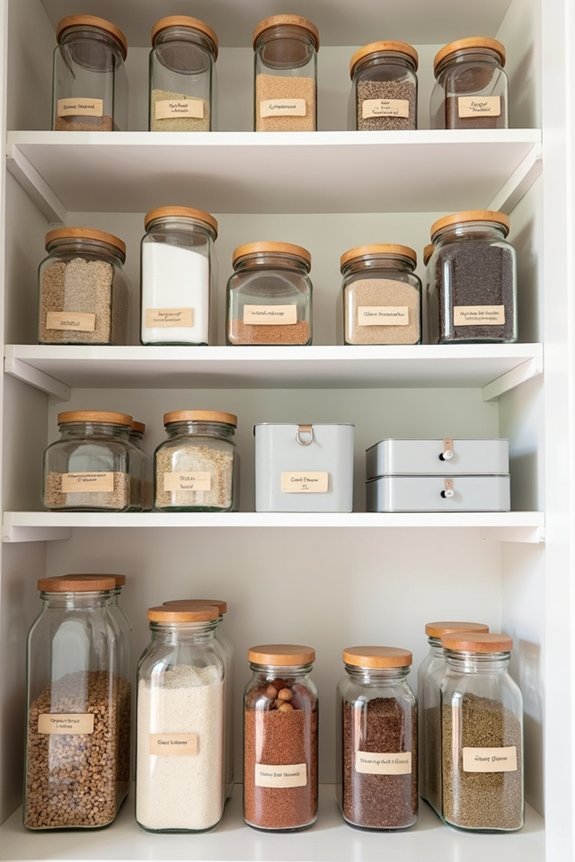
A simple label can transform your pantry from confusing to crystal clear. When you mark containers with contents and expiration dates, you’ll instantly know what you’re looking for. This saves you time and prevents food waste.
You’ll feel more organized and in control of your space.
Consider these labeling options:
- Printed labels with item names and dates
- Masking tape with permanent marker writing
- Chalkboard stickers for easy updates
- Color-coded labels by food category
Grab a label maker or basic supplies you already have. Label everything clearly, including opened packages and homemade items.
You’ll love the peace of mind that comes with knowing exactly what’s in your pantry.
Maintain Monthly to Keep Your System Working
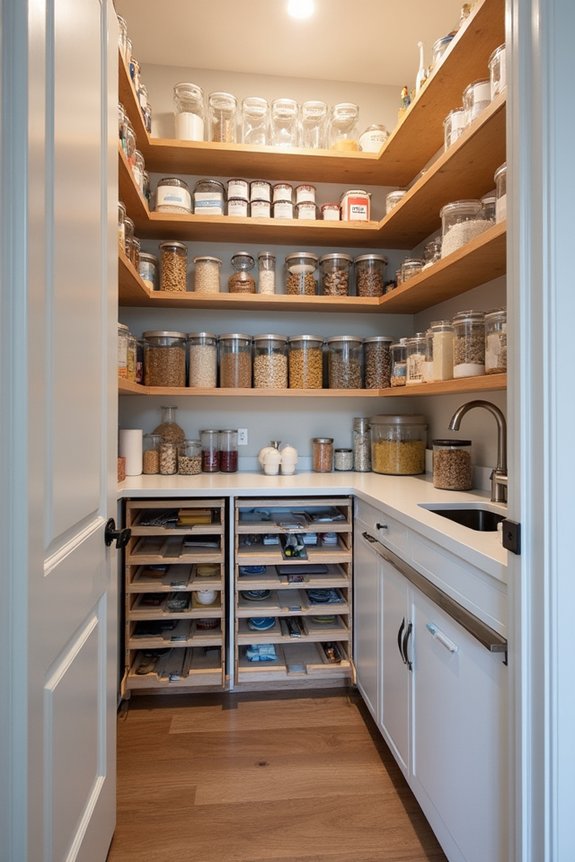
Once you’ve set up your organized pantry system, keeping it running smoothly requires just a little bit of regular attention.
Schedule a quick monthly check-in where you’ll scan your shelves, check expiration dates, and reorganize items that’ve shifted. You’ll spot what’s running low and what you’ve forgotten about.
During this time, wipe down shelves to prevent dust buildup, and adjust your labels if anything’s changed. This simple routine prevents your pantry from sliding back into chaos.
You’re not just maintaining organization; you’re protecting your investment of time and energy while ensuring your system continues serving your family well. Consider complementing your organized pantry with fall home decor finds that bring seasonal warmth to your kitchen space.
Frequently Asked Questions
What Types of Containers Work Best for Different Pantry Items and Foods?
You’ll maximize your pantry space using airtight containers for dry goods like cereals and flour, clear bins for snacks and baking supplies, and stackable containers for spices and smaller items. Glass jars work wonderfully for pasta and legumes.
How Can I Organize a Pantry With Limited Budget Constraints?
You’ll maximize your budget by repurposing containers you’ve got, labeling shelves strategically, and grouping similar items together. You’ll eliminate waste, you’ll reduce duplicates, and you’ll find everything faster without spending extra money.
What’s the Ideal Temperature and Humidity for Small Pantry Storage?
You’ll want to maintain 50-70% humidity and keep temperatures between 50-70°F in your small pantry. You should avoid fluctuations, direct sunlight, and heat sources. You can use silica packets or dehumidifiers to regulate moisture levels effectively.
How Do I Prevent Pests in a Small, Confined Pantry Space?
You’ll want to verify that airtight containers genuinely work—they do. Store your dry goods in sealed containers, eliminate crumbs daily, and use bay leaves or peppermint oil to deter insects naturally in your confined space.
What’s the Best Way to Inventory and Track Pantry Expiration Dates?
You’ll maximize efficiency by labeling items with purchase dates, organizing by expiration using the FIFO method, and maintaining a simple spreadsheet or phone app. You should check your inventory monthly and discard expired products promptly.