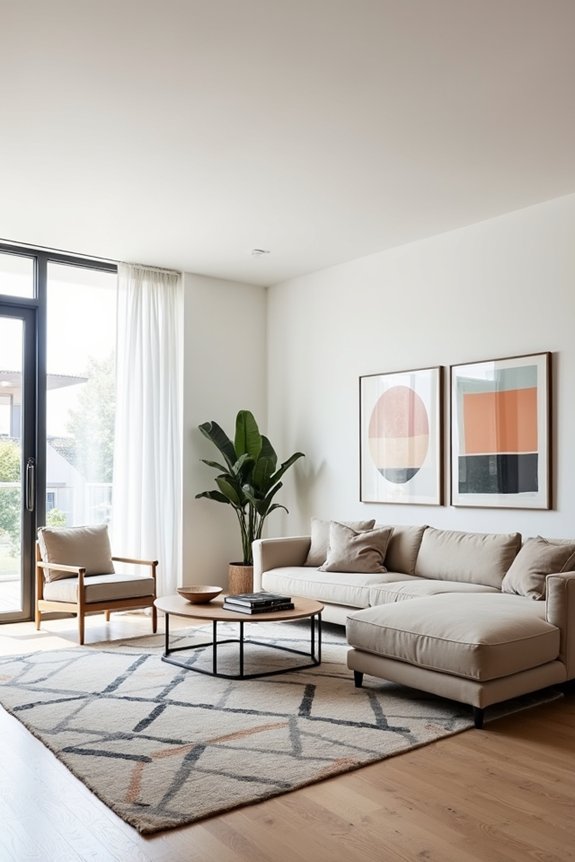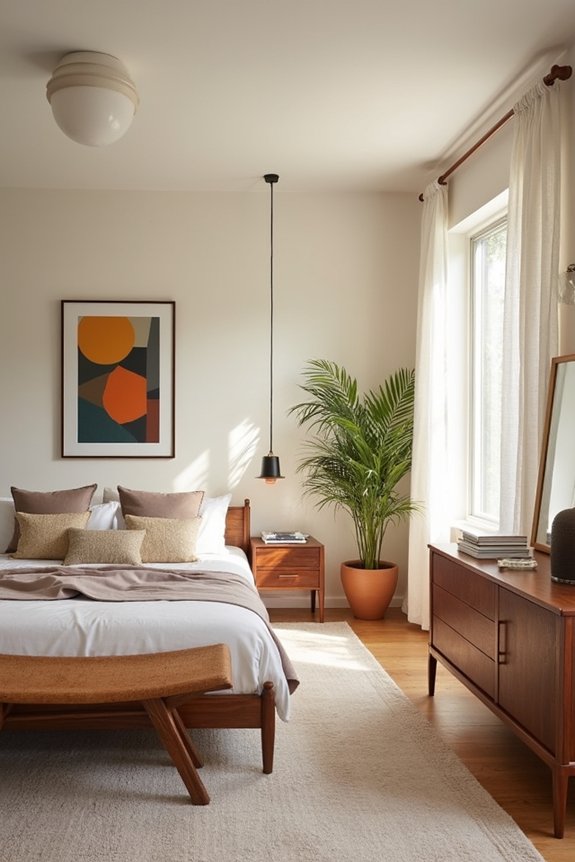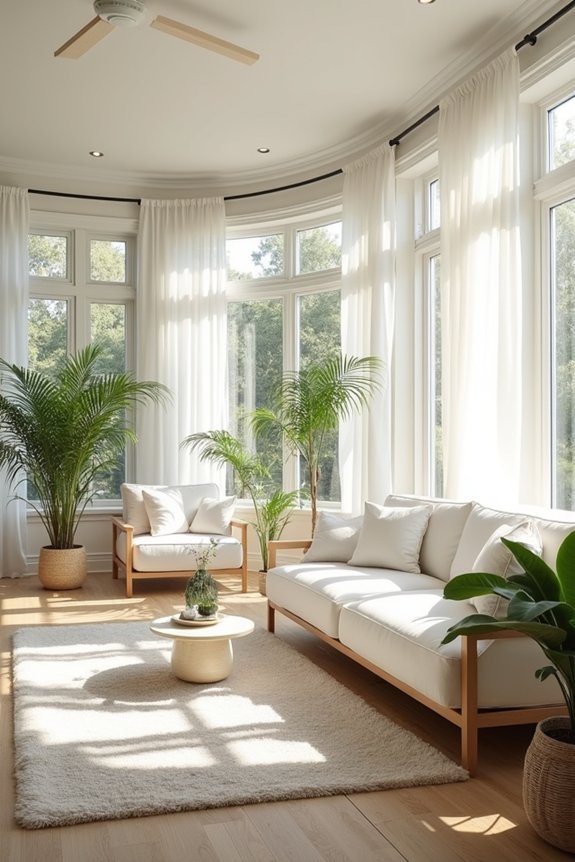
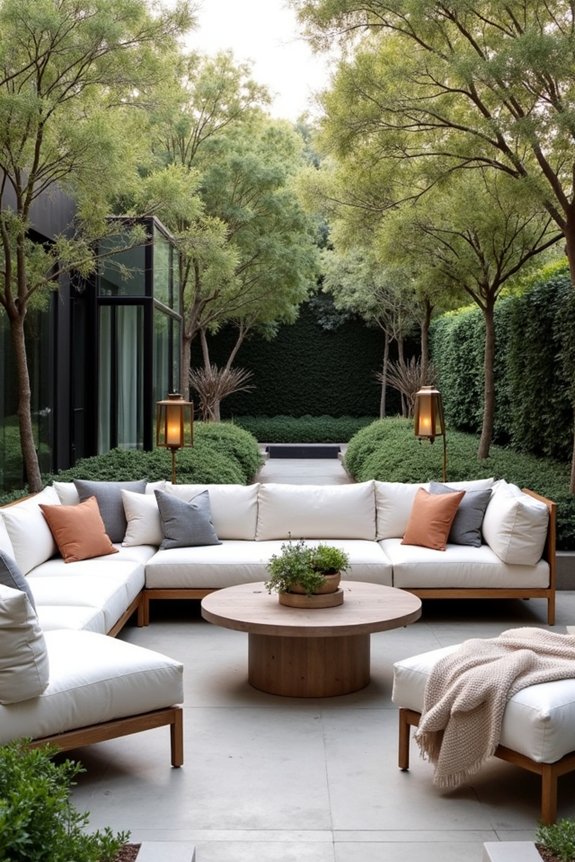
You’ll transform your backyard into a stylish outdoor haven by embracing three key pivotal elements. First, establish a calming foundation with neutral colors like beige and soft gray that echo your indoor spaces. Second, invest in durable furniture—think teak wood and cushioned wicker—that seamlessly connects your interior style to the outdoors. Third, layer your lighting with string lights, task lighting, and ambient options to set the perfect mood and extend your evenings outside. These foundational choices work together beautifully to create a cohesive, inviting space where you’ll discover even more design possibilities.
Design Highlights
- Neutral color palettes with beige, gray, and soft whites create a calming transitional foundation that bridges indoor and outdoor spaces seamlessly.
- Mix durable materials like teak wood, wrought iron, and cushioned wicker to combine contemporary aesthetics with traditional warmth and texture.
- Layer lighting with string lights, task lights, and ambient options to extend outdoor enjoyment and create versatile moods year-round.
- Combine contrasting textures—smooth stones with rough wood, sleek metal with woven fabrics—for visual depth and sophisticated design interest.
- Select weather-resistant furniture that echoes your home’s interior style, ensuring a cohesive aesthetic that encourages regular outdoor relaxation and gatherings.
Transitional Design Fundamentals: Neutral Palettes, Balanced Texture, and Timeless Proportion
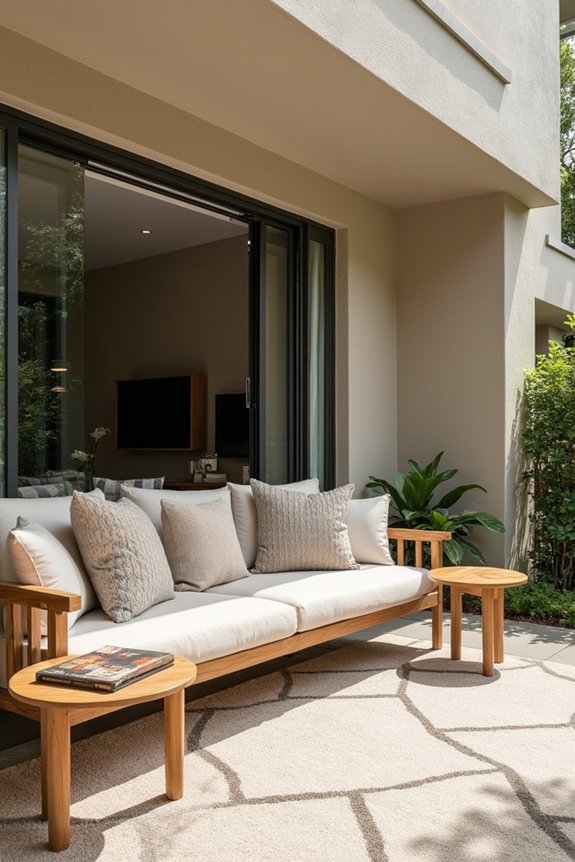
When you’re creating a backyard that feels both modern and classic, bridging design is your answer—it’s a style that merges contemporary clean lines with traditional warmth, giving you the best of both worlds.
Start with neutral colors like beige, gray, and soft whites, which create a calming foundation. Layer in balanced textures through mixed materials: smooth stone paired with rough wood, or sleek metal alongside woven fabrics. These combinations prevent your space from feeling one-dimensional.
Timeless proportions matter too—choose furniture and décor scaled appropriately for your yard’s size, ensuring everything harmonizes beautifully together. Just as material durability is essential in selecting indoor furniture like TV stands, outdoor pieces should be constructed from weather-resistant materials that maintain their aesthetic appeal over time.
Invest in Furniture That Connects Your Interior Style to the Outdoors
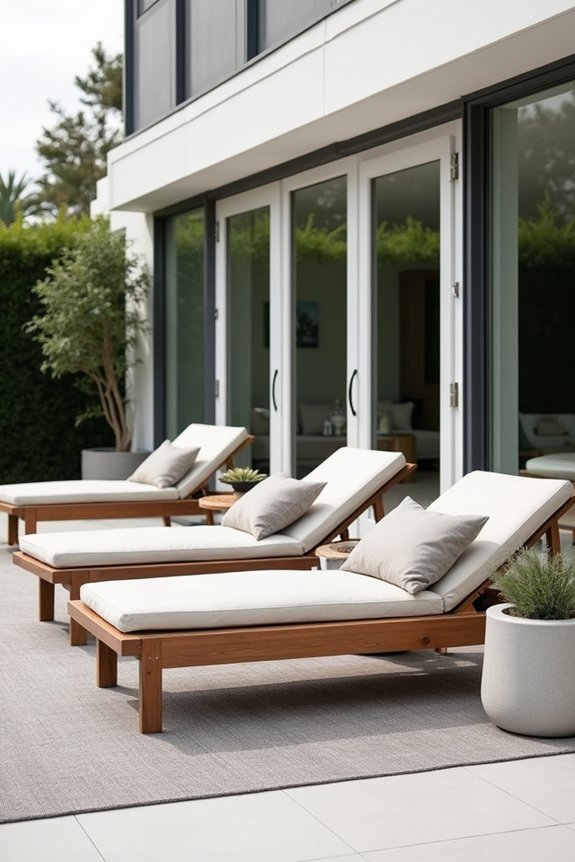
Because your outdoor space is an extension of your home, choosing furniture that bridges your indoor and outdoor styles creates a seamless, cohesive flow throughout your entire property.
Select pieces that echo your interior design—if you love clean lines indoors, choose outdoor furniture with similar simplicity.
Consider materials like teak, wrought iron, or cushioned wicker that complement both spaces beautifully.
Mix textures thoughtfully, pairing natural wood with soft fabrics.
Prioritize weather-resistant materials like aluminum and high-quality resin to ensure your transitional pieces maintain their beauty and durability through changing seasons.
This thoughtful approach transforms your backyard into a natural continuation of your living area, inviting you to spend more time enjoying your complete home environment.
Layer Your Lighting to Set Mood and Extend Evening Enjoyment
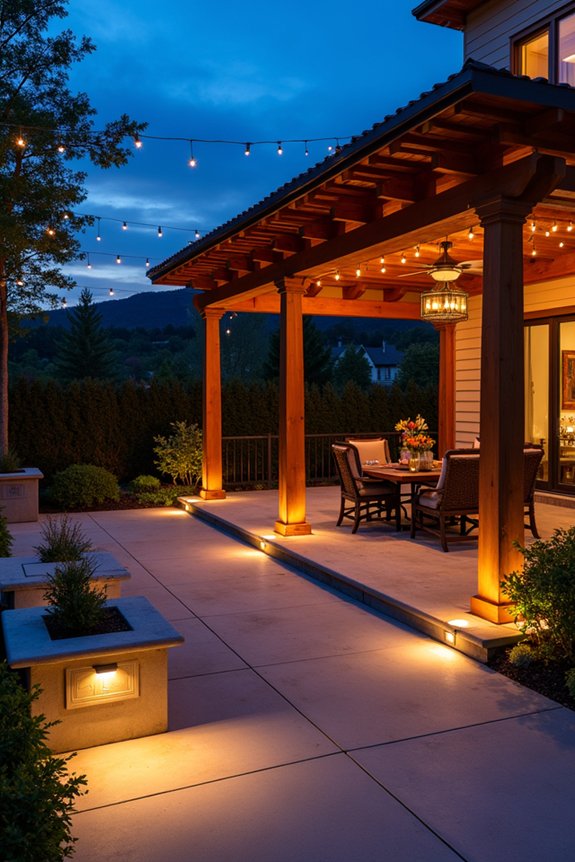
Now that you’ve created a cohesive outdoor space with thoughtful furniture choices, it’s time to illuminate it so you’ll actually want to spend your evenings there.
Layered lighting transforms your backyard into a magical retreat. Start with overhead string lights or lanterns for general illumination, then add task lighting near seating areas.
Incorporate accent lights to highlight landscaping features or architectural details. Finally, include ambient options like solar stake lights or candles for intimate atmosphere.
This combination doesn’t just extend your usable hours; it creates different moods for various occasions, making your outdoor space genuinely inviting year-round.
Frequently Asked Questions
How Do I Maintain Transitional Outdoor Furniture Throughout Different Seasons?
You’ll protect your shift outdoor furniture by covering pieces during harsh weather, cleaning regularly with mild soap, applying sealant annually, storing cushions indoors seasonally, and inspecting for damage before each season changes.
What Budget Should I Allocate for a Complete Backyard Redesign Project?
You’ll allocate $3,000–$15,000 depending on size and scope. Like building a house room-by-room, you’re smartly budgeting furniture, hardscaping, and landscaping. Start modest, then you’ll expand as your vision grows clearer.
Can I Incorporate Transitional Style With Existing Permanent Outdoor Structures?
You can absolutely incorporate connecting style with existing structures. Work with what you’ve got by adding connecting furnishings, plantings, and accessories that bridge your current hardscape with updated aesthetics.
Which Plants and Landscaping Complement Transitional Backyard Design Principles Best?
You’ll want to choose ornamental grasses, hydrangeas, and boxwoods that blend modern and traditional aesthetics. You should incorporate clean lines with layered plantings, complementing your shifting style while you maintain balanced, sophisticated landscaping.
How Do I Choose Between Natural and Synthetic Materials for Durability?
You’ll want to compare your climate’s weather patterns, maintenance requirements, and budget. Natural materials age beautifully but need upkeep; synthetics resist fading and weathering. Choose based on your lifestyle and desired aesthetic longevity.