Transform your outdoor space this spring by planting tulips, daffodils, and hyacinths in vibrant purples, yellows, and pinks within colorful terracotta and ceramic pots arranged at varying heights. Drape warm string lights overhead and position lanterns throughout to create cozy evening ambiance. Finally, design winding pathways that guide visitors toward a focal point—like a birdbath or sculpture—where you can layer decorative planters and ornaments. These three elements work together to craft a personalized garden that invites exploration and wonder.
Design Highlights
- Plant vibrant tulips, daffodils, and hyacinths in colorful terracotta or ceramic pots at varying heights for visual depth and interest.
- Install warm-colored string lights and lanterns overhead to create cozy ambiance and transform your garden into an enchanting evening retreat.
- Design winding stone or gravel pathways that guide visitors through your garden while encouraging natural exploration and discovery.
- Establish a focal point like a birdbath or sculpture where pathways lead, enhanced with decorative planters and ornaments.
- Implement succession planting by adding fresh flowers every few weeks to maintain continuous spring color and extend seasonal appeal.
Add Spring Flowers and Colorful Planters for Instant Color
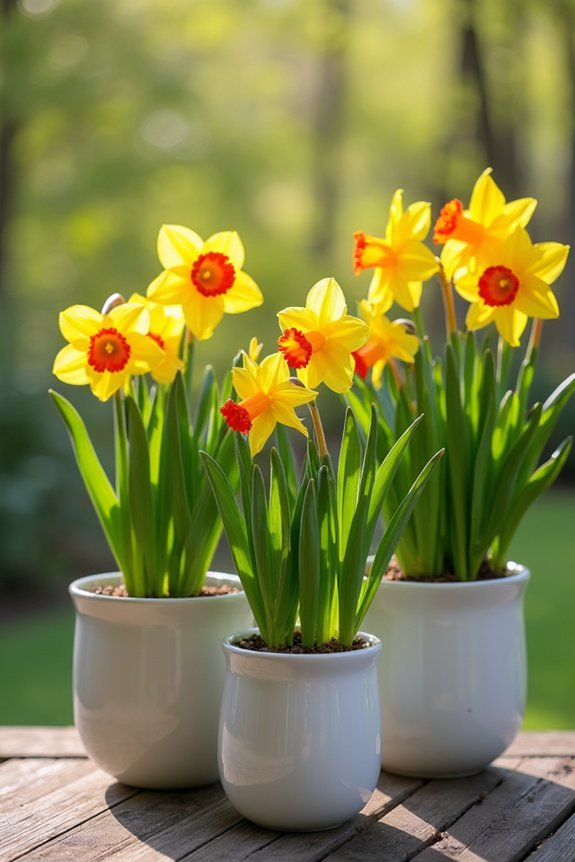
There’s truly nothing quite like spring flowers to transform your garden into a vibrant, welcoming space.
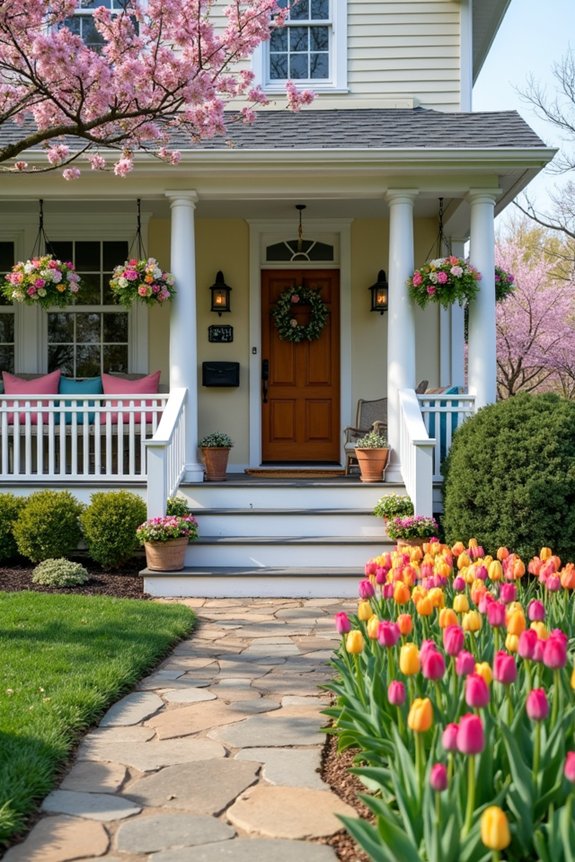
You’ll want to choose a mix of tulips, daffodils, and hyacinths in bold colors like purple, yellow, and pink.
Pair these beauties with colorful planters—terracotta, ceramic, or painted pots—that complement your flowers and home’s style.
Arrange planters at varying heights to create visual interest and depth throughout your garden beds.
Don’t forget about succession planting; this means adding new flowers every few weeks so your garden stays fresh and colorful all season long.
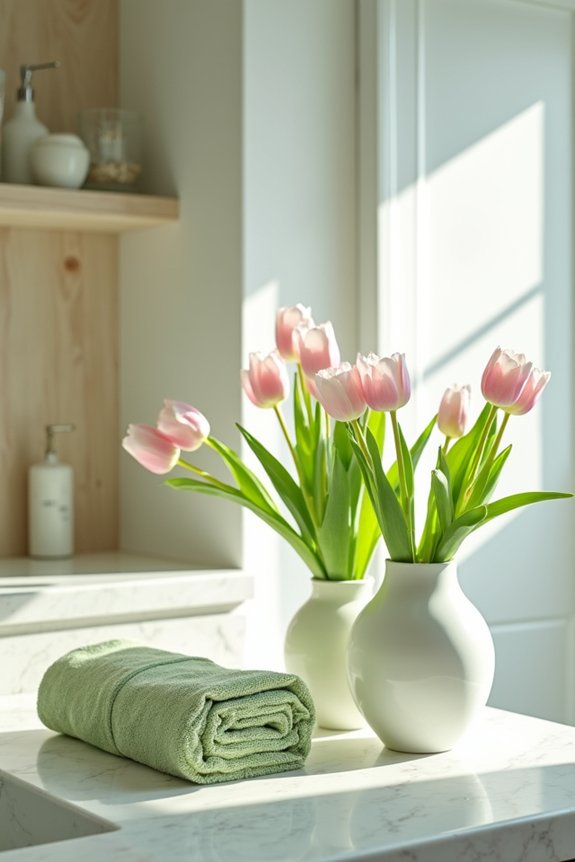
Extend your spring aesthetic indoors by incorporating spring-inspired bathroom decor that echoes the fresh, natural colors and themes of your outdoor garden sanctuary.
Brighten Your Evenings With String Lights and Lanterns
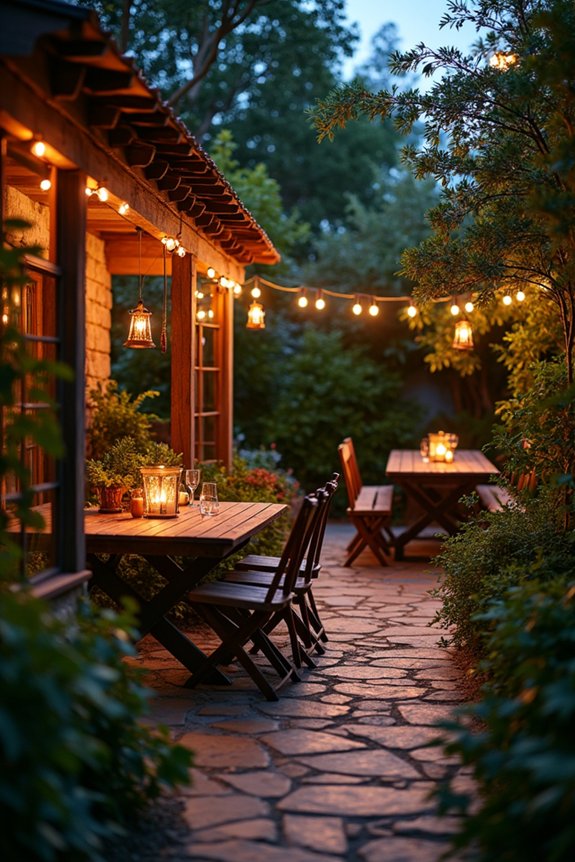
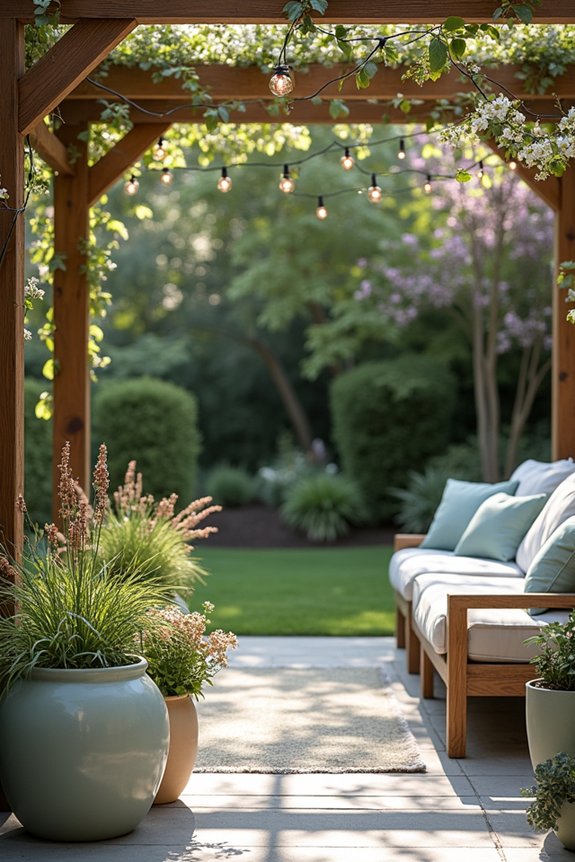
As the sun sets earlier in spring evenings, you’ll discover that thoughtfully placed lighting transforms your garden into a magical retreat.
Soft illumination creates an inviting atmosphere where you can relax and enjoy your outdoor space long after dark.
Consider these lighting options:
- String lights draped overhead create warmth and ambiance
- Lanterns placed on tables or hung from branches add charm
- Solar-powered lights require no wiring for easy installation
- Uplighting on plants highlights your garden’s natural beauty
For optimal results, choose string lights with a warm color temperature between 2200K–2700K to enhance the cozy atmosphere of your spring evenings.
You’ll love how these simple additions extend your outdoor enjoyment, making evenings feel cozy and special while showcasing your spring garden’s best features.
Define Your Space With Pathways and Garden Focal Points
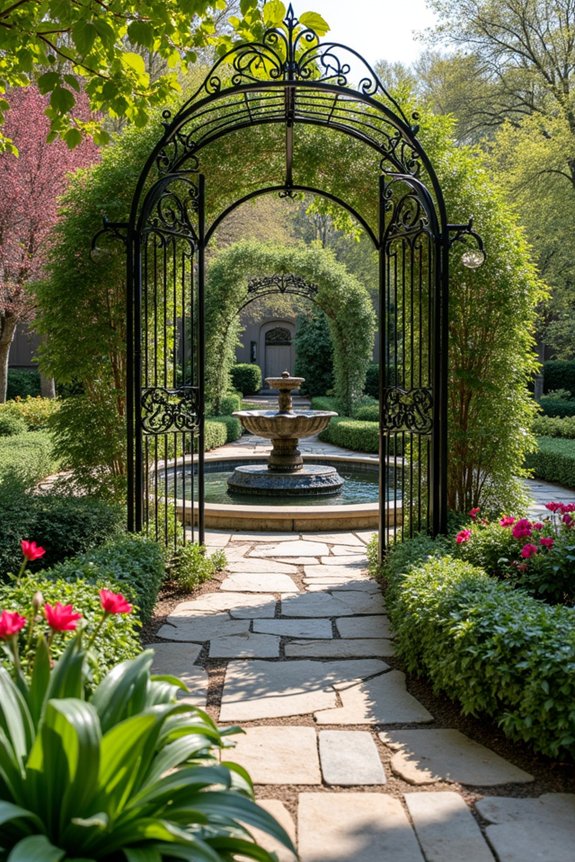
While lighting sets the mood for your evening garden, pathways and focal points give your space structure and purpose.
Consider creating winding stone or gravel paths that guide visitors through your garden naturally. These pathways encourage exploration and make your outdoor area feel intentional and welcoming.
Next, choose a focal point—perhaps a birdbath, sculpture, or flowering tree—to draw the eye. This centerpiece becomes your garden’s heart, anchoring the design beautifully.
Position it where paths naturally lead, creating a satisfying sense of discovery. When you thoughtfully arrange these elements, you’ll transform your spring garden into an organized, inviting retreat that truly reflects your personal style and vision. Adding spring garden decor products like decorative planters and garden ornaments can further enhance these focal points and pathways.
Frequently Asked Questions
What Budget Should I Allocate for a Complete Spring Garden Makeover?
You’ll want to allocate $500-$2,000 for a complete spring garden makeover, depending on your space’s size and design complexity. You can start small with plants and mulch, then you’ll gradually add hardscaping elements and decorative features as your budget allows.
How Do I Protect Delicate Spring Plants From Unexpected Late Frosts?
You’ll protect delicate spring plants by covering them with frost cloth or blankets when temperatures drop. You can also mulch around plants, water before frost hits, and position them in sheltered spots away from wind exposure.
Which Spring Flowers Attract Beneficial Pollinators to My Garden?
You’ll attract pollinators by planting crocuses, tulips, hyacinths, and primrose. You should also consider adding hellebores and snowdrops. These flowers provide early nectar sources that hungry bees and butterflies need after winter.
How Often Should I Water Newly Planted Spring Flowers and Plants?
You should water newly planted spring flowers daily for the first two weeks, then gradually reduce frequency as they establish. Check soil moisture regularly—it shouldn’t dry out completely or become waterlogged.
Can I Repurpose Old Garden Items for Spring Decorating on a Budget?
You can absolutely give your garden items a second life this spring. Repurpose old containers as planters, paint wooden pallets into vertical gardens, transform weathered tools into decorative stakes, and upcycle vintage items into charming focal points for budget-friendly beauty.