You can transform your studio into a fully functional home using smart layout strategies. Try positioning your bed against a wall to free up floor space, or install a loft bed for storage underneath. Create distinct zones using area rugs and strategic furniture placement without building walls. Arrange furniture along parallel walls for smooth flow, and build your layout around fixed points like windows and doors. Each approach maximizes your space while maintaining comfort and style, and we’ll show you exactly how to implement each one.
Design Highlights
- Position your bed against a wall or corner to maximize floor space and add vertical storage above.
- Use area rugs and strategic furniture placement to create distinct living, sleeping, and workspace zones visually.
- Install a loft bed to elevate your sleeping area and create functional space underneath for living.
- Arrange furniture along two parallel walls in a galley-style layout for smooth, efficient movement flow.
- Build your layout around fixed points like windows and doors to optimize natural light and storage.
The Bed-First Layout: Maximize Space Behind Your Sleeping Area
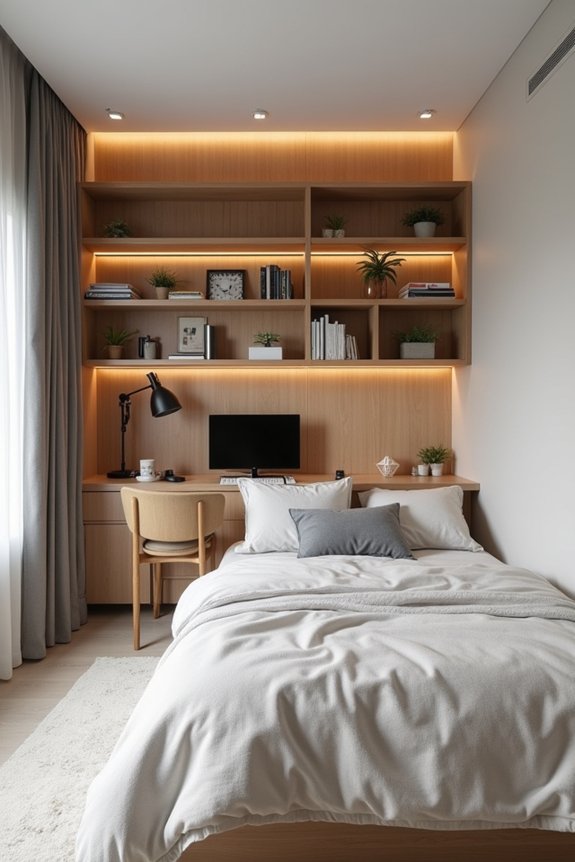
When you’re working with a small studio apartment, your bed’s placement can make or break your whole layout—and that’s why starting with where you’ll sleep is such a smart move.
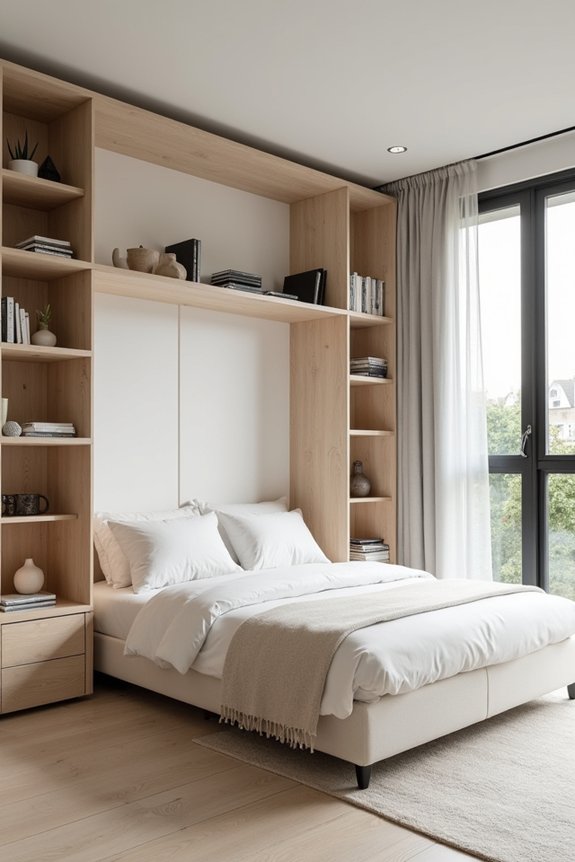
By positioning your bed against a wall or in a corner, you’ll free up valuable floor space for living and working areas. This strategic placement lets you maximize the room you’ve got.
Consider using vertical storage above your bed, like floating shelves or wall-mounted organizers, to keep essentials within reach without cluttering your floor. Narrow, vertical designs are particularly effective in small spaces, allowing you to store more without consuming precious square footage.
You’re creating a functional, comfortable sanctuary that doesn’t sacrifice style or functionality.
Create Zones Without Walls: The Open-Plan Studio Method
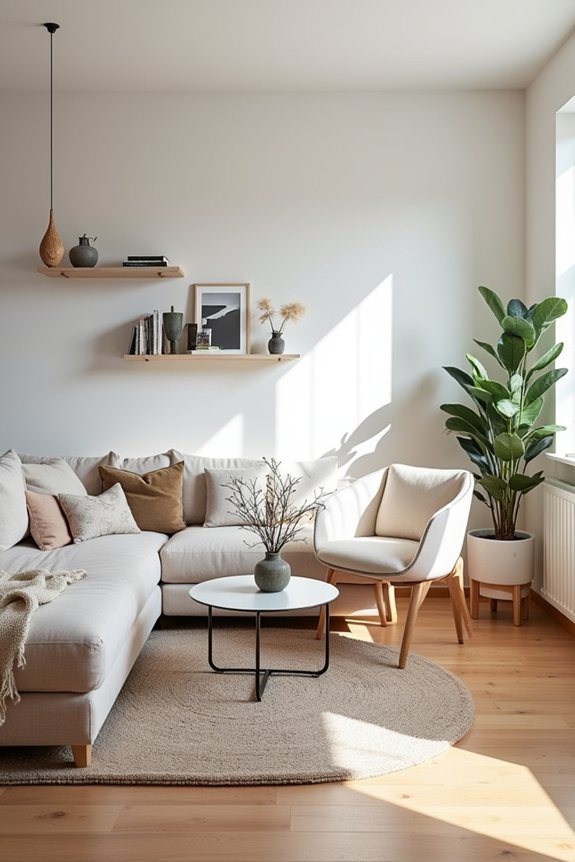
Since your studio apartment likely lacks traditional walls to separate spaces, you’ll want to create distinct zones that make your home feel organized and purposeful.
Try using area rugs to define your living room, bedroom, and workspace—each rug anchors its zone beautifully. Furniture placement works wonderfully too; position your bed against one wall, your couch facing another direction, and your desk in a corner.
Lighting helps tremendously, with different lamps creating ambiance for each area. Open shelving and room dividers add visual boundaries without blocking sight lines. For high-traffic areas like your kitchen or entryway, consider low-pile, non-shedding rugs that are easy to maintain and won’t show dirt quickly.
These clever techniques transform your studio into a well-structured, inviting home.
Go Vertical: Loft Strategies for Tight Spaces
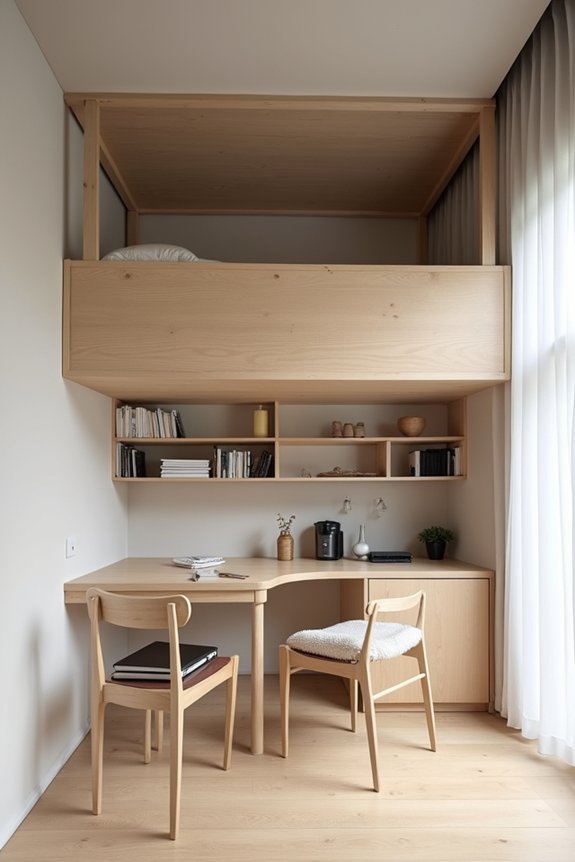
By building up instead of out, you’ll reveal hidden potential in your studio apartment and dramatically expand your usable living space.
Consider installing a loft bed, which elevates your sleeping area and frees up valuable floor space underneath for a desk, seating, or storage.
Tall shelving units and wall-mounted cabinets draw the eye upward while storing belongings efficiently.
Hanging organizers and hooks maximize vertical wall space without consuming floor area.
These strategies create distinct zones while maintaining your studio’s openness.
You’ll feel more spacious and organized, transforming your compact apartment into a functional, comfortable home that works harder for you.
The Linear Flow: Galley-Style Layouts That Work
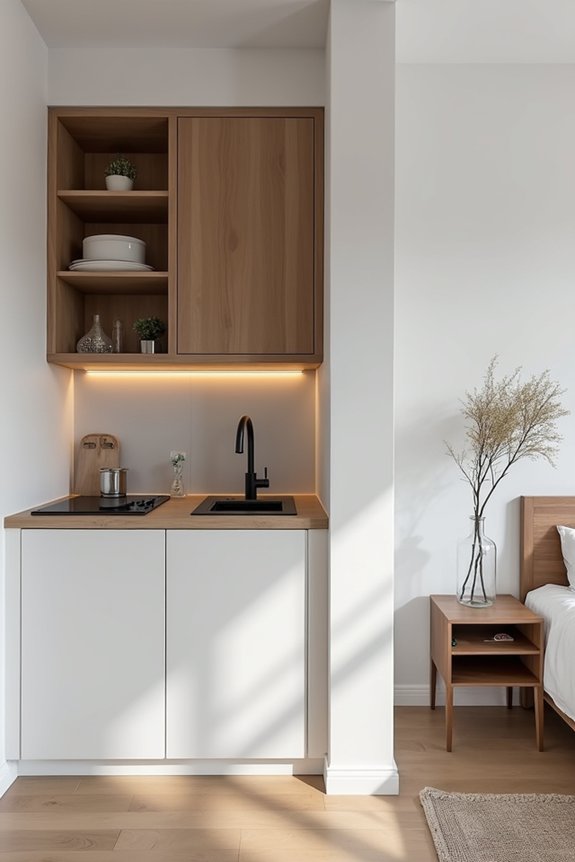
How can you make a narrow studio feel purposeful instead of cramped? A galley-style layout creates natural flow by arranging furniture along two parallel walls. This design guides you smoothly from your entry through living, sleeping, and kitchen zones without awkward dead spaces.
You’ll appreciate how this linear arrangement reduces clutter accumulation since everything has a designated path. Position your bed on one side, place your sofa opposite, and let your kitchen anchor one end.
This thoughtful organization transforms your studio into an efficient, welcoming home where movement feels intuitive and intentional.
Build From the Corners: How Fixed Points Shape Your Layout
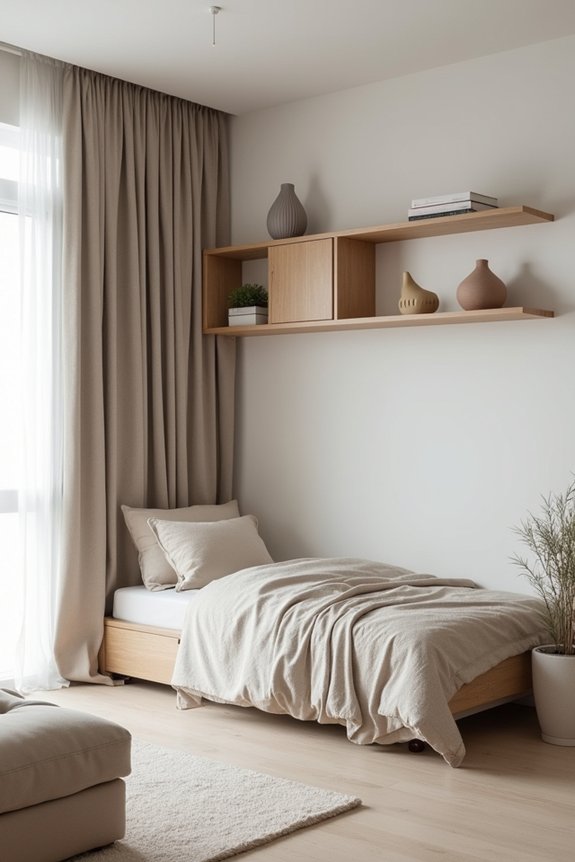
Once you’ve settled on a galley-style flow, your next step is identifying the fixed points in your studio—those permanent features you can’t move, like windows, doors, and built-in closets.
These anchors become your layout’s foundation. Start by mapping where natural light enters and position your bed or seating to take advantage of it.
Place your desk near windows for brightness and inspiration. Use corners strategically for storage or a cozy reading nook.
Frequently Asked Questions
What Furniture Pieces Are Essential for Maximizing Storage in Small Studio Apartments?
You’ll maximize storage by choosing a bed with built-in drawers, installing floating shelves, using a storage ottoman, adding wall-mounted cabinets, and selecting a desk with shelving. You’re creating functional spaces efficiently.
How Can Lighting Design Improve the Perception of Space in a Studio?
You’ll brighten your studio by layering lights—picture soft overhead fixtures combined with wall sconces and task lighting. This strategic approach eliminates shadows, making your compact space feel airier and more expansive than it actually is.
What Color Schemes and Materials Best Suit Compact Living Environments?
You’ll maximize your compact space by choosing light, neutral colors like whites and soft grays that reflect light and create airiness. Incorporate reflective materials, glass, and sleek metals to amplify openness and minimize visual clutter effectively.
Which Multipurpose Furniture Items Provide the Most Functionality for Studios?
You’ll maximize your studio’s functionality with murphy beds, storage ottomans, nesting tables, and sofa beds. These pieces transform your space by serving multiple purposes simultaneously, eliminating the need for separate furniture and creating adaptable living areas.
How Do Mirrors and Reflective Surfaces Strategically Enhance Small Apartment Layouts?
You’ll transform your cramped studio into an illusion of spaciousness when you strategically place mirrors opposite windows. They’ll bounce natural light throughout your room, amplifying brightness and creating depth that tricks your eye into perceiving expansiveness.