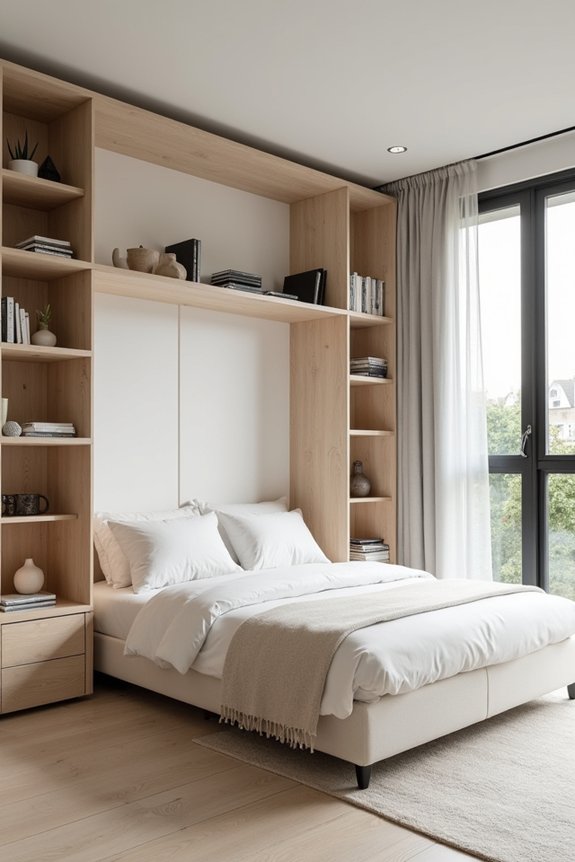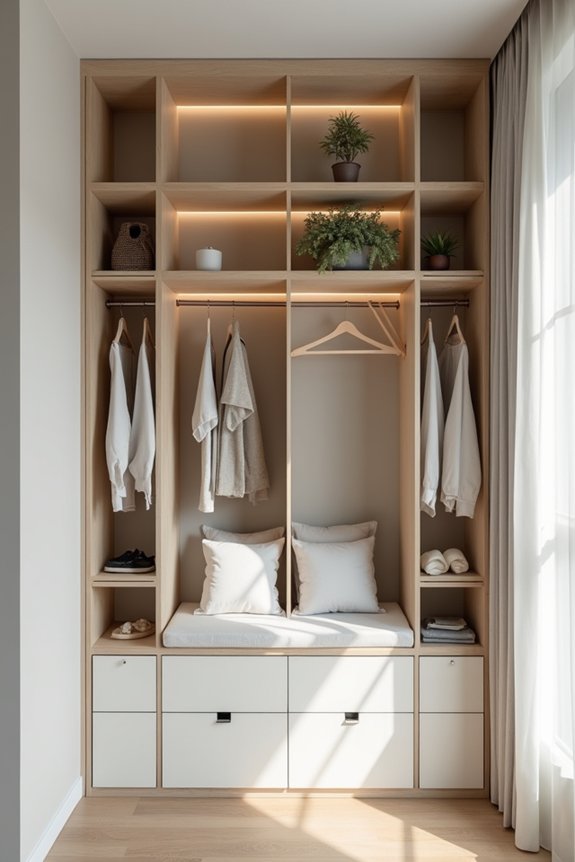
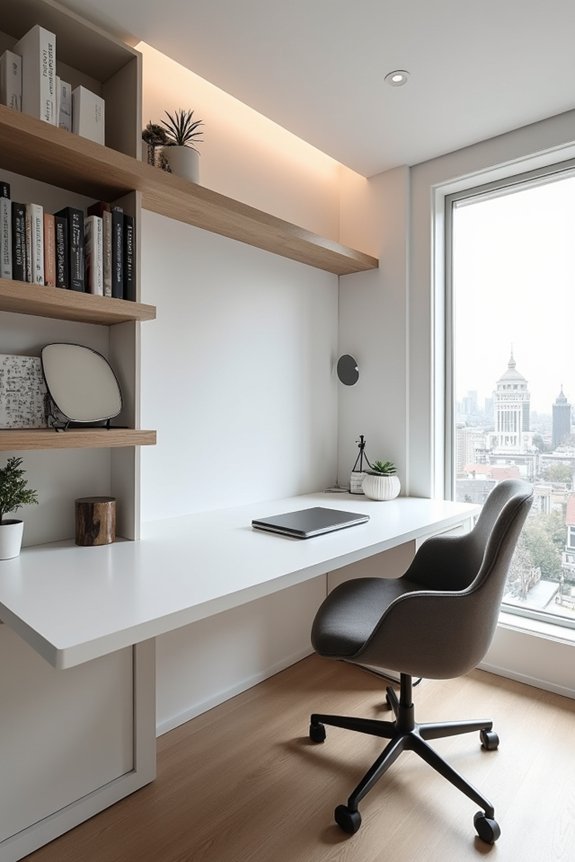
You can transform your small office into a productivity powerhouse by creating a dedicated workspace away from distractions. Invest in multifunctional furniture with built-in storage, and maximize your vertical space with shelves and wall-mounted cabinets. Position your desk strategically to face away from doorways, keeping your back against a wall for privacy. Add adjustable lighting near windows to reduce eye strain, and remove clutter to sharpen your focus. These thoughtful adjustments create an environment where you’ll accomplish more in less space, and there’s even more guidance ahead to refine your setup.
Design Highlights
- Define a dedicated workspace away from distractions to establish clear boundaries and enhance focus.
- Invest in multifunctional furniture with built-in storage to maximize space and minimize clutter.
- Install vertical storage solutions like shelves and pegboards to keep floors clear and organized.
- Arrange your desk facing away from doorways with your back against a wall for privacy.
- Position your desk near natural light and use adjustable lamps to reduce eye strain and boost concentration.
Define Your Small Office Space and Claim a Dedicated Zone
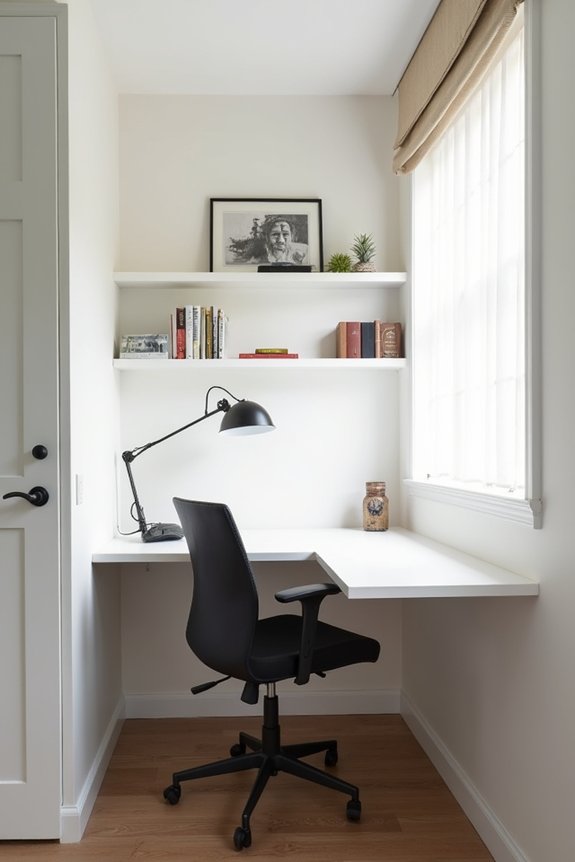
Before you can organize your small office, you’ll need to identify exactly where you’re going to work and set clear boundaries around that space.
Whether it’s a corner of your bedroom, a nook in your living room, or a small dedicated room, claiming your zone sends a powerful message to yourself and others: this is where work happens.
Define this area with intentional choices—position your desk facing away from distractions, use a room divider if needed, and keep personal items minimal.
When you establish clear physical boundaries, you’re creating a mental shift that helps you focus better and be more productive during work hours.
Invest in Multifunctional Furniture That Pulls Double Duty
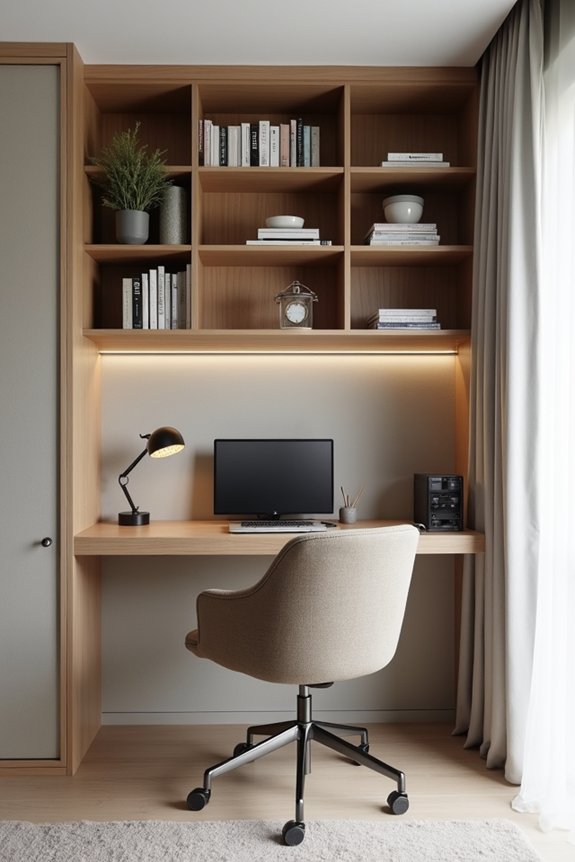
Once you’ve carved out your dedicated workspace, it’s time to fill it smartly—and that means choosing furniture that works as hard as you do.
You’ll maximize your square footage by selecting pieces that serve multiple purposes, transforming your small office into an efficient powerhouse.
Consider these smart furniture choices:
- Desks with built-in storage compartments
- Shelving units that double as room dividers
- Ottoman seating with hidden storage inside
- Wall-mounted fold-down tables for flexible layouts
These strategic investments eliminate clutter while providing everything you need.
You’re creating a workspace that’s both functional and inspiring, proving that small spaces can deliver big productivity results when you’re intentional about your choices.
Choose Vertical Storage to Reclaim Floor Space
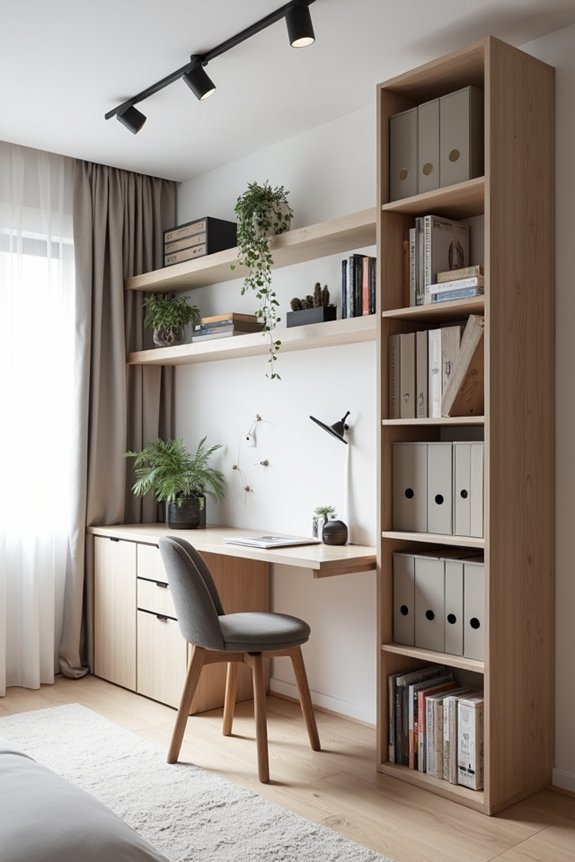
The walls in your small office are real estate you’ve probably overlooked—and they’re ready to work for you.
Installing shelves, wall-mounted cabinets, and pegboards transforms empty vertical space into functional storage. This approach keeps your floor clear, making your office feel more spacious and less cluttered. You’ll find that organizing supplies upward rather than outward dramatically improves your workflow.
Floating shelves work beautifully above your desk for books and decorative items, while wall-mounted organizers store pens, papers, and essentials within arm’s reach. Your small space’ll feel intentional and efficient when you maximize every inch available.
Arrange Your Layout to Block Out Distractions
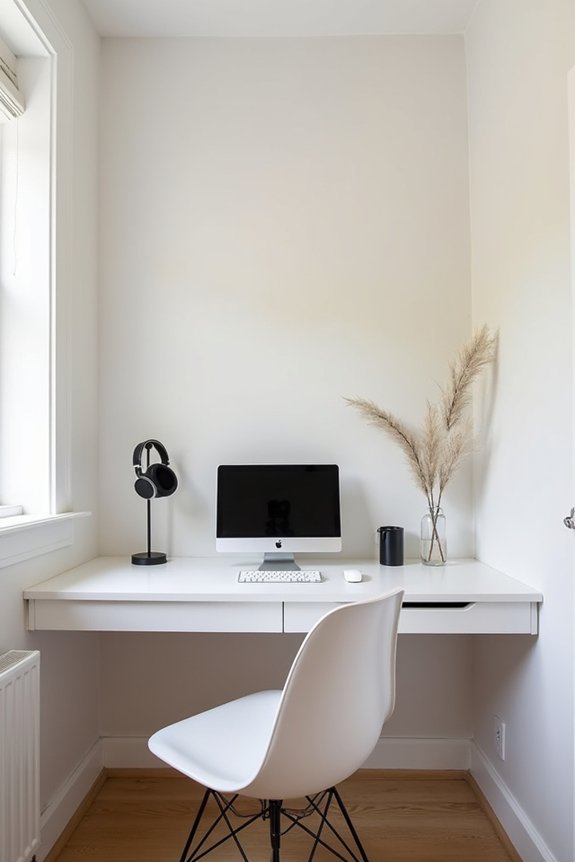
While vertical storage keeps your space tidy and organized, how you arrange your furniture matters just as much—especially when you’re working in a small office where distractions can easily creep in.
Position your desk strategically to minimize interruptions and create a focused work zone. Consider these layout tips:
- Face your desk away from doorways and high-traffic areas
- Use bookshelves or filing cabinets as natural barriers between you and distractions
- Keep your back to a wall for added privacy and concentration
- Angle your desk to create a defined workspace that signals you’re in focus mode
You’ll find that thoughtful arrangement transforms your productivity.
Optimize Your Desk Setup for Ergonomics and Efficiency
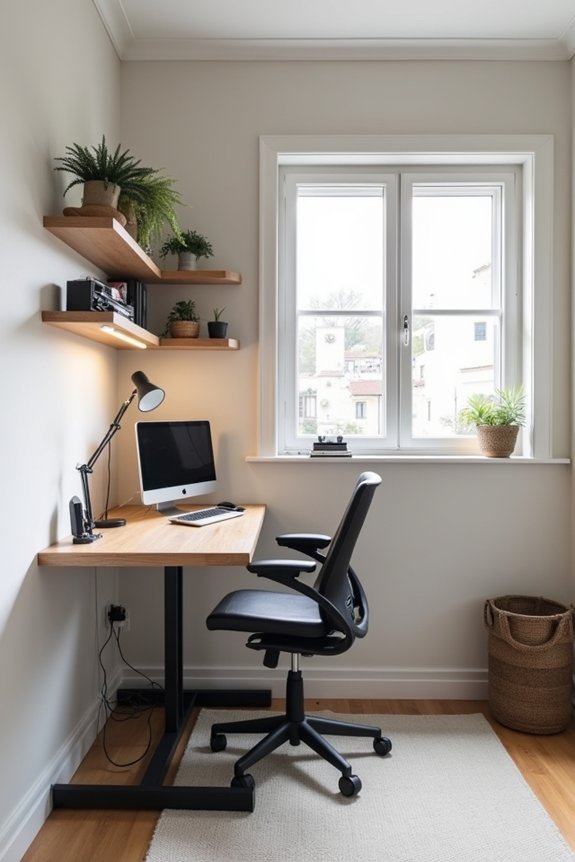
Your desk setup deserves just as much attention as your office layout, because spending hours in an uncomfortable position can drain your energy and hurt your productivity.
Position your monitor at eye level, about an arm’s length away, so you’re not straining your neck or eyes. Keep your keyboard and mouse close together at elbow height, allowing your arms to rest comfortably.
Your chair should support your lower back and let your feet flat on the floor. Add a cushion or footrest if needed.
These small adjustments create a workspace that feels good, keeps you focused, and helps you work longer without fatigue or pain.
Manage Lighting and Visual Clutter to Stay Focused
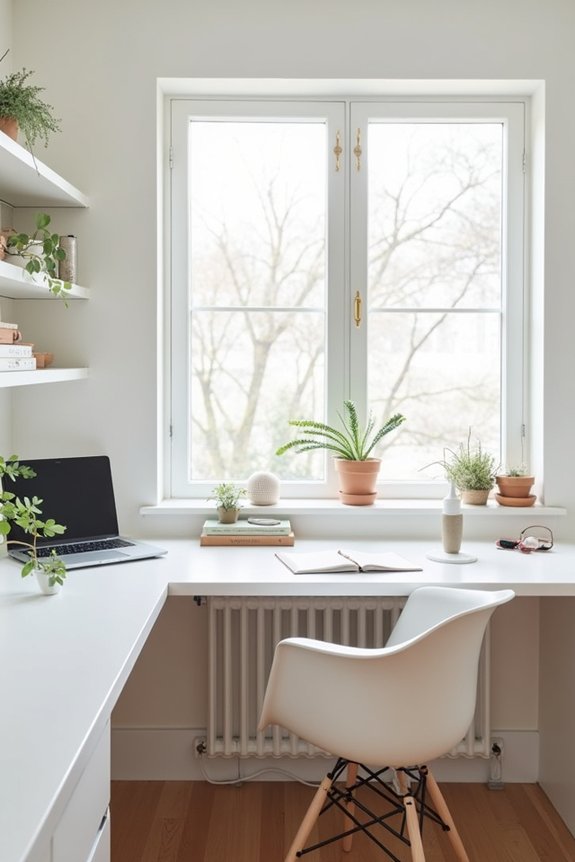
Once you’ve got your desk and chair dialed in for comfort, it’s time to look around and notice what else is affecting how well you can focus.
Lighting and clutter greatly impact your concentration. Here’s how you can create a clearer, brighter workspace:
- Use natural light whenever possible, positioning your desk near a window to reduce eye strain
- Add a desk lamp with warm, adjustable lighting to prevent shadows and fatigue
- Minimize visual distractions by removing unnecessary items from your immediate work area
- Organize cables and supplies in containers so your space feels calm and intentional
You’ll notice improved focus when your environment feels purposeful and well-lit.
Build Organization Systems That Keep You On Track
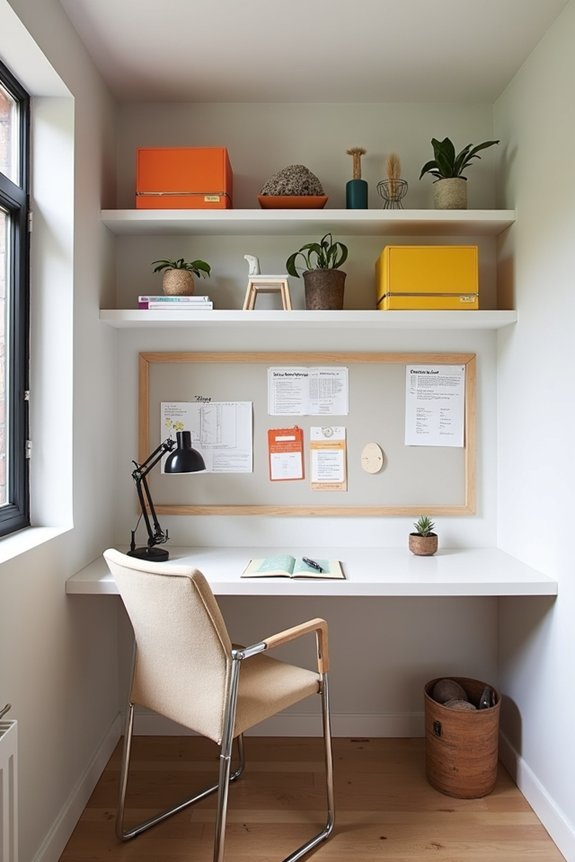
Because a tidy desk isn’t enough on its own, you’ll need solid systems that help you stay organized day after day.
Start by creating labeled folders, both digital and physical, for different projects and tasks. Use a simple filing system you can actually maintain, not one that’s complicated or frustrating.
Consider a task list or planner where you capture everything swirling around in your head. Color-coding supplies, designating specific spots for frequently used items, and scheduling regular five-minute tidying sessions all reinforce your organizational efforts.
These consistent habits transform your small space into a reliable productivity partner.
Frequently Asked Questions
How Can I Soundproof My Small Office Space on a Budget?
You’ll transform your space into a quiet sanctuary without breaking the bank—silence isn’t golden; it’s essential. Hang heavy curtains, add weatherstripping, use bookshelves strategically, and layer rugs to absorb sound effectively.
What Are the Best Plants for Improving Air Quality in Small Offices?
You’ll benefit from spider plants, pothos, and snake plants—they’re low-maintenance and effectively filter toxins. Peace lilies and rubber plants also work well. They’re affordable, improve air quality, and enhance your workspace’s aesthetics simultaneously.
How Do I Set Boundaries With Family Members During Work Hours?
You’ll need to become a fortress of focus! Clearly communicate your work schedule, close your door, use “do not disturb” signals, and establish consequences. You’re not rejecting them—you’re protecting your productivity and theirs.
Which Color Schemes Boost Productivity and Make Spaces Feel Larger?
You’ll boost productivity with cool blues and greens that calm your mind. Whites and light neutrals expand your space visually. You can add warm accents for energy without overwhelming your small office.
How Can I Create a Professional Video Call Background in Limited Space?
You’ll hang a neutral backdrop behind your desk or use a virtual background. Position your camera at eye level, guarantee good lighting in front of you, and declutter what’s visible. You’ve got a polished setup instantly.