You can transform your small garden into a thriving food source by growing vertically on trellises and walls, freeing up precious ground space for other plants. Next, match your crops to your garden’s sunlight and size—leafy greens love partial shade while tomatoes need full sun. Finally, layer your plantings across seasons, starting with cool-season crops in spring, switching to warm-season vegetables in summer, and replanting greens in fall. This strategic approach keeps your garden productive year-round. There’s so much more you’ll discover about each technique.
Design Highlights
- Use vertical structures like trellises and wall-mounted planters to grow vining vegetables and maximize limited ground space.
- Hang baskets overhead for herbs and flowers to efficiently utilize vertical space above garden beds.
- Choose compact plant varieties and herbs suited for small spaces to increase productivity per square foot.
- Observe sunlight patterns to place sun-loving crops like tomatoes in full sun and shade-tolerant greens strategically.
- Layer seasonal crops by planting cool-season greens in spring and fall, warm-season vegetables in summer for continuous harvests.
Grow Vertically to Reclaim Floor Space
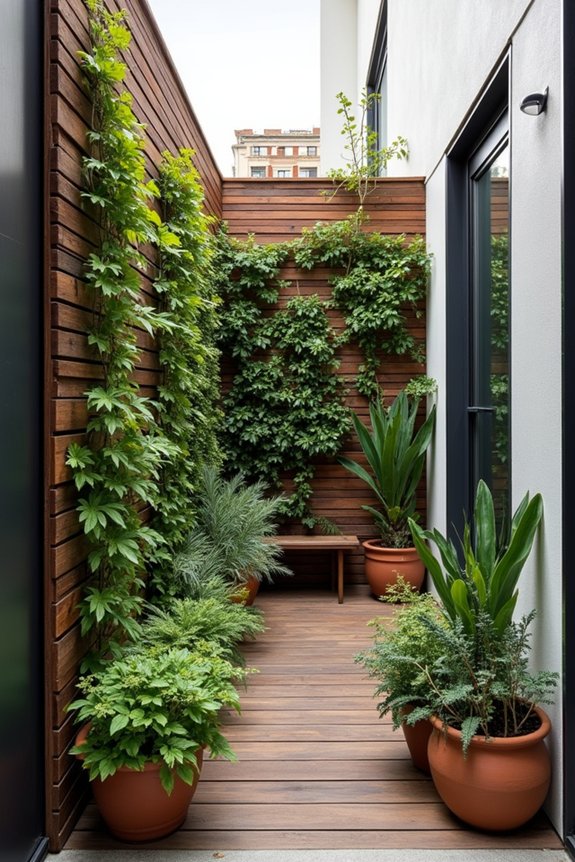
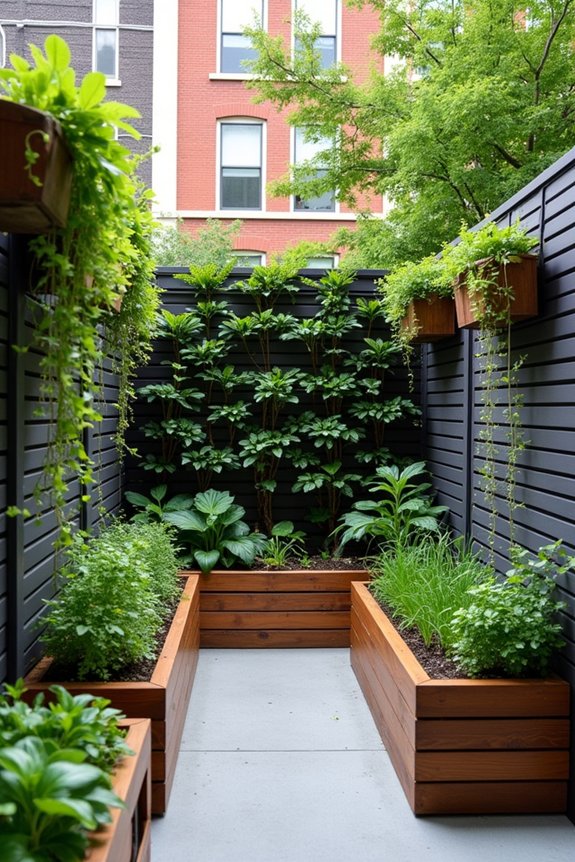
Growing vertically is one of the smartest moves you can make in a small garden, and it’ll transform how you think about your growing space. By training plants upward along trellises, walls, and stakes, you’re freeing up precious ground area for more plantings.
Vining vegetables like beans, cucumbers, and tomatoes thrive on vertical structures, while hanging baskets let you cultivate herbs and flowers overhead. Wall-mounted planters maximize every inch of your garden.
This approach doesn’t just save space—it improves air circulation around your plants, reduces disease risk, and creates a lush, layered garden that feels abundant and beautifully organized.
Choose What to Grow Based on Your Space and Sunlight
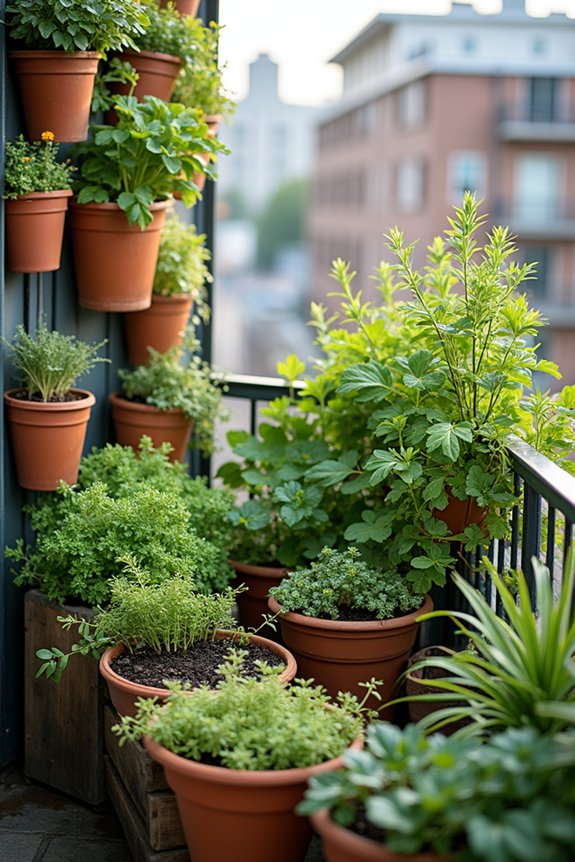
Before you fill your garden with plants, it’s worth taking time to understand what your space can actually offer them.
Observe how sunlight moves across your area throughout the day—some spots get full sun, while others stay shady. This matters because plants have different needs. Leafy greens and herbs thrive in partial shade, whereas tomatoes and peppers crave full sunlight.
Consider your space’s size too. Compact areas work wonderfully for bush varieties, herbs, and strawberries. Knowing these details helps you choose plants that’ll genuinely flourish, setting you up for gardening success and satisfaction.
Layer Your Plants for Multi-Season Harvests
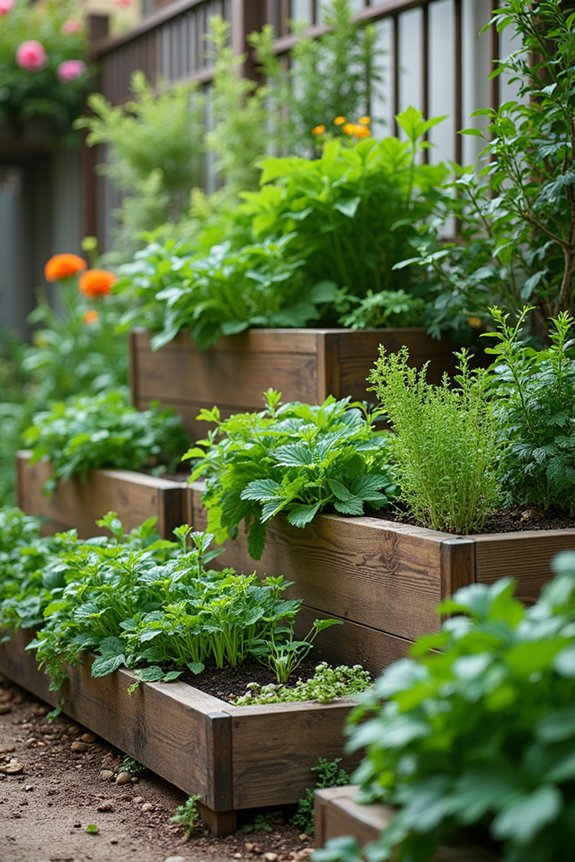
Once you’ve figured out what grows best in your space, you can really maximize your garden’s potential by planting at different times throughout the year.
Start with cool-season crops like lettuce and spinach in spring, then shift to warm-season vegetables like tomatoes and peppers in summer.
As fall approaches, plant another round of cool-season greens that’ll thrive in cooler temperatures.
This layering strategy guarantees you’re harvesting something fresh constantly, making the most of every inch.
You’ll enjoy continuous abundance and keep your small garden productive across all seasons.
Frequently Asked Questions
What Soil Type Works Best for Small Container Gardens?
You’ll want to use a well-draining potting mix that’s specifically formulated for containers. It’ll retain moisture while preventing waterlogging. You can mix peat moss, coconut coir, and perlite to create your ideal blend.
How Often Should I Water Plants in Limited Spaces?
You’ll water your container plants a million times more often than in-ground gardens. Check soil daily; it’ll dry out faster in limited spaces. Water when the top inch feels dry, typically every one to three days.
What’s the Minimum Sunlight Requirement for Vegetable Gardening?
You’ll need at least six hours of direct sunlight daily for most vegetables. If you’re working with limited space, you can position containers on south-facing surfaces to maximize sun exposure and boost your vegetable yields.
How Do I Prevent Pests in a Small Garden?
You’ll prevent pests by installing row covers, introducing beneficial insects like ladybugs, spacing plants properly for airflow, removing affected leaves immediately, and spraying neem oil regularly. You can also companion plant marigolds and herbs.
Which Tools Are Essential for Maintaining a Compact Garden?
You’ll need a hand trowel, pruning shears, cultivator, and watering can for your compact garden. Add a small rake and kneeling pad to complete your essential toolkit. These tools won’t consume much storage space.