You can transform your small backyard into a stunning outdoor oasis by building upward with trellises and vertical gardens, choosing furniture that does double duty, and layering your lighting for warmth and function. Create distinct zones using pathways and rugs to guide the eye naturally throughout your space. Add a focal point like a water feature, use flexible containers for planting, and strategically place mirrors to reflect light and create depth. These seven techniques work together beautifully to make your compact yard feel spacious and inviting, and exploring each approach reveals even more possibilities for your unique space.
Design Highlights
- Install vertical gardens and trellises to grow plants upward, maximizing limited ground space while enhancing visual interest.
- Choose multifunctional furniture like storage ottomans and fold-up tables to serve multiple purposes without overwhelming compact areas.
- Layer strategic lighting with overhead lights, task lighting, and string lights for functionality and ambiance throughout evenings.
- Create distinct zones using garden beds, pathways, and rugs to organize seating, dining, and play areas effectively.
- Use focal points, containers, and weather-resistant mirrors to create depth and the illusion of expanded outdoor space.
Go Vertical: Garden Walls and Trellises for Small Backyards
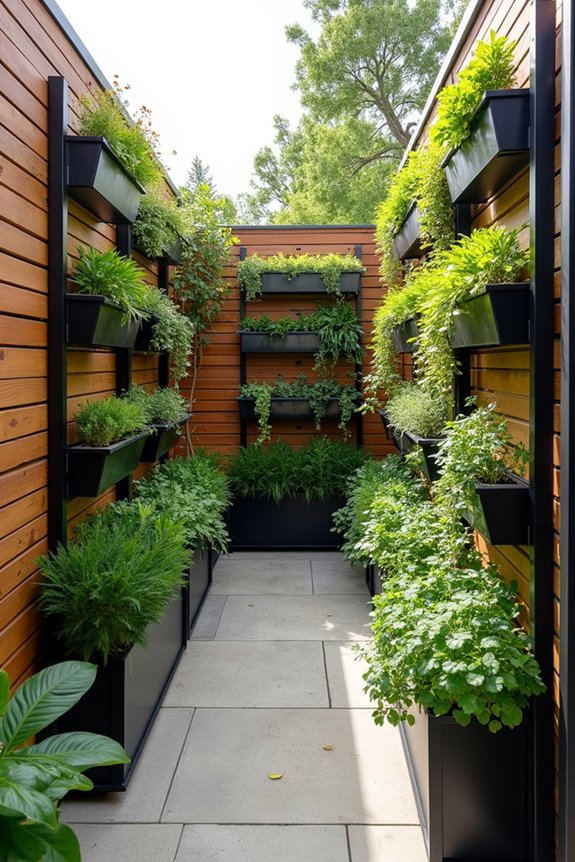
When you’re working with limited ground space, growing upward is your secret to transforming a cramped backyard into a lush, thriving garden.
Vertical gardening maximizes every inch by using walls and trellises, letting you grow more plants without eating up valuable floor space. You can train climbing vegetables like beans and cucumbers up sturdy trellises, or mount shallow planters directly on sunny walls for herbs and flowers.
This approach creates visual interest and depth, making your backyard feel larger and more inviting. Plus, vertical gardens are easier to maintain, water, and harvest—giving you more time enjoying your beautiful outdoor sanctuary.
Pick Furniture That Works Harder in Tight Spaces
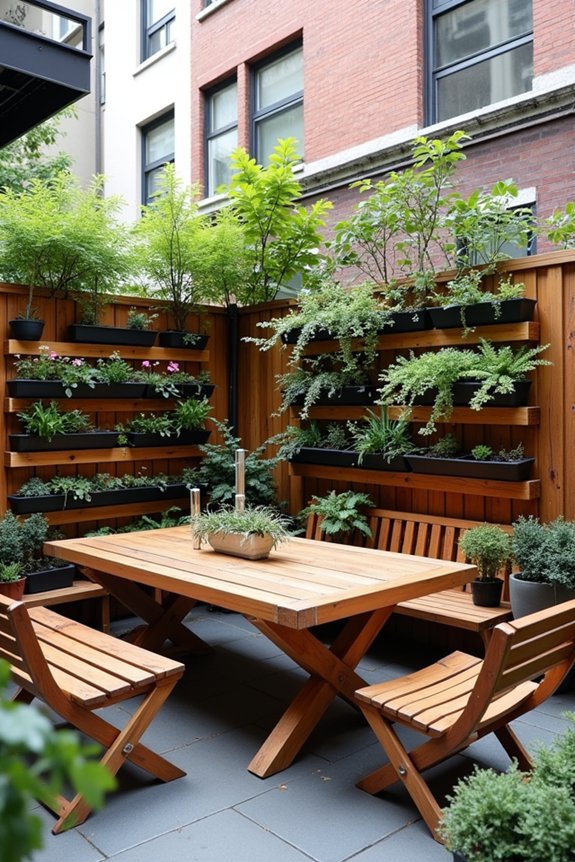
While you’re building your vertical garden above, you’ll also want to think about what’s happening on ground level—because the right furniture can make all the difference in a small backyard.
Choose pieces that serve double duty, like ottomans with hidden storage or benches that double as seating and plant stands. Fold-up chairs and tables let you reconfigure your space whenever you need it.
Look for lightweight materials that won’t overwhelm your area visually.
Multipurpose furniture transforms your compact outdoor space into something functional and inviting, giving you more room to relax and enjoy your backyard oasis. Consider benches with padded cushions for comfortable seating that also provides convenient storage for outdoor accessories.
Layer Your Backyard Lighting for Ambiance and Function
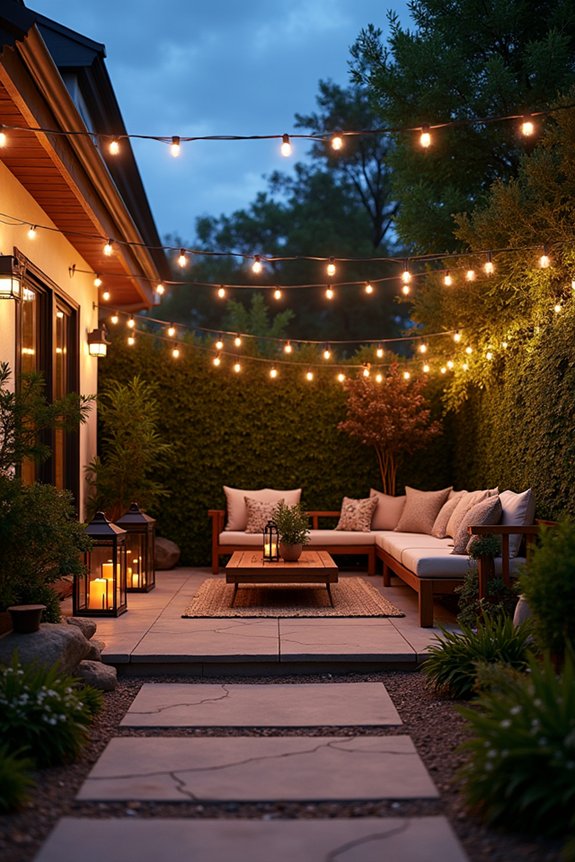
How’d you like to transform your backyard into a space that’s just as inviting at sunset as it’s during the day? You can do this by layering your lighting strategically.
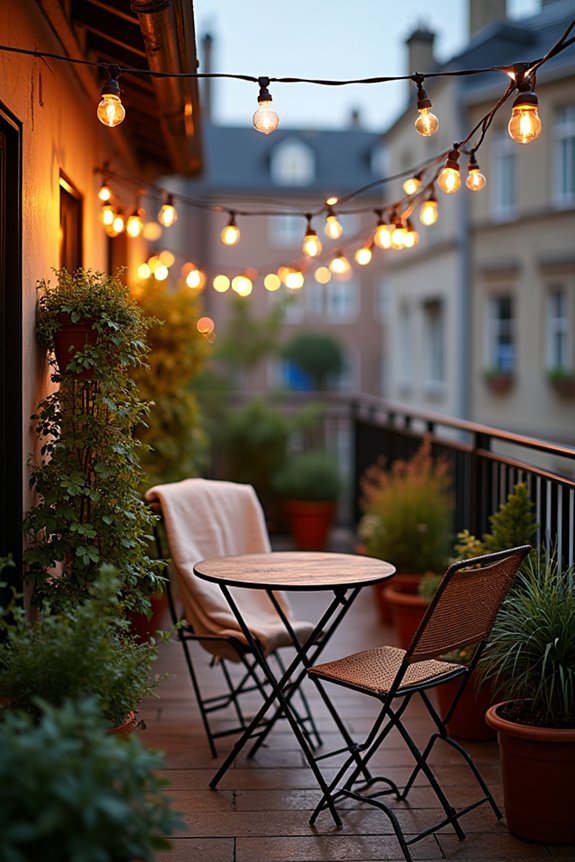
Start with overhead lights for general brightness, then add task lighting near seating areas and pathways for safety. String lights overhead create warmth and charm, while accent lights highlight plants or architectural features.
Solar-powered options save energy and money. Dimmers let you adjust the mood for different occasions. This thoughtful approach makes your small backyard feel larger, safer, and more welcoming for evening gatherings.
Create Defined Zones to Expand Your Layout Visually
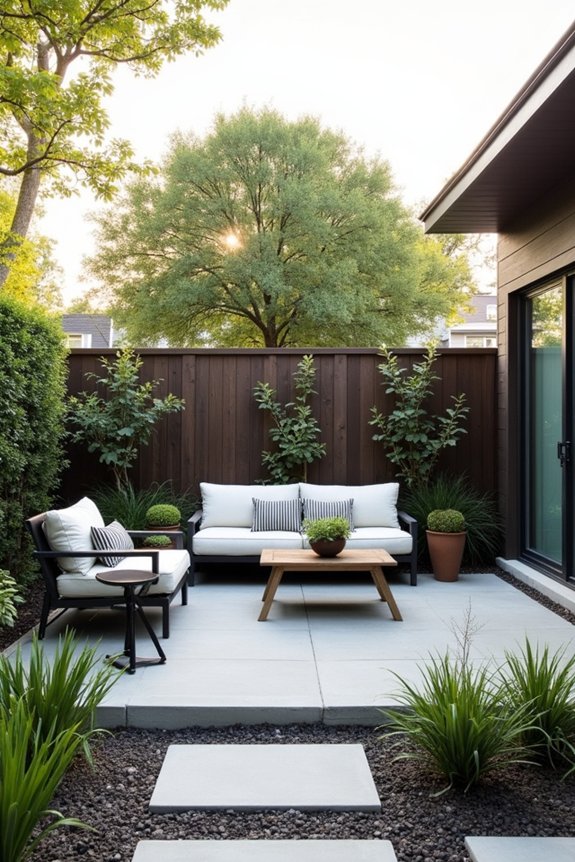
By dividing your backyard into separate areas, you’ll actually make your entire space feel bigger and more thoughtfully designed.
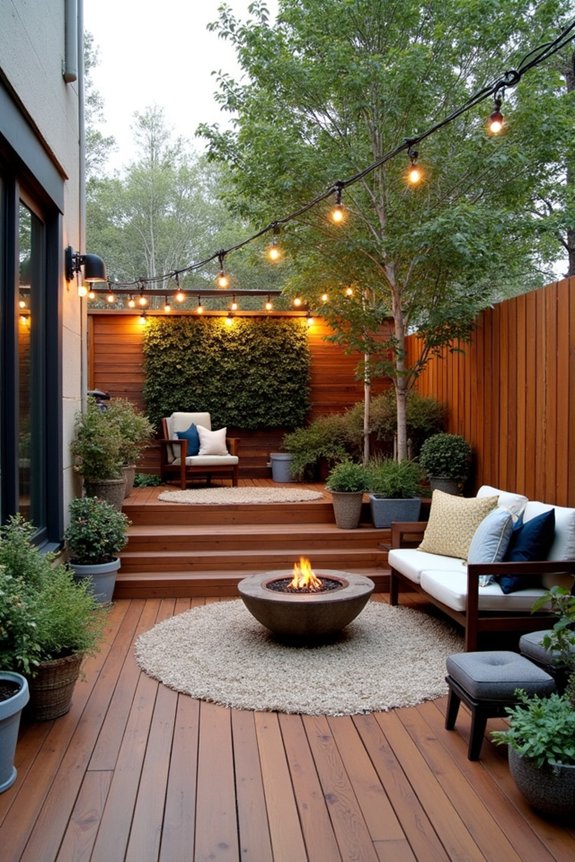
Try creating distinct zones using garden beds, pathways, or outdoor rugs—each area serves a specific purpose. You might designate a cozy seating nook, a dining space, and a play area.
Vertical elements like trellises or planters help define boundaries without blocking sightlines. This strategic organization guides your eye throughout the space, creating depth and dimension. Consider incorporating entryway decor ideas to create welcoming transitions between your outdoor zones.
When visitors move from one zone to another, your yard feels expansive and intentional. You’re transforming limited square footage into multiple functional, beautiful spaces that serve your family’s needs perfectly.
Add a Water Feature or Focal Point for Impact
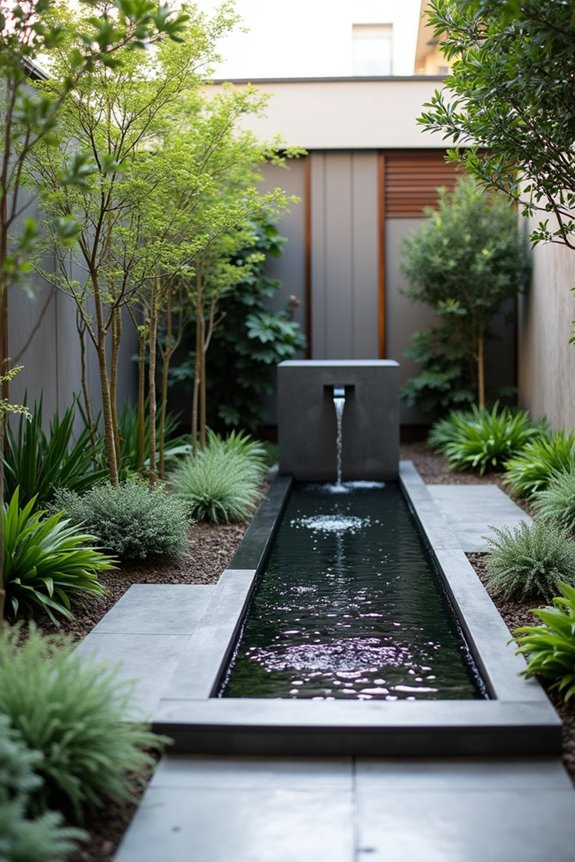
A focal point acts like a magnet for your yard, drawing everyone’s eyes to something beautiful and interesting. You can create this with a water feature—a small fountain, birdbath, or pond adds movement, sound, and life to your space.
If water isn’t feasible, consider a striking sculpture, colorful garden bed, or seating area instead. Your focal point should sit naturally within your layout, perhaps where two zones meet. It doesn’t need to be expensive; a simple painted bench or artistic planter works wonderfully.
This intentional placement makes your backyard feel purposeful, complete, and truly inviting for relaxation and enjoyment.
Use Containers and Raised Beds for Flexible Planting
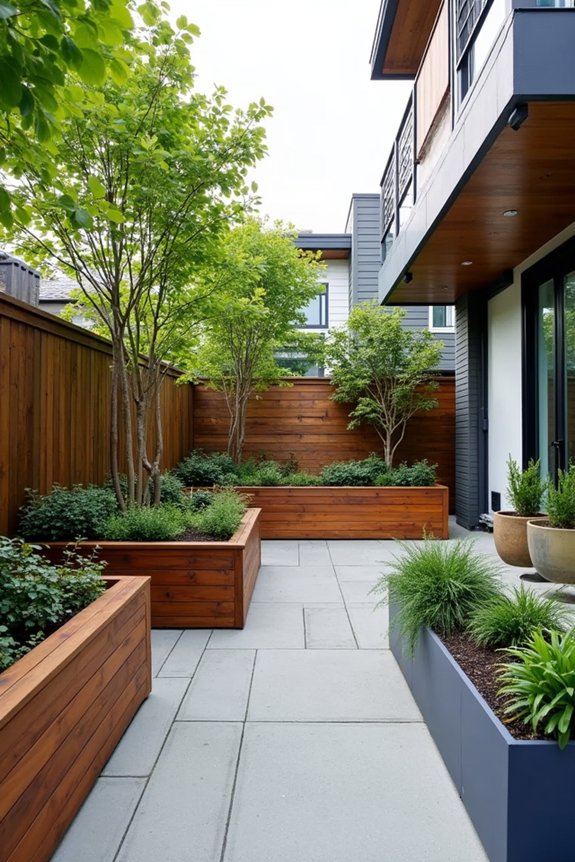
When you’re working with limited space or challenging soil, containers and raised beds become your secret weapons for garden success.
You can position them anywhere—on patios, decks, or small corners—giving you complete control over your garden’s layout. Raised beds offer excellent drainage and warmer soil for growing vegetables, herbs, and flowers.
Containers provide flexibility; you can rearrange them seasonally or move them to chase sunlight. Both options require less weeding and make gardening more accessible.
You’ll feel empowered watching your plants thrive in customized growing environments, transforming even the tiniest backyard into a flourishing garden space.
Use Mirrors to Expand Your Space Visually
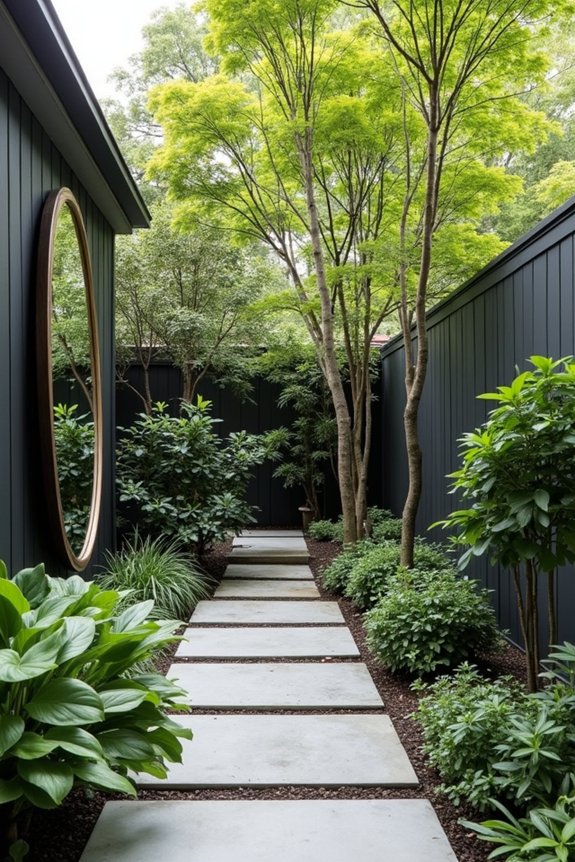
One of the smartest tricks for making your backyard feel bigger is strategically placing mirrors around your outdoor area. Mirrors reflect light and landscape views, instantly creating the illusion of depth and openness.
You’ll want to position them where they catch sunlight and reflect your garden’s best features. Weather-resistant mirrors work best for durability.
Try placing one near a fence to bounce light into shadowy corners, or lean one against a wall behind plants.
This simple technique transforms cramped spaces into seemingly expansive retreats, giving you that spacious feeling you’ve always wanted without any actual construction.
Frequently Asked Questions
What’s the Best Budget-Friendly Way to Start a Small Backyard Makeover Project?
You’ll maximize your budget by starting with plants and mulch, then adding DIY seating from pallets. You can paint existing structures, install string lights, and create defined zones with affordable materials you’ve already got.
How Can I Maintain Privacy in a Small Outdoor Space From Neighbors?
You’ll build a fortress of greenery by planting dense shrubs and tall bamboo along your borders. Install lattice panels, strategic trellises, and climbing vines. Consider affordable fencing options or privacy screens that shield your space effectively.
What Are the Lowest-Maintenance Plants Suitable for Container Gardening?
You’ll find that succulents, ornamental grasses, and evergreens thrive in containers with minimal care. They’re drought-tolerant, don’t require frequent pruning, and you can easily move them around your small backyard space.
How Do I Deal With Poor Drainage Problems in Compact Backyards?
You’ll improve drainage by installing raised beds with quality soil, adding drainage holes to containers, and incorporating perlite or gravel into planting areas. Consider French drains or redirect water toward designated drainage zones.
Which Small Backyard Design Styles Work Best for Different Climates?
You’ll hit the ground running by choosing Mediterranean styles for hot, dry climates with drought-resistant plants. Select tropical designs for humid regions, and opt for minimalist Japanese aesthetics for temperate zones. Your climate dictates success.