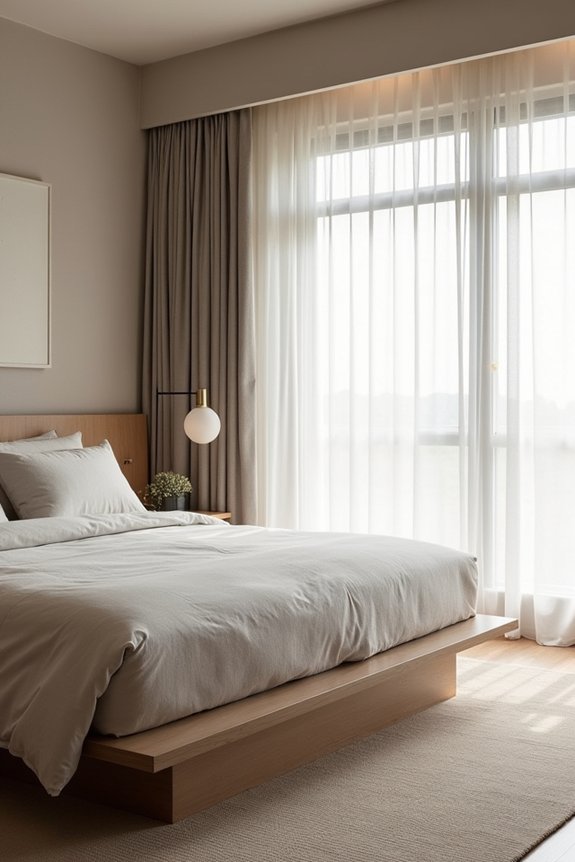
You can create a serene master bedroom by combining soft neutrals like warm whites and gentle beiges with clean-lined furniture in natural wood finishes. Layer in materials like linen, cotton, and stone that grow more beautiful with time. Position your bed as the focal point with breathing room around it, keeping surfaces clear and intentional. Use warm, soft lighting through fabric-shaded lamps, and add meaningful accessories sparingly. Each thoughtful choice you make transforms your space into a peaceful sanctuary where stress simply dissolves away, and there’s much more to discover about perfecting each element.
Design Highlights
- Layer soft neutrals like warm whites, gentle beiges, and muted taupes to create a calming, serene sanctuary.
- Select low-profile wood furniture with clean lines and natural finishes that develop character and patina over time.
- Position the bed as a focal point with ample breathing room and minimal surrounding furniture for tranquility.
- Use natural materials like linen, cotton, and stone that improve with age and tell your bedroom’s story.
- Incorporate soft, warm lighting and meaningful minimal accessories that serve a purpose without overcrowding surfaces.
Choose Your Japandi Color Palette: Neutrals That Calm
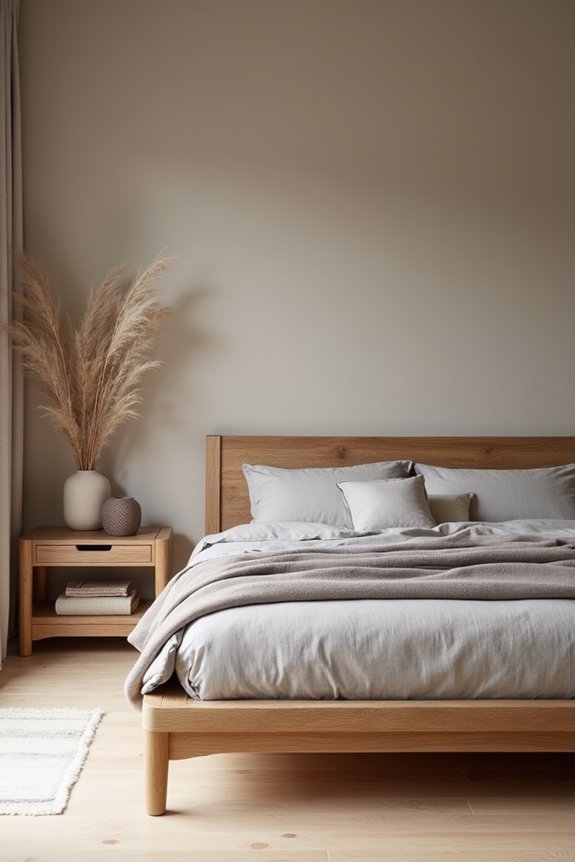
When you’re creating a Japandi bedroom, the colors you choose become the foundation for everything else in the room. You’ll want to embrace soft, neutral tones that naturally calm your mind and body.
Think warm whites, gentle beiges, soft grays, and muted taupes. These colors reflect nature’s peaceful palette, which is central to both Japanese and Scandinavian design. You’re creating a serene sanctuary where stress melts away. These same winter kitchen decor principles of neutral sophistication can be extended throughout your home for a cohesive, calming aesthetic.
Select Simple Furniture Built to Last
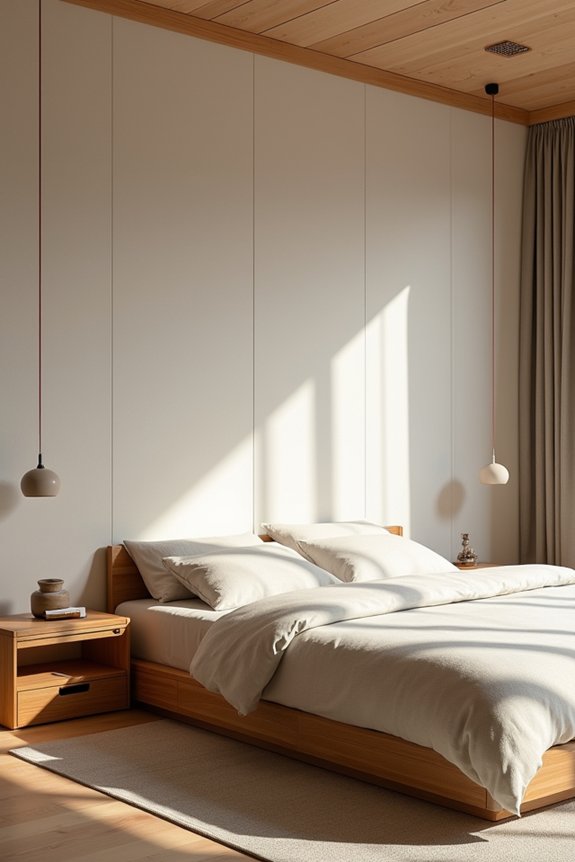
Since you’ve established your calm color palette, it’s time to choose furniture that’ll anchor your Japandi bedroom with both beauty and purpose.
Look for pieces that combine clean lines with natural warmth, creating a space that feels both modern and inviting.
- Wood bed frames with simple designs ground your room authentically.
- Low-profile nightstands keep the space uncluttered and accessible.
- Quality dressers in natural finishes offer lasting durability.
- Minimal benches at the foot provide functional elegance.
Each piece you select should serve a purpose while standing the test of time. Investing in furniture with high-density cushioning and ergonomic support ensures your bedroom remains comfortable for years to come.
This thoughtful approach transforms your bedroom into a peaceful sanctuary where quality truly matters.
Mix Natural Materials That Age Beautifully
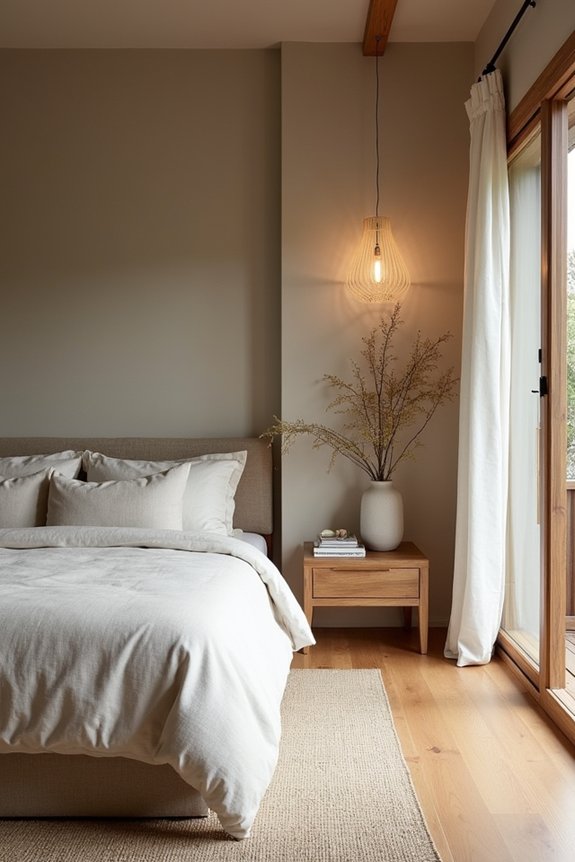
As your Japandi bedroom takes shape, the materials you choose become the foundation of its timeless appeal.
Wood, stone, and natural fibers like linen and cotton aren’t just beautiful—they improve with age. A wooden bed frame develops character through years of use, while linen bedding becomes softer and more inviting.
Stone accents gain depth and patina over time. These materials tell your bedroom’s story, creating genuine warmth that synthetic alternatives can’t match.
Arrange Your Space to Breathe
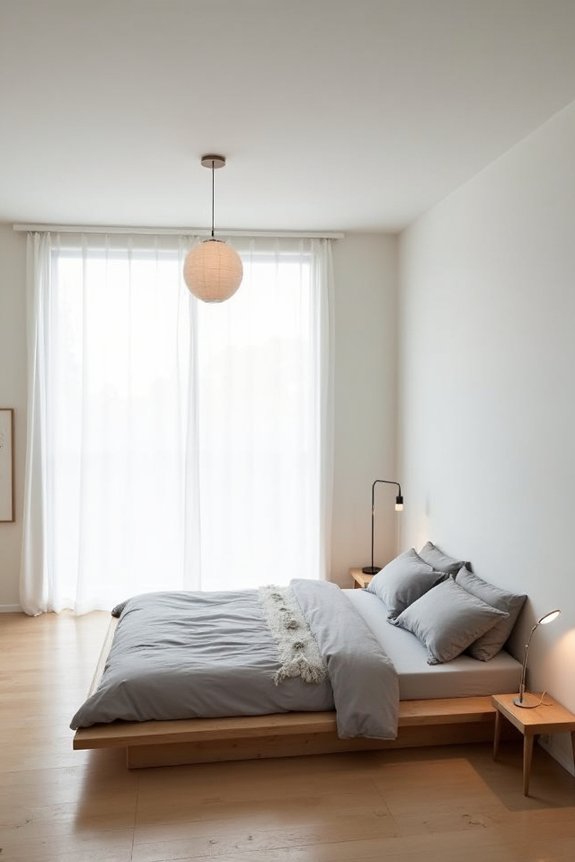
One of the most transformative principles of Japandi design is the power of negative space—you’ll find that less truly becomes more when you’re creating a bedroom that feels calm and open.
Strategic spacing transforms your room into a sanctuary:
- Position your bed as a focal point, leaving breathing room around it
- Avoid cluttering nightstands with unnecessary items; keep only essentials
- Leave wall space empty to let your eyes rest peacefully
- Space furniture deliberately, creating natural pathways through your room
You’re not just arranging pieces; you’re orchestrating harmony.
This intentional emptiness invites tranquility, allowing your mind to settle into genuine relaxation each evening.
Add Soft Lighting and Intentional Accessories
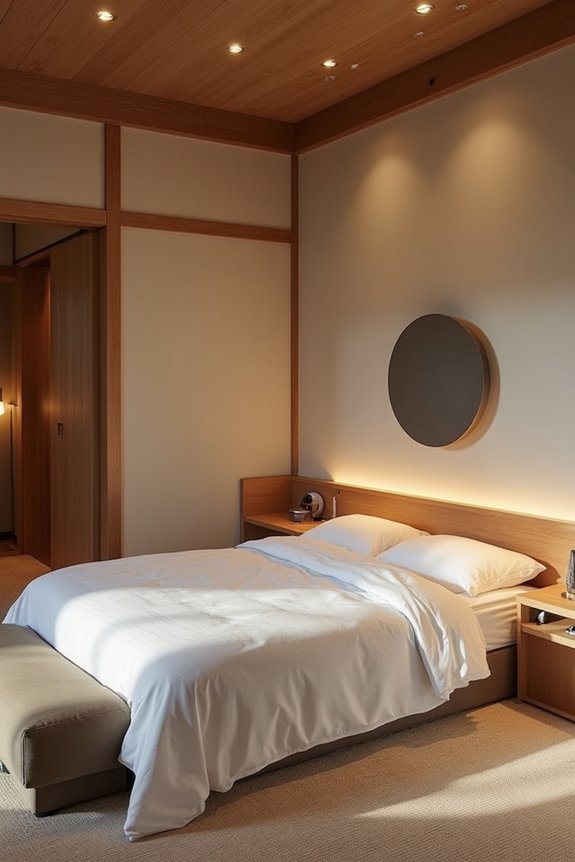
Now that you’ve created that peaceful, open feeling in your room, it’s time to fill it thoughtfully with lighting and accessories that enhance the calm you’ve built.
Choose soft, warm light sources like bedside lamps with fabric shades or gentle pendant lights that won’t startle your eyes.
Add a few meaningful pieces—perhaps a wooden tray, ceramic vase, or framed nature photo—that spark joy without cluttering surfaces.
Consider incorporating winter window decor elements that bring natural light and seasonal warmth into your bedroom retreat.
Each item you select should serve a purpose or bring you comfort. This intentional approach keeps your space serene while reflecting your personality beautifully.
Frequently Asked Questions
How Can I Transition My Current Bedroom to Japandi Style Without Complete Renovation?
You’ll paint your walls in calm, neutral tones like soft sand drifting across a beach. Replace heavy furniture with low-profile pieces, add natural wood elements, incorporate bamboo accents, and layer in simple linens and minimal décor.
What Is the Ideal Bedroom Size for Implementing Authentic Japandi Design Principles?
You’ll find that japandi design thrives in any bedroom size—it’s not about square footage but about how you maximize your space. You should prioritize quality furnishings, declutter ruthlessly, and embrace negative space to create your serene retreat.
How Do I Incorporate Japandi Style With Existing Family Heirlooms or Sentimental Items?
Studies show 72% of people struggle displaying heirlooms in modern spaces. You’ll curate sentimental items thoughtfully, displaying only meaningful pieces that complement clean lines. You’ll arrange them on floating shelves or dedicate a single display area, maintaining japandi’s minimalist aesthetic while honoring your family’s legacy.
What Budget Range Should I Expect for a Complete Japandi Bedroom Makeover?
You’ll spend $2,000–$5,000 for a complete makeover, depending on quality and existing furniture. You can start smaller by investing in key pieces like bedding, lighting, and flooring, then gradually add accessories that align with your budget.
Can Japandi Design Work in Bedrooms With Limited Natural Light or Small Windows?
You’re arranging soft paper lanterns just as afternoon shadows creep across your walls—and yes, you can absolutely embrace japandi design. You’ll maximize light with mirrors, pale woods, and shoji screens that beautifully diffuse whatever natural illumination you’ve got.