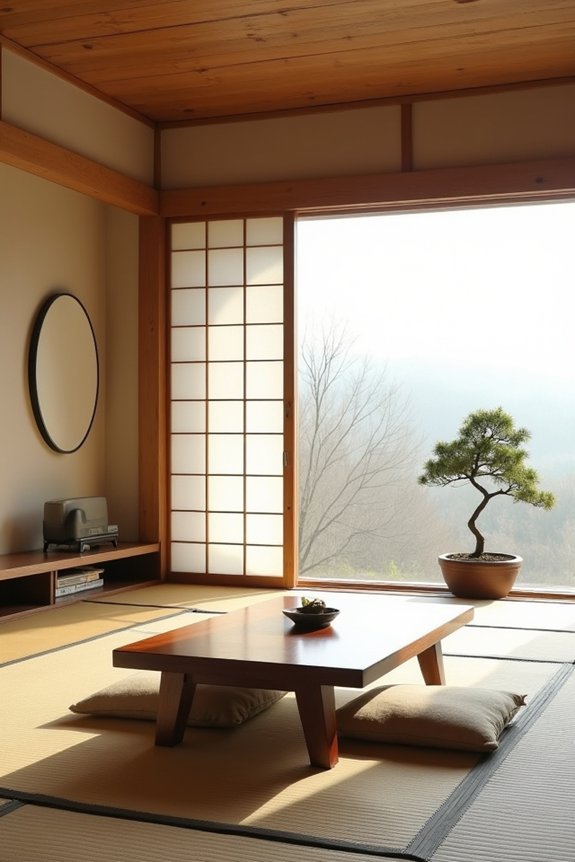
You can transform your living room into a serene sanctuary by embracing three key principles. First, apply minimalism by choosing only essential furniture and neutral colors like soft whites and warm grays. Second, incorporate natural materials such as wood, stone, and bamboo to create warmth and coziness. Third, balance empty space with one strong focal point—like a scroll painting or meditation corner—that draws your eye and calms your mind. These intentional choices work together to create a peaceful environment where you’ll naturally relax and reflect more deeply.
Design Highlights
- Embrace minimalism with essential furniture pieces and neutral color palettes to create peaceful, clutter-free living spaces.
- Incorporate natural materials like wood, stone, and bamboo paired with earthy tones to establish warm, soothing sanctuaries.
- Balance negative space intentionally with a strong focal point such as scroll paintings or sculptural plants for calm.
- Layer textured fabrics like linen and jute to enhance coziness while maintaining the tranquil aesthetic throughout.
- Prioritize purposeful decoration and functional design elements that invite relaxation, reflection, and meaningful contemplation daily.
Apply Minimalism to Your Zen Living Room
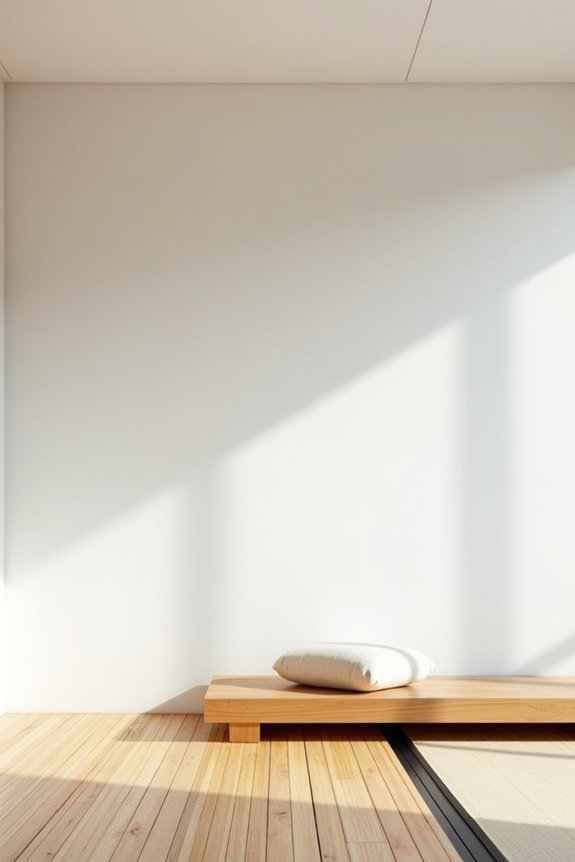
When you’re creating a truly peaceful space, minimalism becomes your greatest ally because it strips away the distractions that clutter your mind and home.
You’ll want to choose only essential furniture pieces, leaving plenty of open floor space that invites calm and movement.
Select a neutral color palette—soft whites, warm grays, and natural wood tones—that soothes your senses.
Keep decorative items intentional and meaningful; each object should serve a purpose or bring you genuine joy.
Consider bar stools with ergonomic design aspects that provide comfortable seating without overwhelming your minimalist aesthetic, ensuring any additional furniture maintains both form and function.
Incorporate Natural Materials and Earthy Color Palettes
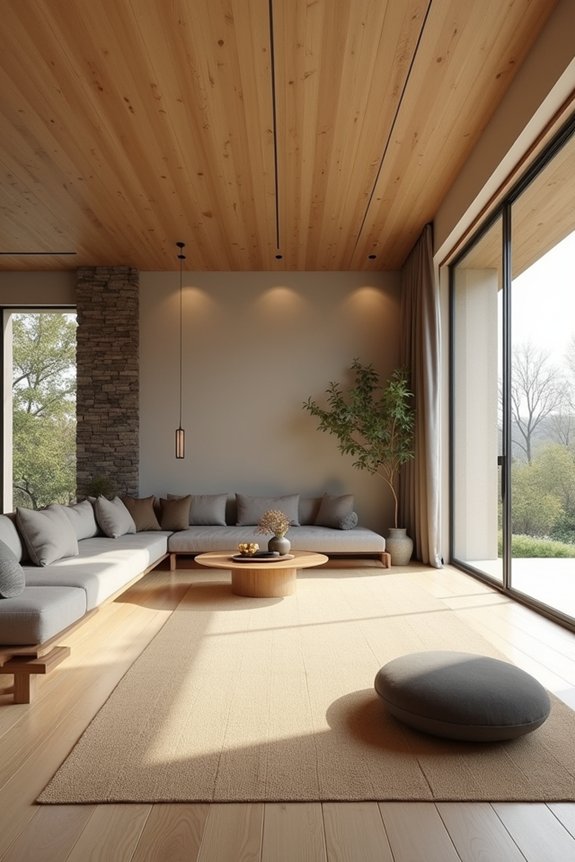
Since minimalism’s clean foundation is now in place, it’s time to layer in materials and colors that ground your space in nature’s calming energy.
You’ll want to focus on these essential elements:
- Natural materials like wood, stone, and bamboo that bring authentic warmth to your room.
- Earthy tones including warm beiges, soft browns, and gentle greens that soothe your mind.
- Textured fabrics such as linen and jute that invite touch and create coziness.
These choices work together beautifully, transforming your living room into a peaceful sanctuary. For outdoor extensions of your zen space, consider adding garden statues made from stone or composite resin to maintain visual harmony between indoor and outdoor environments.
When you select materials and colors inspired by nature, you’re creating an environment that naturally encourages relaxation and reflection, making your space truly restorative.
Balance Negative Space With Intentional Focal Points
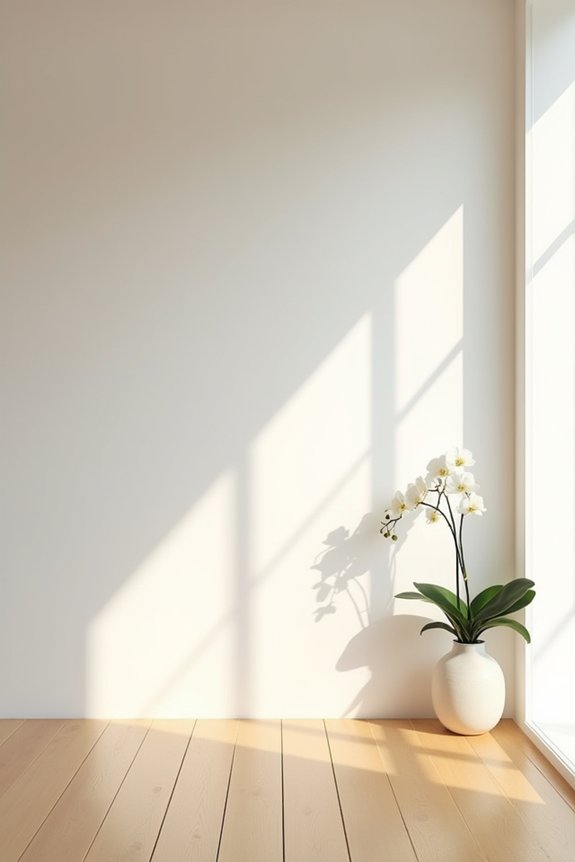
To truly capture the essence of Asian Zen design, you’ll need to master the art of balancing emptiness with purpose. Negative space isn’t wasted room; it’s breathing room that calms your mind.
You’ll want to create one strong focal point—perhaps a beautiful scroll painting, a sculptural plant, or a meditation corner—that naturally draws your eye. Arrange furniture intentionally around this anchor, leaving plenty of open floor space.
This thoughtful placement prevents clutter while highlighting what matters most. When you embrace stillness alongside intention, you’re crafting a sanctuary that feels peaceful, purposeful, and genuinely inviting for relaxation and reflection.
Frequently Asked Questions
How Can I Incorporate Asian Zen Design on a Limited Budget?
You can incorporate Asian zen design affordably by adding bamboo accents, placing indoor plants strategically, using neutral paint colors, hanging scroll art prints, and arranging furniture minimally for peaceful, uncluttered spaces.
What Lighting Options Best Complement a Zen Living Room Aesthetic?
You’ll transform your space using soft, diffused lighting. Paper lanterns or rice paper lamps create that authentic zen glow. Incorporate dimmer switches so you’re controlling ambiance. Avoid harsh overhead lights—they’ll disrupt your tranquil atmosphere completely.
Which Asian Cultures Influence Modern Zen Interior Design Styles?
You’ll find that Japanese, Chinese, and Tibetan cultures most greatly influence modern zen interior design. Japanese minimalism, Chinese feng shui principles, and Tibetan Buddhist aesthetics combine to shape today’s tranquil living spaces you create.
How Do I Soundproof a Zen Space for Maximum Tranquility?
You’ll absolutely transform your zen sanctuary into an impenetrable fortress of silence by installing acoustic panels, heavy curtains, weatherstripping, and sound-absorbing rugs. You’re creating pure tranquility that’ll blow your mind completely away.
What Maintenance Routines Keep Natural Materials Looking Fresh and Beautiful?
You’ll maintain natural materials by dusting weekly with soft cloths, oiling wood surfaces monthly, and wiping stone with pH-neutral cleaners. You should seal bamboo annually and rotate plants regularly for even light exposure.