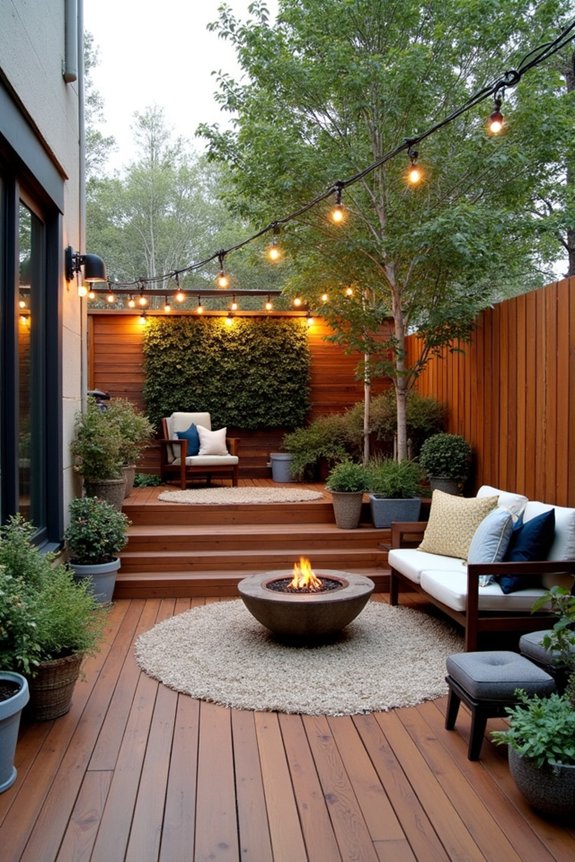
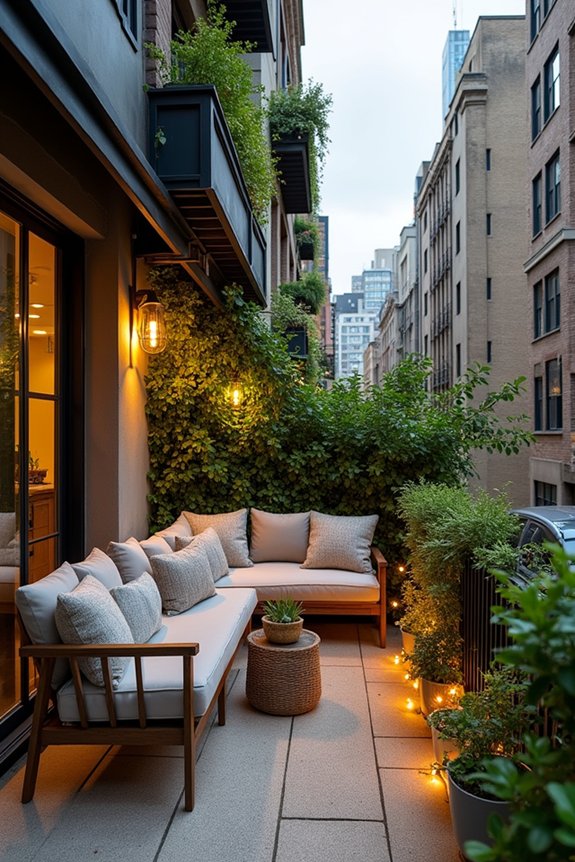
You can transform your small balcony into a vibrant retreat by choosing furniture that does double duty, like ottomans with hidden storage and benches that seat and organize. Go vertical with wall planters and floating shelves to free up floor space. Create different zones for lounging, dining, and gardening using rugs and lighting to divide areas. Layer plants at varying heights for depth, then brighten everything with string lights and a soft color palette of whites and pastels. The specifics on each strategy reveal surprising ways to make your outdoor space feel larger and more inviting.
Design Highlights
- Install floating shelves and wall planters to maximize vertical space without consuming valuable floor area.
- Choose dual-purpose furniture like storage ottomans and benches to combine seating with hidden organization solutions.
- Define distinct activity zones using rugs, lighting, and strategic furniture placement to enhance perceived spaciousness.
- Layer container plants at varying heights with complementary colors and textures for visual depth and abundance.
- Add string lights, solar lanterns, and light-colored textiles to create an inviting atmosphere and expand the space visually.
Choose Dual-Purpose Furniture to Maximize Seating and Storage
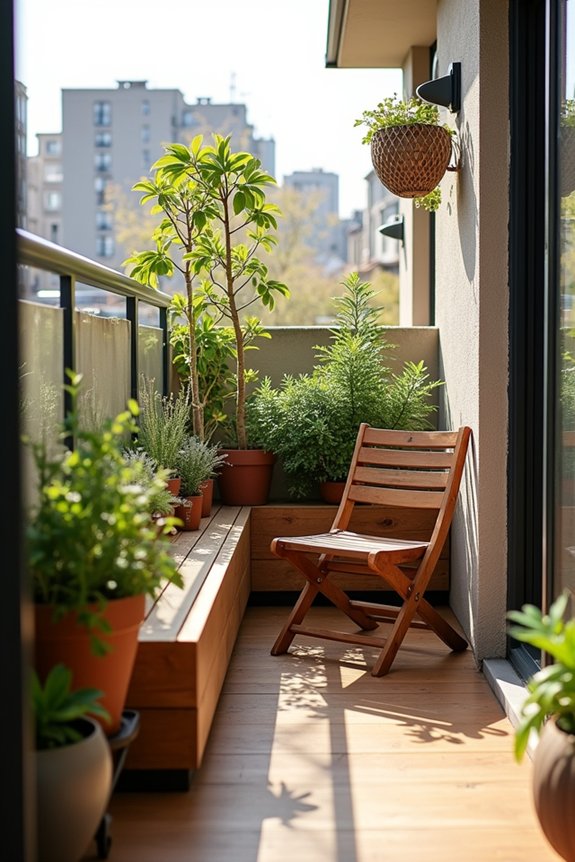
When you’re working with a smaller balcony space, every piece of furniture you choose matters tremendously. Dual-purpose furniture becomes your secret weapon, allowing you to create comfort without sacrificing precious square footage.
Consider ottomans with hidden storage compartments—they’ll give you a place to rest your feet while concealing cushions, gardening tools, or seasonal items. Benches with built-in storage work wonderfully too, providing seating and organization in one elegant piece.
Folding chairs tuck away easily when you’re not using them, and nesting tables stack neatly while offering flexible surface space. Incorporate summer entryway decor principles by adding welcoming touches like potted plants or cushions that brighten your compact outdoor area. These smart choices transform your balcony into a functional, inviting retreat that feels spacious and organized.
Go Vertical: Wall Planters, Shelves and Trellises
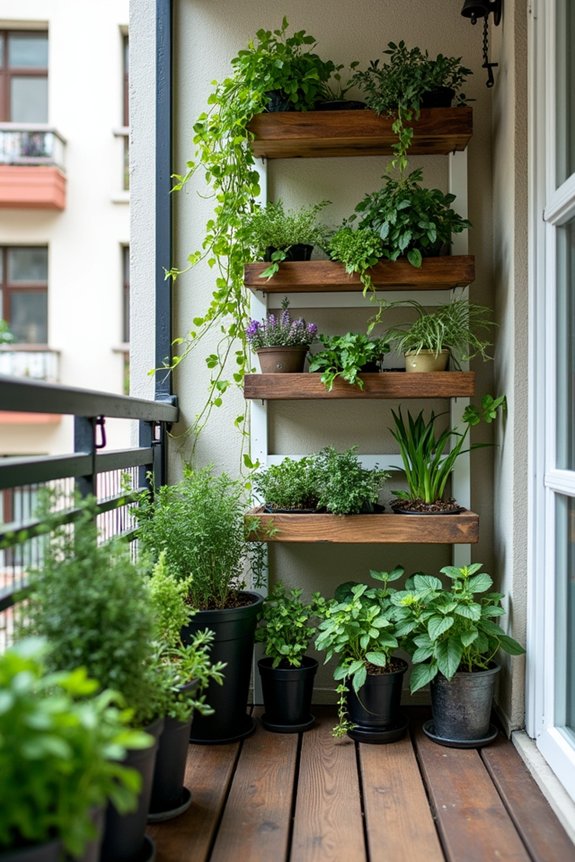
Since floor space on a balcony is limited, you’ll want to look up—literally—to find room for the things you love.
Wall planters transform bare surfaces into lush green displays, bringing life and color without consuming precious floor real estate.
Install floating shelves to showcase your favorite books, plants, or decorative items, creating visual interest at different heights.
Trellises work wonderfully too, supporting climbing plants like ivy or clematis that add texture and privacy.
These vertical solutions maximize your space efficiently, making your balcony feel fuller and more inviting while keeping everything organized and accessible. For small urban apartments with limited outdoor space, consider freestanding designs that can be easily relocated or adjusted to suit your balcony’s layout and your evolving needs.
Define Activity Zones Without Sacrificing Square Footage
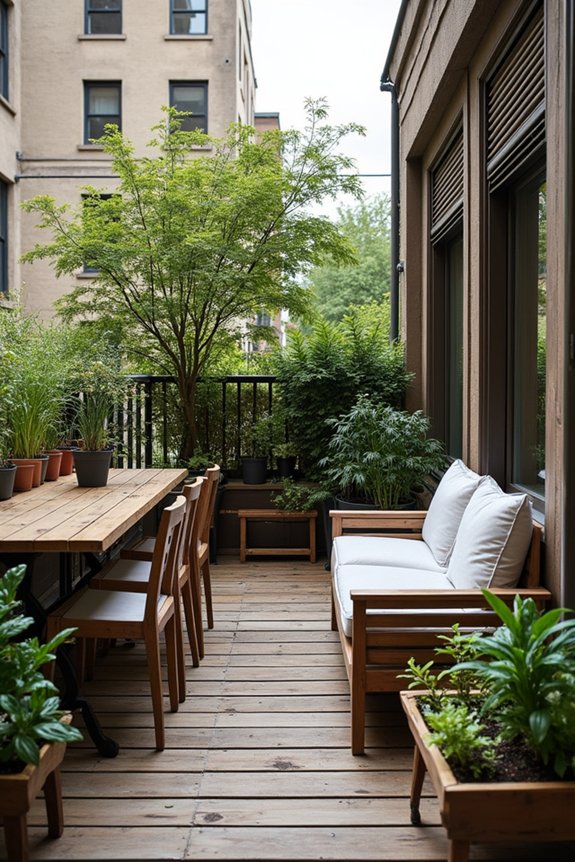
Even a small balcony can serve multiple purposes when you’re thoughtful about how you arrange your space.
You can create distinct zones that feel separate without needing extra room. Use furniture placement, rugs, and lighting to define different areas for relaxing, dining, and gardening.
- Lounge corner: Position a chair and small table together for reading or unwinding.
- Dining nook: Arrange a bistro table and chairs for meals and conversation.
- Garden station: Group planters and shelving for your vertical greenery display.
- Transition zones: Use rugs or lighting changes to naturally separate each area.
This smart arrangement makes your balcony feel purposeful and spacious.
Layer Container Plants for Instant Garden Ambiance
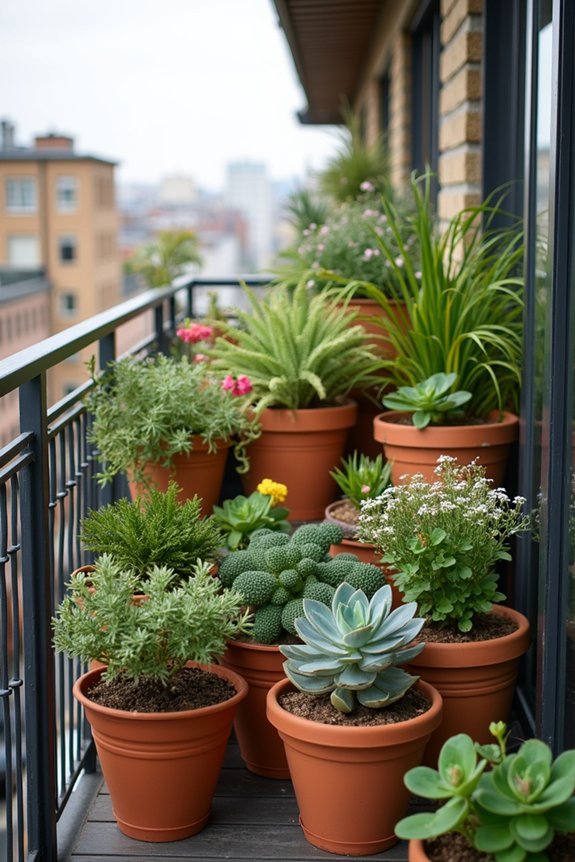
Container plants are your secret weapon for transforming a bare balcony into a lush, inviting escape.
You’ll create depth and visual interest by arranging plants at different heights, using tall plants in back, medium ones in the middle, and trailing varieties cascading over edges.
Mix textures and colors—combine leafy greens with vibrant flowers, and add evergreens for year-round appeal.
Choose containers in complementary colors and sizes to unify your design.
Group plants together to create impact, making your small space feel abundant.
Incorporate summer garden decor elements like decorative planters and accent pieces to enhance the overall aesthetic of your outdoor sanctuary.
This layering technique maximizes your balcony’s potential, turning it into a personal garden sanctuary you’ll love spending time in.
Light Your Balcony So You Can Use It After Dark

As the sun sets, your beautiful balcony doesn’t have to fade into darkness—you can extend your outdoor time by adding the right lighting.
Strategic lighting transforms your space into a welcoming retreat you’ll actually use during evenings. Consider these options:
- String lights create a warm, magical atmosphere overhead
- Solar-powered lanterns offer eco-friendly illumination without electricity
- Wall-mounted sconces provide focused light for reading or dining
- LED candles deliver cozy ambiance safely without fire hazards
Layer different lighting types throughout your balcony. This approach lets you adjust brightness based on your mood and activity. For maximum efficiency and minimal maintenance, prioritize energy-efficient LEDs that reduce electricity consumption while providing reliable illumination for extended outdoor enjoyment.
You’ll discover that properly lit outdoor spaces feel larger, more inviting, and genuinely functional for entertaining or unwinding after dark.
Pick a Light Color Palette to Make Space Feel Bigger
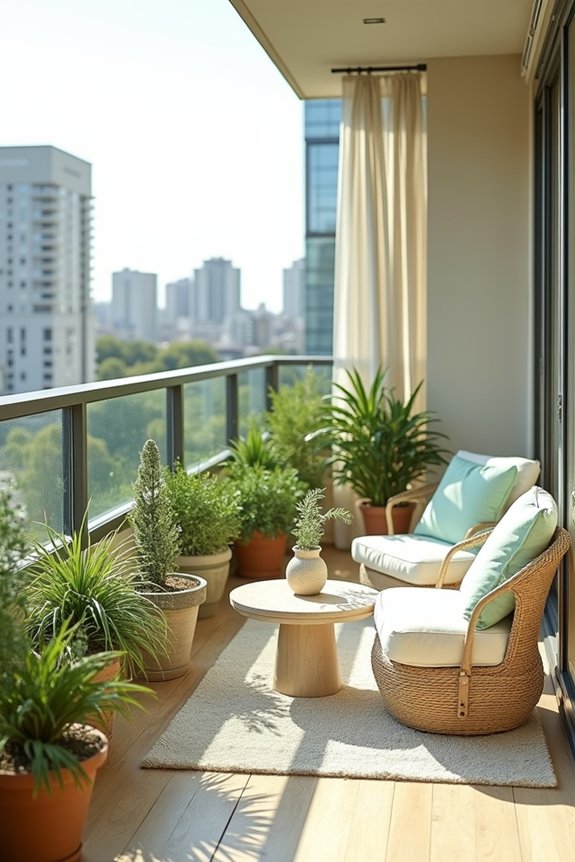
While lighting sets the mood for your evening gatherings, the colors you choose around your balcony play an equally important role in how spacious and inviting your outdoor area feels.
Light colors like whites, creams, and soft pastels reflect sunlight, making your balcony appear larger and more open. You’ll want to paint your railings or walls in these brighter shades, and choose light-colored furniture that won’t overwhelm the space.
Add pale cushions and neutral rugs to enhance the airy feeling. This approach creates a welcoming environment where you’ll genuinely enjoy spending time, transforming your small balcony into a peaceful retreat.
Add Rugs and Throws for Comfort and Visual Warmth
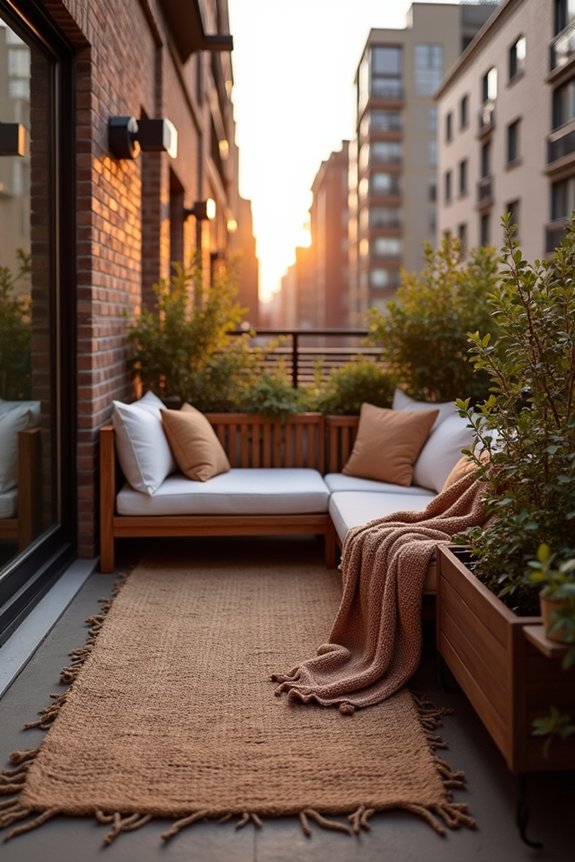
Since your balcony’s color palette sets the foundation for a spacious feel, layering in rugs and throws transforms it into a genuinely comfortable retreat where you’ll actually want to spend time.
These textiles add softness underfoot and coziness to your seating areas, making your outdoor space feel intentional and inviting.
Consider these additions:
- Outdoor rugs in complementary colors to define your seating zone
- Lightweight throws draped over chairs for warmth on cooler evenings
- Weather-resistant fabrics that withstand sun and moisture exposure
- Layered textures combining different materials for visual interest
These elements work together, creating an atmosphere that encourages you to relax and enjoy your balcony regularly.
Frequently Asked Questions
What Is the Ideal Balcony Size for Implementing These Small Space Design Ideas?
Your balcony doesn’t need to be a sprawling kingdom—even a modest 4×6 feet works perfectly. You’ll find these design ideas thrive in intimate spaces where you’re creating a personal sanctuary that reflects who you’re becoming.
How Much Weight Can a Typical Apartment Balcony Safely Support With Furniture?
Your apartment balcony typically supports 40-100 pounds per square foot, though you’ll want to check your building’s specifications. You shouldn’t exceed this limit when arranging furniture to guarantee safety and structural integrity.
What Are the Best Low-Maintenance Plants for Small Balcony Container Gardening?
You’ll thrive with succulents, ornamental grasses, and herbs like rosemary. These plants don’t require frequent watering or pruning. Pothos and snake plants also flourish in containers with minimal care, making them ideal for your small balcony space.
Do I Need Landlord Permission Before Making Permanent Modifications to Rental Balconies?
You’re walking a tightrope between creativity and consequences. Yes, you’ll need landlord permission before making permanent modifications to your rental balcony. Always check your lease and communicate directly with your landlord first.
What Is the Average Budget Needed to Fully Outfit a Small Balcony?
You’ll typically spend $500–$2,000 fully outfitting a small balcony, depending on your choices. Budget $200–$500 for seating, $100–$400 for plants and planters, $150–$300 for lighting, and $100–$200 for accessories and decor.