You can transform your tiny dining room by choosing round or oval tables with pedestal bases, which maximize legroom and flow. Add benches and ottomans with hidden storage to eliminate clutter while gaining extra seating. Install floating shelves and wall cabinets to keep everything organized without eating floor space. Hang mirrors opposite windows and layer your lighting with warm pendant lights to make the room feel bigger and cozier. Finally, arrange furniture along walls with slim chairs to maintain clear pathways. There’s so much more you can discover about maximizing every corner.
Design Highlights
- Choose round or oval tables with pedestal bases to maximize legroom and improve flow in tight dining areas.
- Select dual-purpose furniture like benches with storage and extendable tables with drawers to reduce clutter and boost functionality.
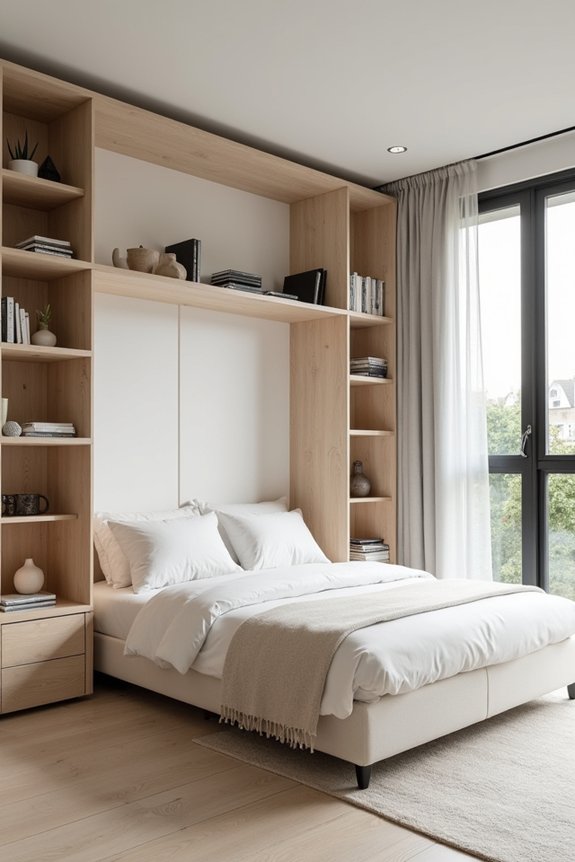
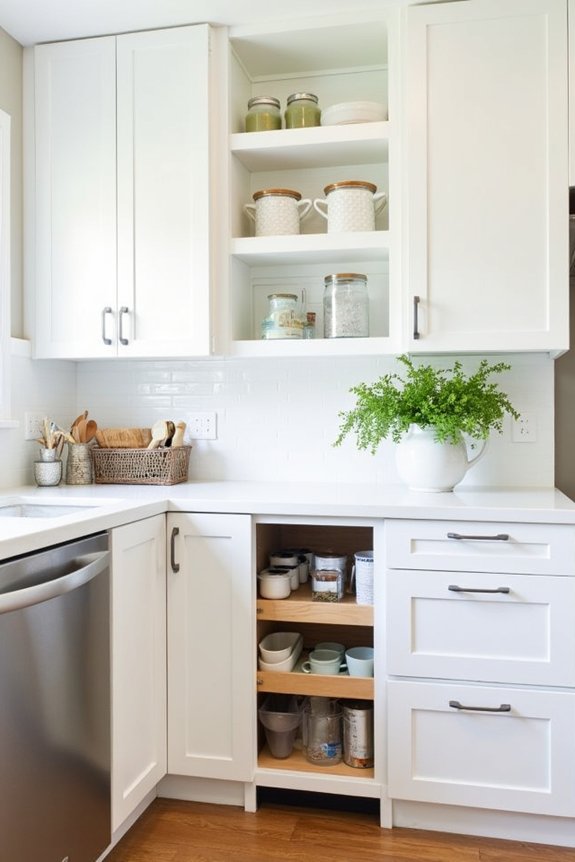
- Install floating shelves, wall-mounted cabinets, and pegboards to utilize vertical space and free up floor area.
- Hang mirrors opposite windows and layer lighting with pendant lights and warm-toned bulbs to enhance openness and ambiance.
- Push tables against walls and use slim chairs to maintain clear sightlines and natural airflow throughout the room.
Pick the Right Space-Saving Table for Your Layout
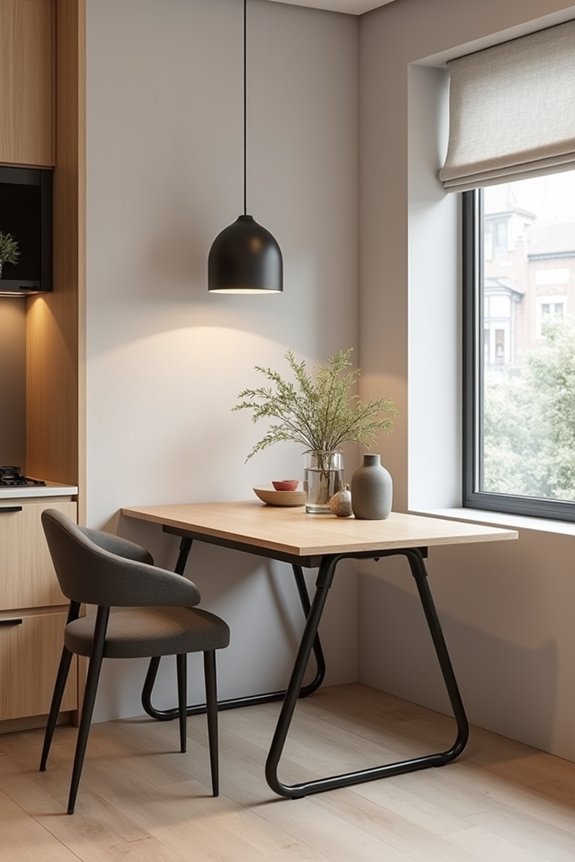
When you’re working with a small dining room, your table choice can truly make or break your space.
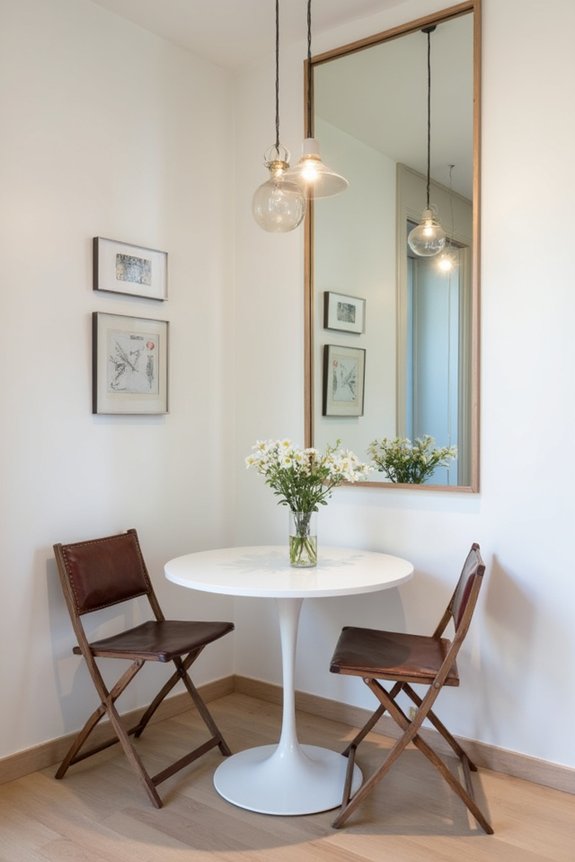
You’ll want to contemplate round or oval tables, which don’t have sharp corners and create better flow in tight areas. Pedestal bases work wonderfully because they free up legroom compared to four-legged designs.
Drop-leaf tables are fantastic too—they expand when you need them and collapse when you don’t. Think about your lifestyle and how you’ll actually use the space.
Measure your room carefully before shopping, ensuring at least three feet of walking space around your table. The right choice transforms your dining area into something functional and welcoming.
Choose Furniture That Serves Double Duty (Seating + Storage)
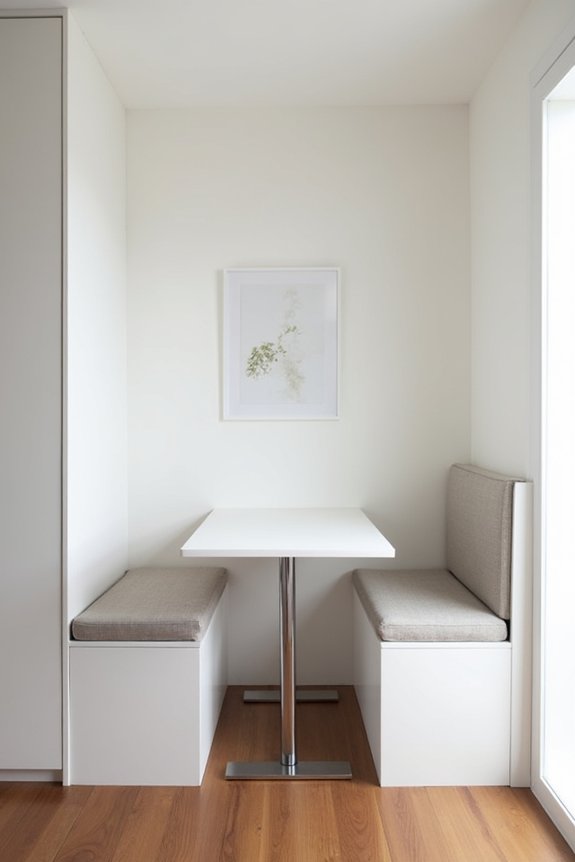
Since space is precious in a small dining room, you’ll want furniture that works harder for you.
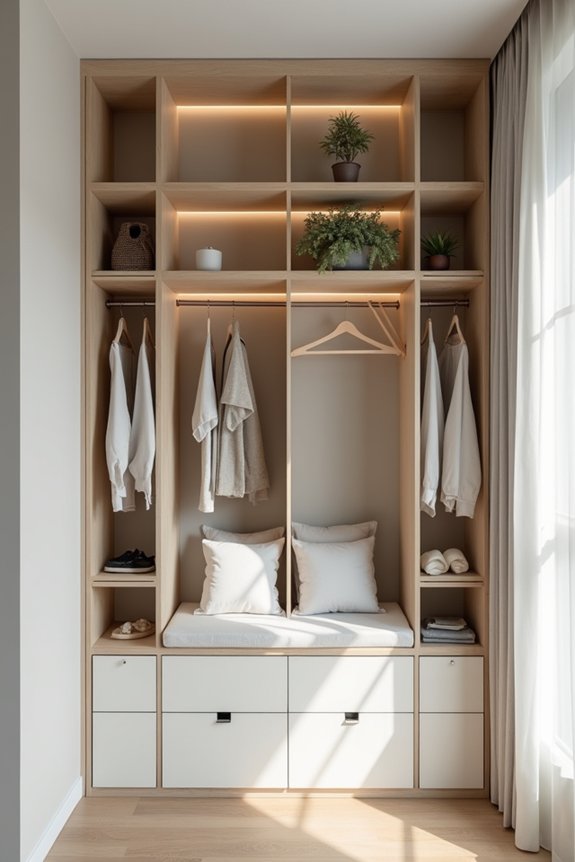
Consider a bench with built-in storage underneath, perfect for stashing linens, placemats, and dishes. Ottomans with hidden compartments offer extra seating plus storage for seasonal items.
Wall-mounted shelving above your dining area combines display space with functional organization. Extendable tables with drawers maximize your surface area while keeping supplies accessible.
These dual-purpose pieces eliminate clutter while giving you the flexibility you need. By choosing smart furniture, you’re creating a dining space that’s both beautiful and practical, making every square inch count.
Go Vertical: Wall Storage That Frees Up Floor Space
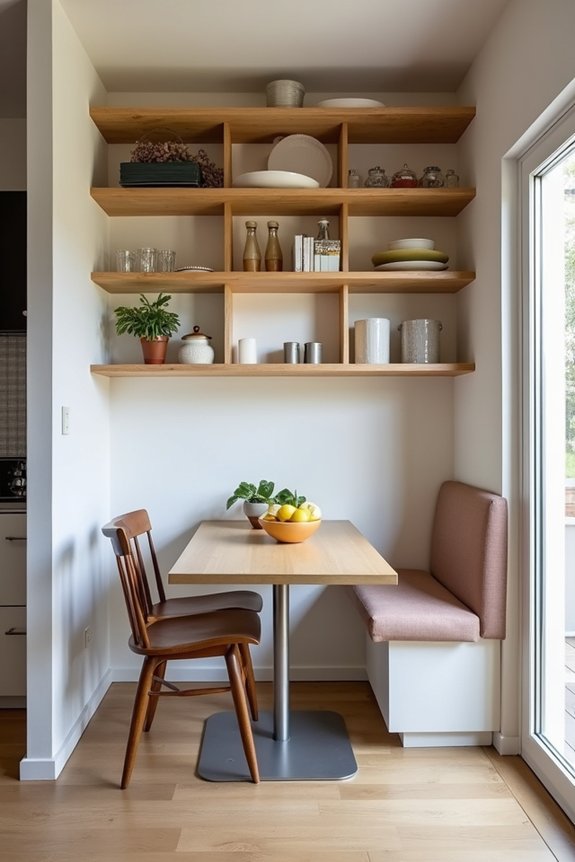
Every bit of wall space in your small dining room is real estate you can claim back, and that’s exactly what you should do.
Install floating shelves above your dining table to display dishes, glasses, or decorative items without eating up precious floor space.
Wall-mounted cabinets offer hidden storage for linens and serving pieces.
Vertical pegboards let you organize utensils and cooking tools efficiently.
Consider corner shelving units that tuck into unused angles.
Brighten Your Dining Nook With Strategic Mirrors and Lighting
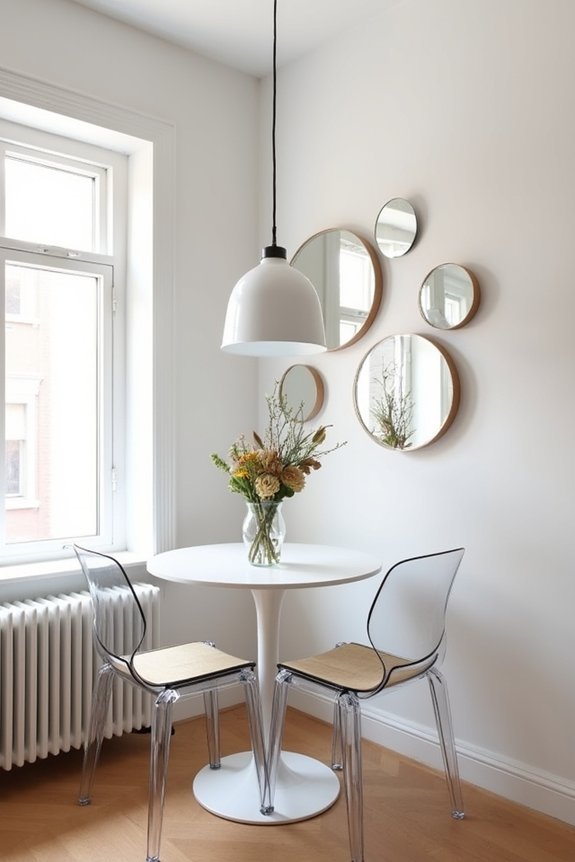
After you’ve maximized your vertical storage, it’s time to transform how your small dining space feels, and mirrors and lighting are your secret weapons for doing exactly that.
Mirrors bounce light around, creating an illusion of openness and airiness. Thoughtful lighting eliminates dark corners and sets a welcoming mood for gatherings.
- Hang mirrors opposite windows to amplify natural light
- Install pendant lights above your table for focused, flattering illumination
- Use warm-toned bulbs to create cozy, intimate ambiance
- Layer lighting with wall sconces for depth and flexibility
- Choose reflective surfaces that catch and spread light beautifully
Layout Tips for Open Flow
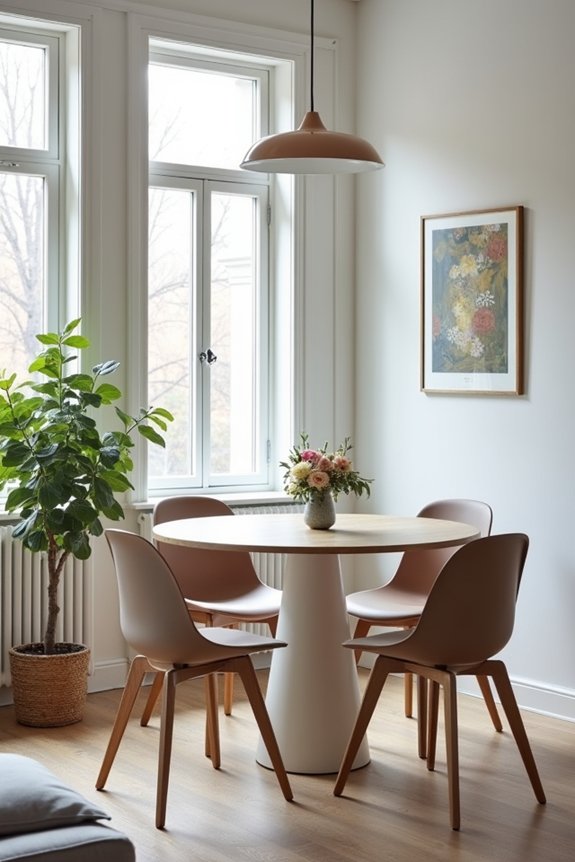
Now that you’ve brightened your space with mirrors and lighting, it’s time to think about how you arrange your furniture—because the layout you choose can make all the difference in how spacious your small dining room actually feels.
Consider pushing your table against a wall to create an open pathway. Use slim chairs instead of bulky ones, and keep your floor visible by elevating furniture slightly.
Avoid cluttering corners with unnecessary pieces. Let air flow naturally through the room by maintaining clear sightlines. Incorporate multifunctional storage solutions like wall-mounted shelving to keep dining essentials organized without consuming valuable floor space.
This thoughtful arrangement transforms your compact dining area into an inviting, breathable space where guests genuinely feel comfortable gathering.
Frequently Asked Questions
What Dining Room Color Schemes Work Best for Making Small Spaces Feel Larger?
You’ll make your small dining room feel larger by choosing light, neutral colors like whites, soft grays, and pale blues. These hues reflect light and create an airy atmosphere that visually expands your space effortlessly.
How Can I Accommodate Guests Comfortably When My Dining Room Is Extremely Small?
You’ll absolutely maximize your microscopic dining room by choosing a round table that doesn’t hog space, using stackable chairs you’ll store away, and strategically placing mirrors to create the illusion you’ve somehow invented extra square footage.
What Budget-Friendly Options Exist for Furnishing a Tiny Dining Area?
You’ll find budget-friendly options by shopping secondhand furniture stores, using folding tables you can store away, choosing wall-mounted shelves for storage, and selecting stackable chairs that won’t consume permanent space.
Which Window Treatments Are Ideal for Small Dining Rooms?
You’ll want window treatments that won’t weigh down your workspace. Sheer curtains, simple shades, or sleek shutters serve small dining spaces superbly. They’re streamlined solutions that safeguard your sightlines while maximizing your modest room’s visual volume.
How Do I Prevent a Small Dining Room From Feeling Cramped or Cluttered?
You’ll prevent cramping by choosing multipurpose furniture, keeping surfaces clear, and using vertical storage. You should maximize light with mirrors, select a cohesive color palette, and limit decorative accessories to essential pieces only.