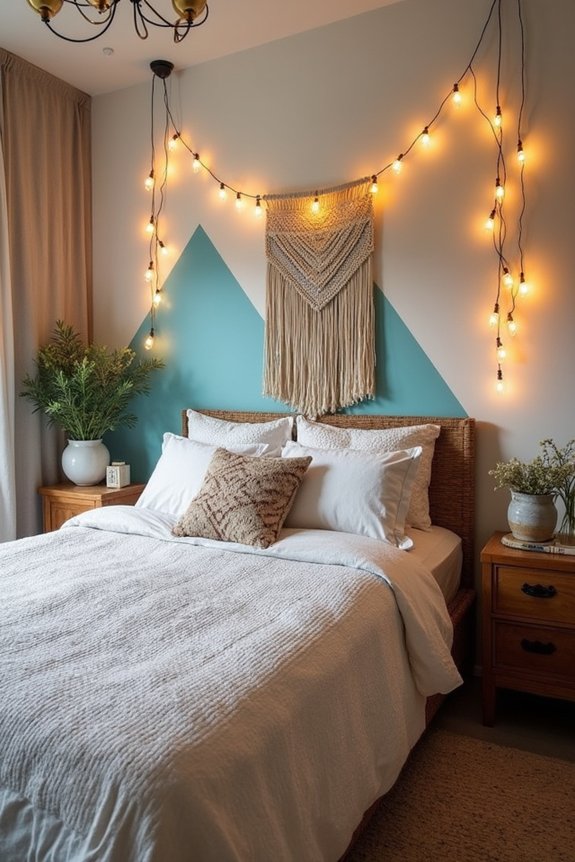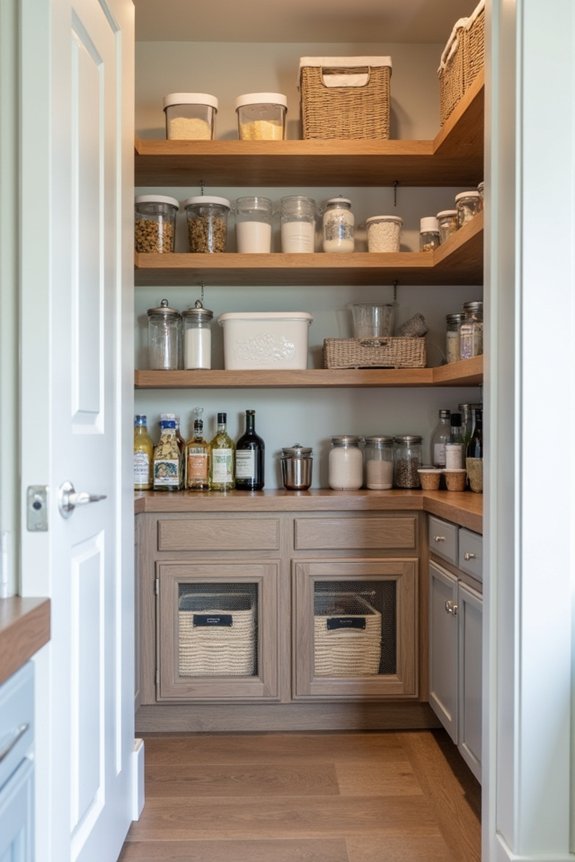
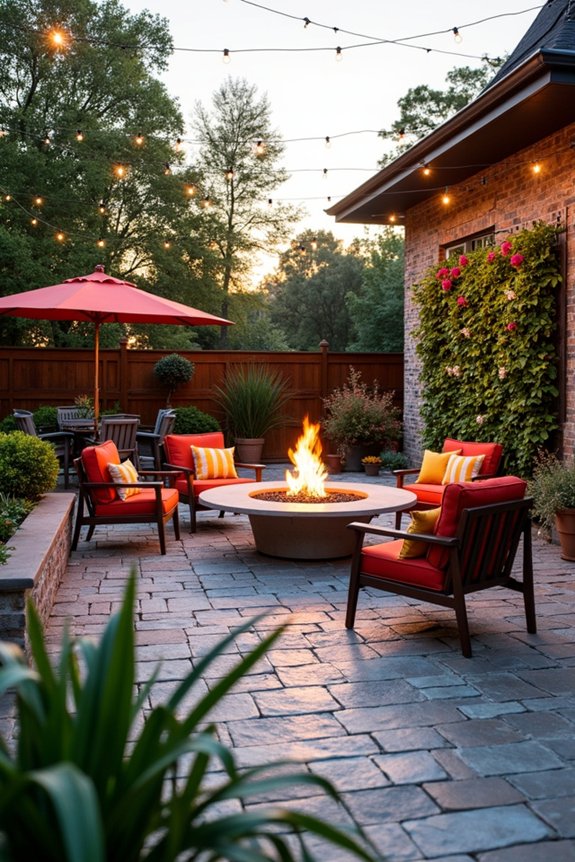
You can transform your outdoor space into a cozy retreat by upcycling old pallets into comfortable seating with cushions. String up warm white lights along your fence or trees for an inviting atmosphere. Plant fresh vegetables in a raised garden bed positioned in a sunny spot. Add a simple water feature using a birdbath and pump to create soothing sounds. Finally, build a basic pergola with wooden beams for shade and structure. These budget-friendly projects blend function with beauty, and each one offers unique customization possibilities.
Design Highlights
- Upcycle wooden pallets, crates, and old furniture into unique seating with cushions and paint.
- Install string lights along fences or trees for warm, inviting ambient lighting on patios.
- Build raised garden beds in sunny spots to grow fresh vegetables and herbs nearby.
- Create a peaceful water feature using a birdbath, pump, and basin for relaxation.
- Construct a simple pergola with wooden beams and posts to add shade and structure.
Build Seating From Upcycled Materials
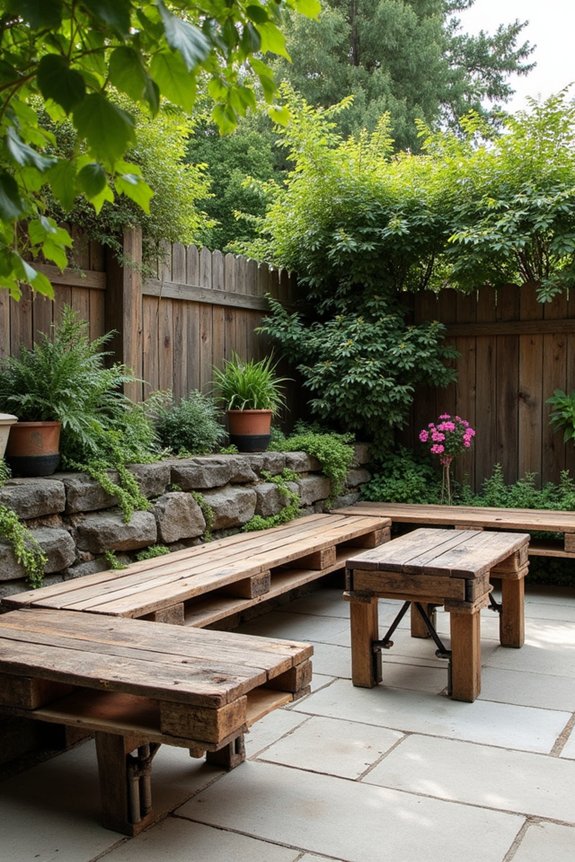
If you’ve got old wooden pallets, crates, or even worn-out furniture lying around, you’re sitting on a goldmine of DIY seating possibilities. You can transform these materials into comfortable, stylish pieces that’ll make your patio feel personal and unique.
Stack pallets together, add some cushions, and you’ve got a cozy lounge spot. Paint old wooden crates in your favorite colors, then arrange them into ottomans or side tables.
Even broken chairs can become bench seating with minimal effort. This approach saves money, reduces waste, and gives your outdoor space genuine character that store-bought furniture simply can’t match. For additional inspiration, explore fall outdoor decor ideas that complement your DIY seating arrangements and enhance your patio’s seasonal aesthetic.
String Up Ambient Lighting
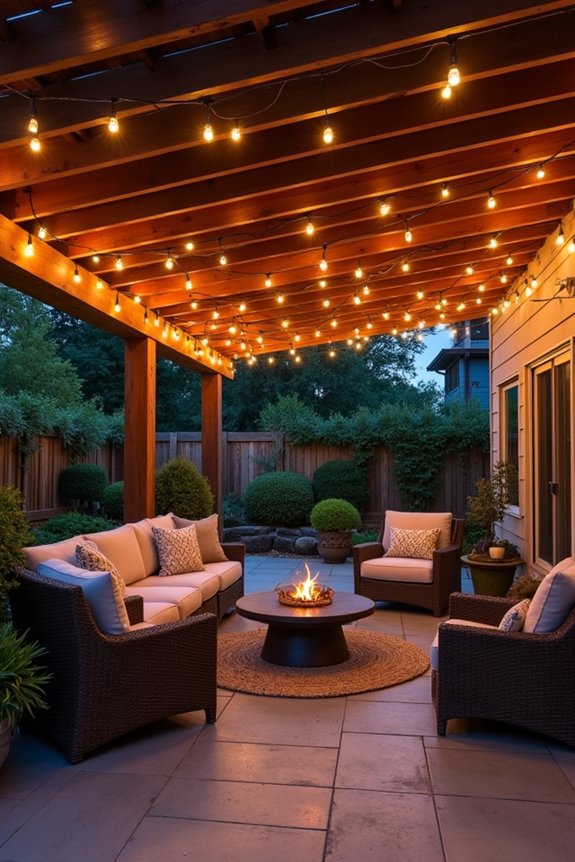
Nothing transforms a patio quite like the warm glow of string lights dancing overhead, and you’ll be amazed at how this simple addition creates an inviting atmosphere that’ll make you want to spend every evening outside.
You can drape lights along fences, wrap them around trees, or hang them between posts to create magical patterns. Choose warm white bulbs for a cozy feel, or go colorful for festive gatherings.
Solar-powered options save energy and money, while battery-operated lights offer flexibility. Installation takes just minutes, requiring only hooks or clips.
Your patio becomes a welcoming retreat where memories flourish.
Grow Your Own Raised Garden Bed
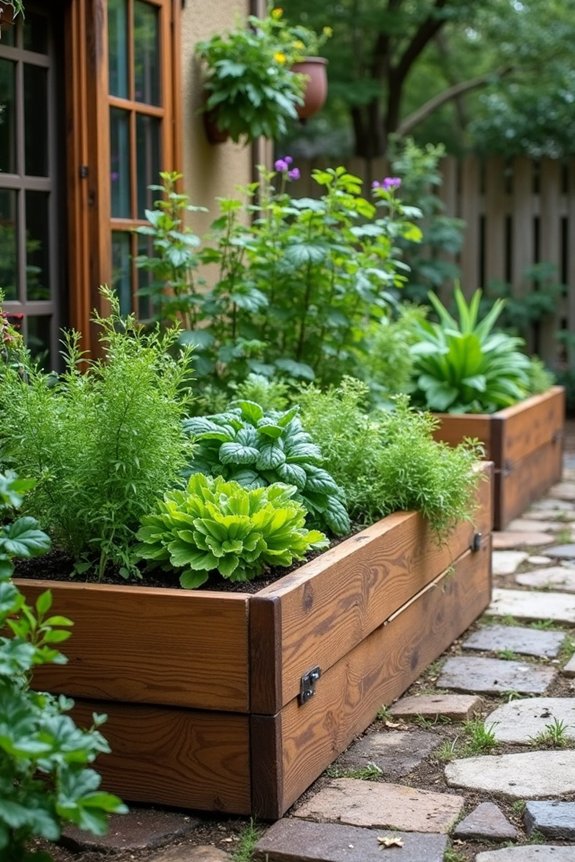
While string lights set the mood for your outdoor evenings, a raised garden bed brings purpose and freshness to your patio space—you’ll love having homegrown vegetables and herbs just steps away from your door.
Building one is easier than you’d think. Start by choosing a sunny spot, then assemble wooden boards or composite materials into a rectangular frame. Fill it with quality soil, and you’re ready to plant.
Tomatoes, lettuce, peppers, and basil thrive in raised beds. You’ll water less often since the soil drains better, and you’ll enjoy harvesting your own produce all season long. Pairing your garden bed with spring exterior decor creates a cohesive outdoor living space that’s both functional and visually appealing.
Add a DIY Water Feature
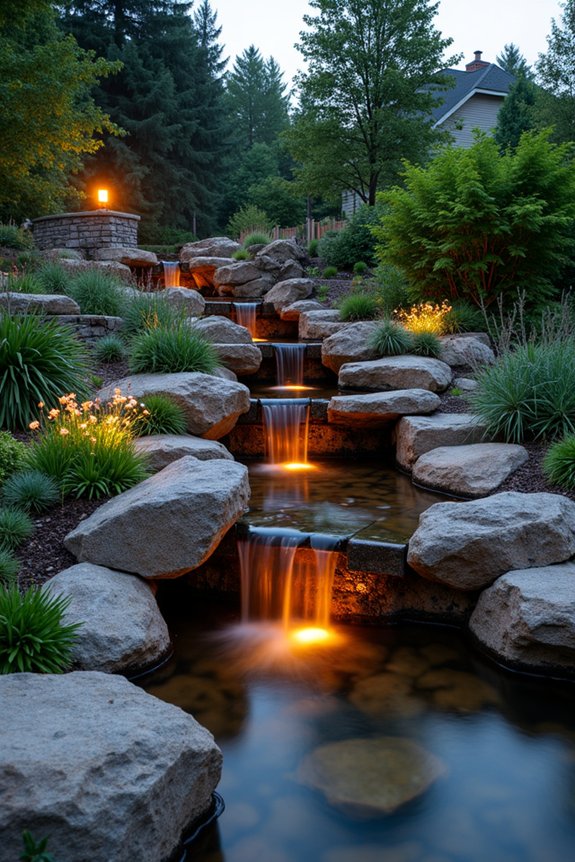
There’s something magical about the sound of flowing water that can transform your patio into a peaceful retreat. You can create a simple water feature using a birdbath, fountain pump, and basin.
Start by selecting a focal point in your patio, then assemble your materials. Position the pump inside the basin, add water, and watch as it cascades beautifully.
This DIY project requires minimal tools and takes just an afternoon. You’ll instantly notice how the gentle water sounds promote relaxation and attract birds.
Your patio becomes an inviting sanctuary where you can unwind and reconnect with nature daily. Consider pairing your water feature with other summer yard decor to create a cohesive outdoor design.
Build a Simple DIY Pergola
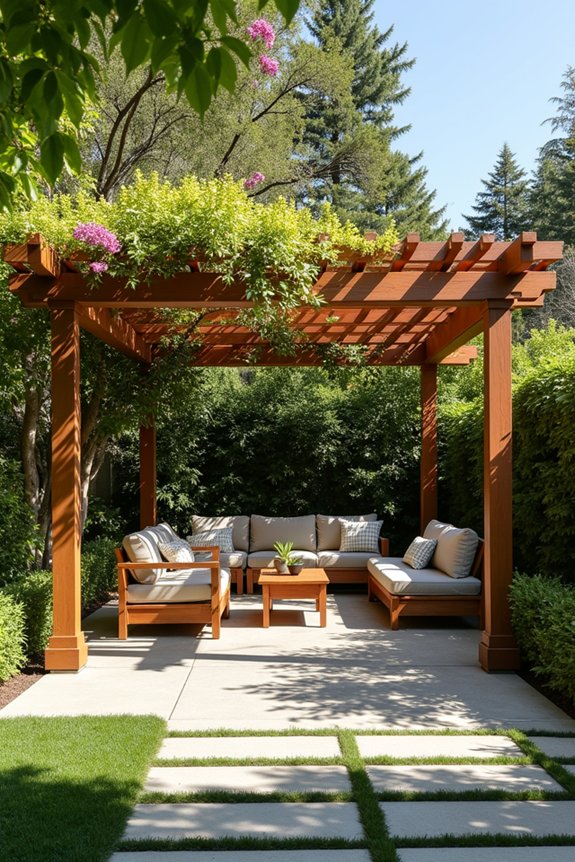
If you’re looking to add shade and structure to your patio while creating a stunning focal point, a DIY pergola is the perfect project for you.
You’ll need basic materials like wooden beams, posts, and screws, making this achievable for most skill levels. Start by marking your post locations, then dig holes about two feet deep for stability.
Secure your posts in concrete, and attach the overhead beams using a drill and level. This creates a beautiful framework that supports climbing vines, providing natural shade while enhancing your outdoor space’s appeal and functionality beautifully. Pair your pergola with complementary summer patio decor to complete your outdoor living area.
Frequently Asked Questions
What Is the Best Budget for Starting a DIY Patio Project?
You’ll want to start with $500-$1,500 for a basic DIY patio project. This budget covers materials like pavers, gravel, or concrete depending on your patio’s size and design complexity. You’ll maximize value by doing the labor yourself.
How Do I Prepare My Patio Space Before Beginning Any DIY Projects?
You’re probably wondering where to start—it’s that exact moment when you’ll want to clear debris, level the ground, check drainage, and mark your project boundaries. You’ll measure twice, remove obstacles, and inspect for underground utilities.
What Tools and Materials Are Essential for Most DIY Patio Improvements?
You’ll need a hammer, saw, drill, level, measuring tape, and safety gear. For materials, gather wood, screws, nails, concrete, gravel, and outdoor paint. These basics’ll cover most patio projects you’re tackling.
How Can I Maintain My DIY Patio Features Throughout the Seasons?
Studies show you’ll extend your patio’s lifespan by 50% with seasonal maintenance. You’ll seal surfaces quarterly, clear debris regularly, inspect for damage, and protect furniture during harsh weather to keep your outdoor space thriving year-round.
What Safety Precautions Should I Take When Building Outdoor Structures?
You’ll need proper safety gear including gloves, goggles, and sturdy footwear. Always check local building codes before starting. Secure all materials properly, use correct tools, and don’t rush through construction steps.