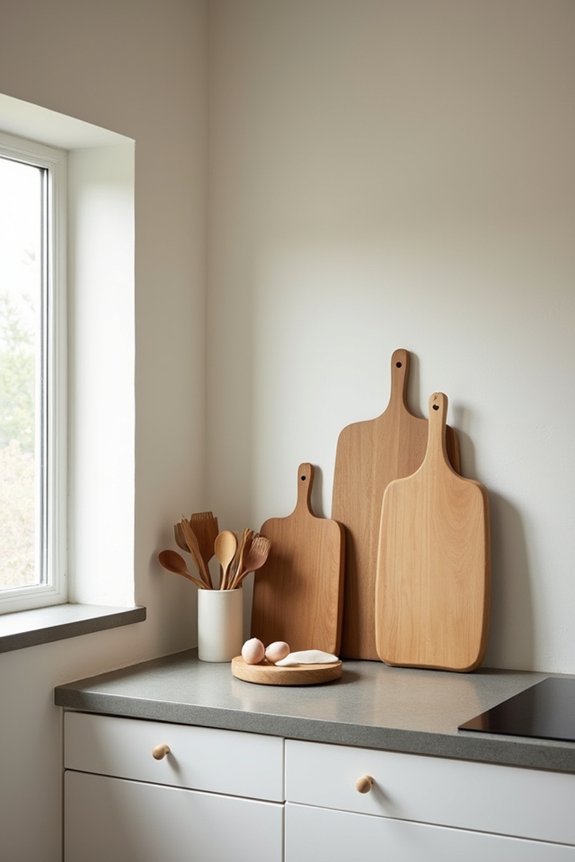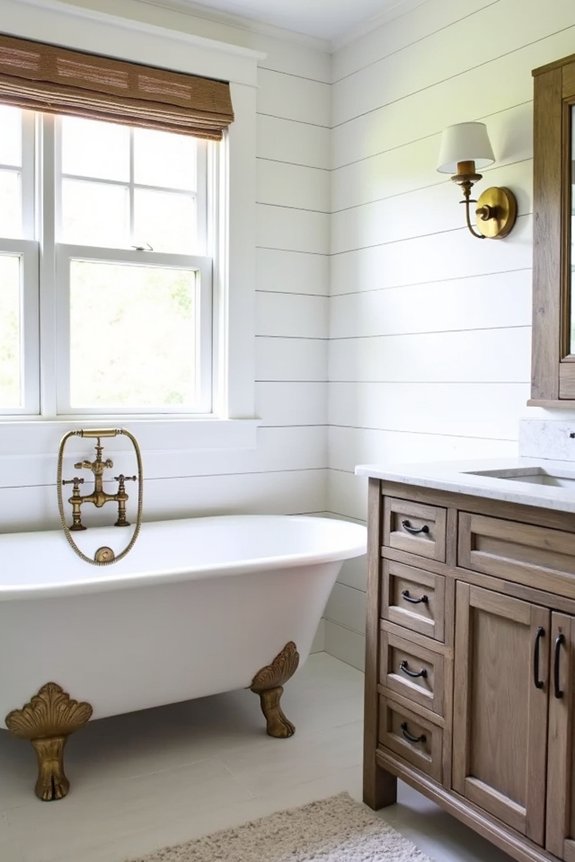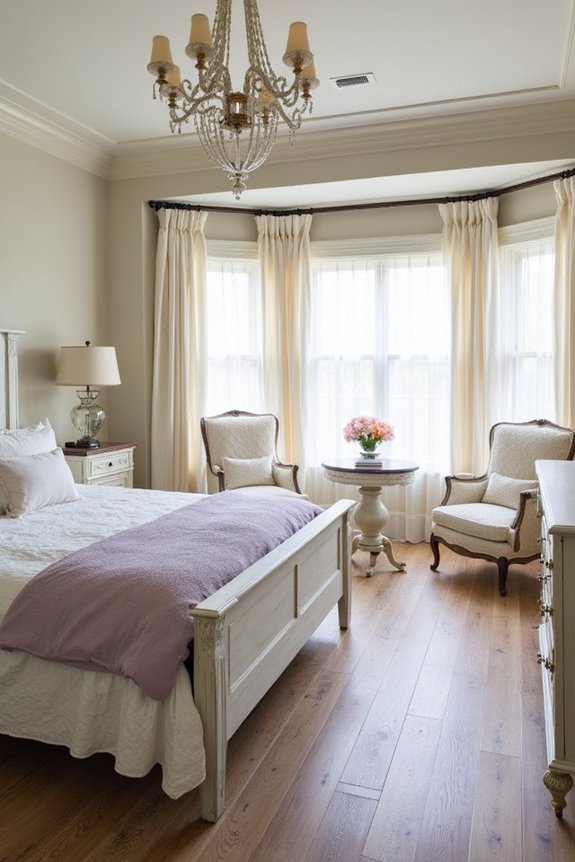
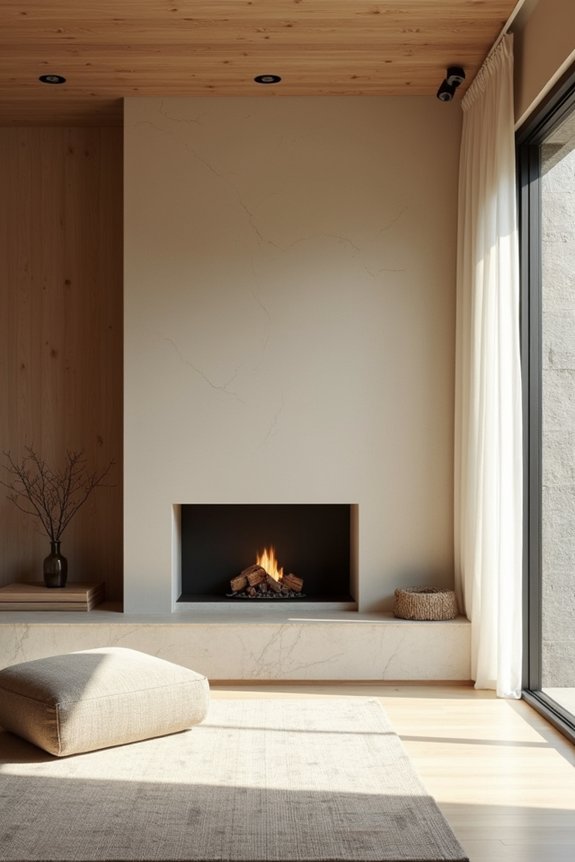
You can create a serene japandi fireplace by layering natural materials like wood and stone with warm neutrals—soft beiges, creams, and taupe tones. Arrange just three to five meaningful pieces on your mantel with breathing room between them. Position seating to face the fireplace, creating an inviting gathering spot. Add warm-toned ambient lighting and accent lights to highlight artwork. These thoughtful touches transform your space into a sophisticated sanctuary that balances minimalist elegance with cozy comfort, and there’s much more to discover about perfecting each element.
Design Highlights
- Combine natural wood mantels with stone accents and layered textures for authentic Japandi aesthetic appeal.
- Style mantels minimally with 3–5 meaningful pieces like ceramic vases or wooden sculptures with ample breathing room.
- Position seating facing the fireplace with slightly angled furniture to create intimate gathering spaces.
- Use warm-toned ambient lighting through lanterns and dimmable fixtures to enhance cozy, inviting atmospheres.
- Apply soft neutral palettes of beiges, warm grays, and creams to complement natural fireplace materials beautifully.
Choose Natural Materials and Textures
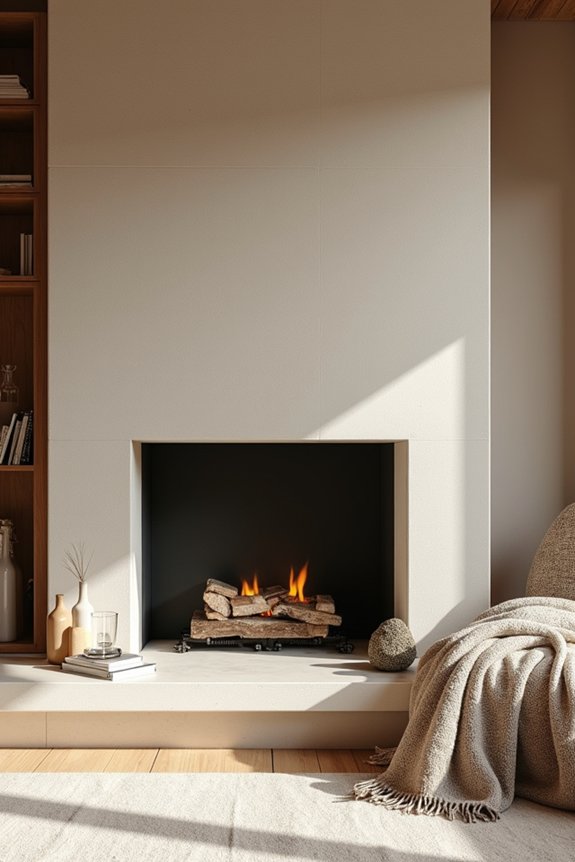
When you’re designing a Japandi fireplace, selecting natural materials and textures is truly where the magic happens.
Consider using wood for your mantel, choosing pieces with visible grain and warm tones that reflect nature’s beauty. Stone or slate creates an authentic foundation around your fireplace opening.
You’ll want to incorporate natural fibers like linen, cotton, or jute through decorative baskets and textiles. These materials work together harmoniously, creating visual interest while maintaining the calm, balanced aesthetic that Japandi design celebrates.
Layer different textures thoughtfully—smooth stones paired with rough wood, soft fabrics beside hard surfaces—to build depth and invite tactile engagement with your space. A console table with natural materials positioned near your fireplace can serve as an elegant display surface for candles, plants, and other decorative elements that enhance your Japandi aesthetic.
Select Your Warm, Neutral Color Palette
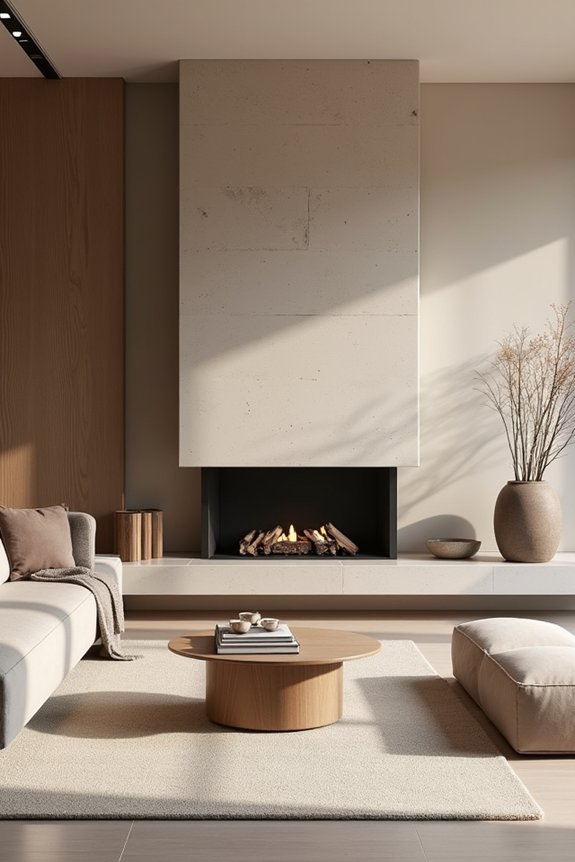
The foundation of a stunning Japandi fireplace lies in your color choices, and you’ll find that warm, neutral tones create the perfect backdrop for this serene design style.
Consider soft beiges, warm grays, and creamy whites that evoke calm and sophistication. These colors work beautifully because they complement natural materials like wood and stone. You can also incorporate subtle touches of warm taupe or soft sand tones.
Layering these hues around your fireplace creates visual depth while maintaining the peaceful, balanced aesthetic that Japandi design celebrates. Your space’ll feel inviting and timeless.
Master Minimalist Mantel Styling
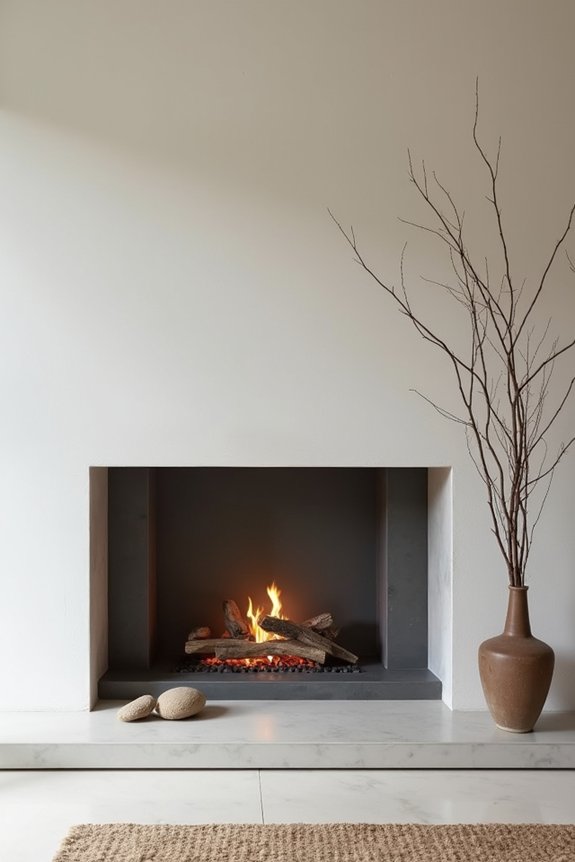
Once you’ve established your warm, neutral foundation, it’s time to style your mantel with intention and restraint.
Keep your arrangement uncluttered by selecting just three to five meaningful pieces. Consider placing a simple wooden sculpture, a ceramic vase, or framed artwork as focal points.
Leave breathing room between items, allowing each piece to shine individually. You might add a mirror to reflect light and create openness. For seasonal updates, incorporate Easter balcony decor elements that can transition beautifully to your indoor fireplace styling throughout the year.
Position Seating to Frame Your Fireplace
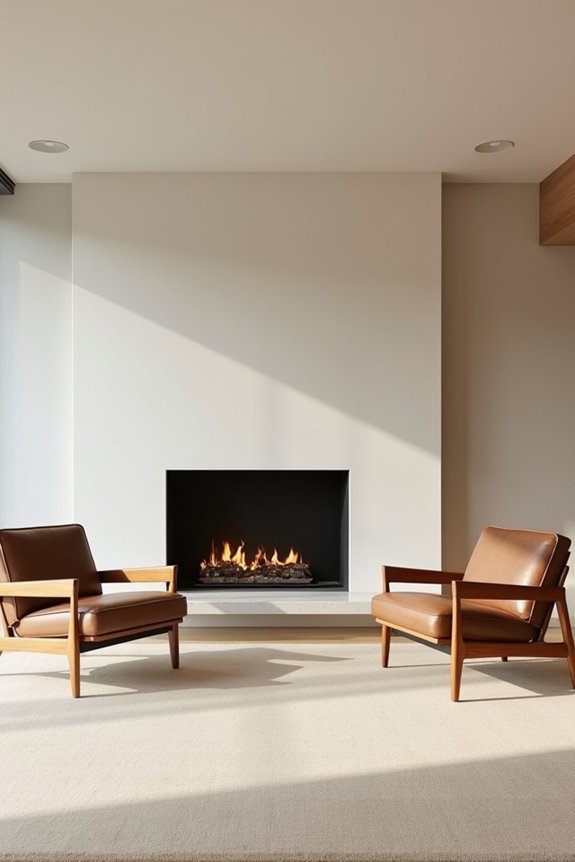
Your fireplace’ll become the heart of your living space when you arrange your seating to naturally draw attention toward it. Position your chairs and sofas facing the fireplace, creating an inviting focal point that encourages gathering and conversation.
Consider angling seating slightly inward, which frames the fireplace beautifully while fostering intimate connections. Leave adequate space between furniture pieces for easy movement and visual flow.
This thoughtful arrangement transforms your fireplace into a natural gathering spot, perfect for quiet moments or meaningful time with loved ones. Your intentional positioning creates warmth, both visually and emotionally, within your Japandi-inspired sanctuary.
Layer Ambient and Accent Lighting
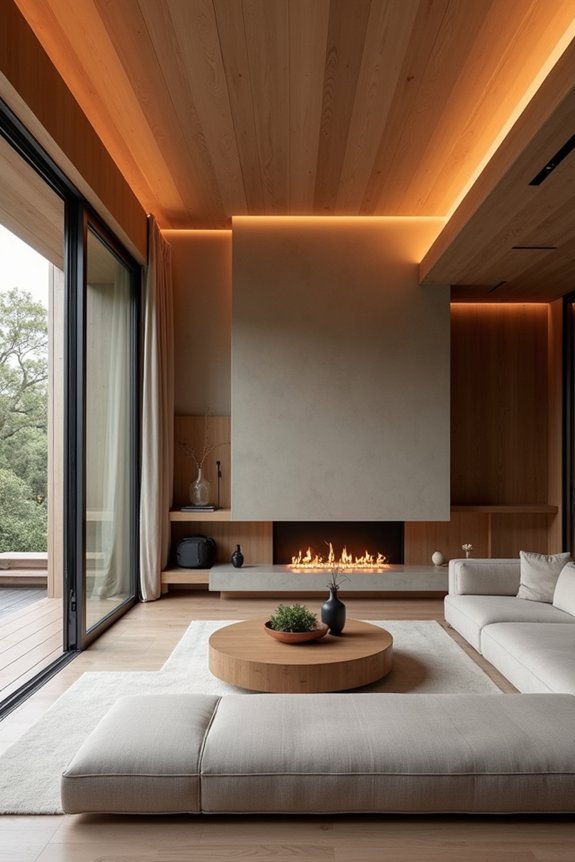
Because lighting sets the mood around your fireplace, layering different types of light creates depth and warmth that’ll make your Japandi space feel both cozy and intentional.
Start with soft ambient lighting using paper lanterns or frosted fixtures that gently illuminate your room. Then add accent lighting with small spotlights highlighting artwork or plants near your fireplace.
Consider warm-toned bulbs that complement the natural fire glow. Install dimmable options so you can adjust brightness for different times and moods.
This thoughtful combination transforms your fireplace into a welcoming focal point, inviting relaxation and connection.
Leave Breathing Room Between Mantel Pieces
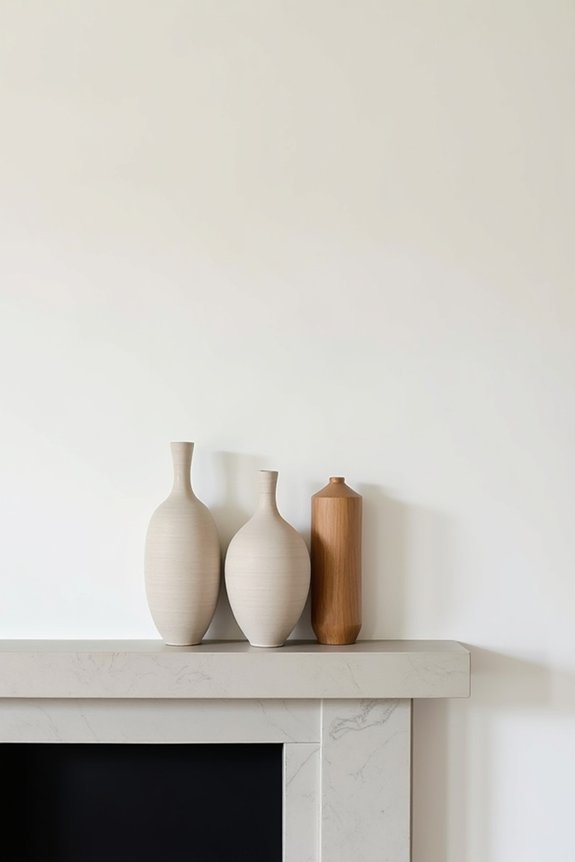
When you’re arranging items on your fireplace mantel, the space between each piece matters just as much as the objects themselves.
Overcrowding creates visual chaos that contradicts Japandi’s core principle of simplicity. Instead, you’ll want to space your decorative items thoughtfully, allowing negative space to breathe and draw attention to each element.
This breathing room lets your eye rest naturally between pieces, creating a calming, balanced composition. Try placing items in groups of three or leaving several inches between objects.
You’re not just decorating; you’re crafting an intentional, peaceful focal point that invites genuine appreciation and reflection. Similar principles apply when designing dining room decor, where thoughtful spacing and restraint create sophisticated, welcoming environments.
Make Your Fireplace the Heart of the Gathering Space
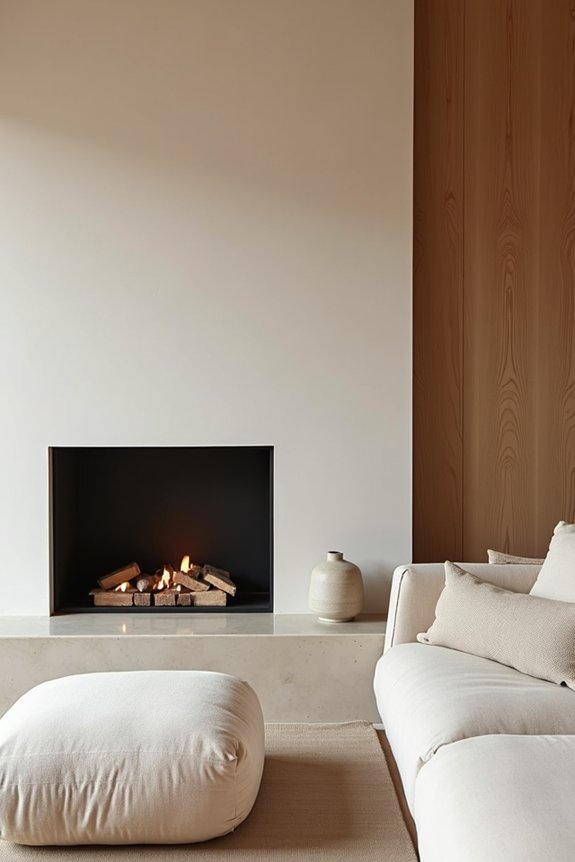
A fireplace’s warmth naturally draws people together, making it the perfect centerpiece for a room where family and friends love to gather.
You’ll want to arrange seating so everyone faces the fireplace, creating an inviting conversation area. Add comfortable chairs, soft throws, and cushions to encourage people to linger and relax.
Consider positioning a low table nearby for games, drinks, or snacks. Soft lighting around the fireplace enhances the cozy atmosphere. Versatile lighting options like battery-operated LED fixtures can highlight your fireplace while adding warmth to the space.
When you make your fireplace the focal point, you’re creating a welcoming space where meaningful moments naturally happen and connections deepen.
Frequently Asked Questions
How Do I Incorporate Water Features or Fountains Into My Japandi Fireplace Design?
You’ll place a small tabletop fountain near your fireplace’s base or on a nearby shelf. Choose minimalist designs with natural stone or ceramic. The water’s soft sound complements the fireplace’s warmth, creating balance in your japandi aesthetic.
What’s the Best Way to Hide Modern TV Equipment While Maintaining Japandi Aesthetic?
You’ll hide your TV behind a sliding wooden screen or shoji panel that you can open when watching. Alternatively, you can mount it above the fireplace and disguise the equipment with natural stone or wood paneling that blends seamlessly.
Can I Use a Faux Fireplace or Electric Insert in Japandi Decor?
Why wouldn’t you embrace modern convenience without sacrificing authenticity? You can absolutely use electric inserts—they’re perfect for japandi spaces. Choose minimalist designs with clean lines, natural materials like stone or wood frames, and warm lighting that echoes traditional fireplaces’ coziness.
How Often Should I Update Seasonal Decorations Around My Japandi Fireplace?
You’ll want to update your seasonal decorations around your japandi fireplace two to four times yearly, aligning with spring, summer, fall, and winter. This keeps your space fresh while maintaining the minimalist aesthetic japandi style demands.
What Plants Work Best for Decorating Around a Functional Fireplace Safely?
You’ll want heat-tolerant plants like pothos, snake plants, or bamboo palm placed at least three feet from your fireplace. They’ll thrive in the warmth while staying safe from direct flames and excessive heat exposure.