You can craft a serene master bedroom by starting with warm neutrals like soft beige and creamy white, then layering different textures—velvet pillows, chunky knits, and natural wood—to add depth. Choose furniture with clean lines, install statement lighting with dimmer switches, and arrange art in odd numbers to create focal points. Mix investment pieces with artisan accents, and leave intentional empty space to avoid clutter. These seven ideas work together to build a sophisticated, inviting retreat that feels timeless and calming, and exploring each strategy reveals how they transform your space completely.
Design Highlights
- Layer warm neutrals like soft beige and creamy white through walls, bedding, and furniture for an inviting, calm foundation.
- Mix textures such as linens, velvet, and natural wood to create visual interest while maintaining a sophisticated aesthetic.
- Select transitional furniture with clean lines and simple silhouettes to achieve balanced proportions without ornate details.
- Install layered lighting including chandeliers, sconces, and floor lamps with dimmer switches for mood control throughout the day.
- Arrange artwork and décor in odd numbers with intentional spacing to create focal points without overwhelming the space.
Start With Transitional Neutrals: Warm, Balanced Colors
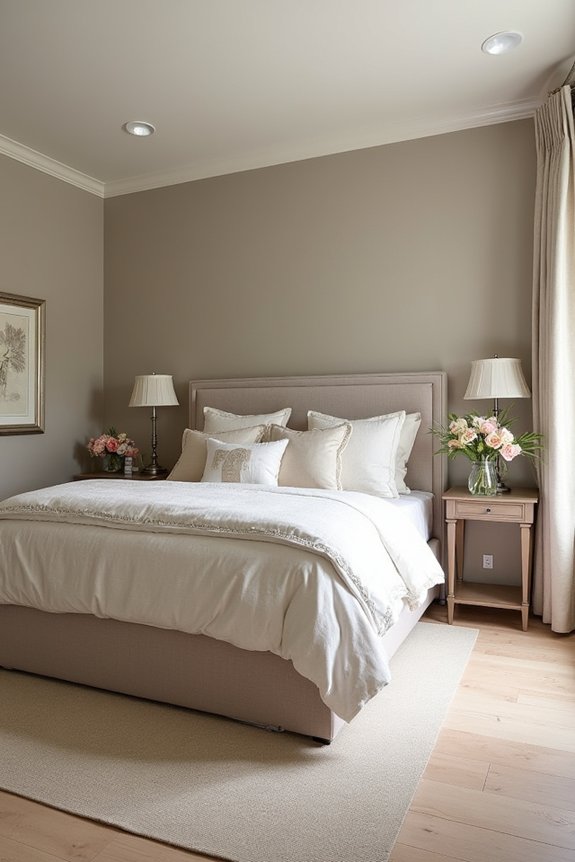
Because you’re creating a bedroom that feels both calm and inviting, choosing the right neutral foundation is absolutely essential.
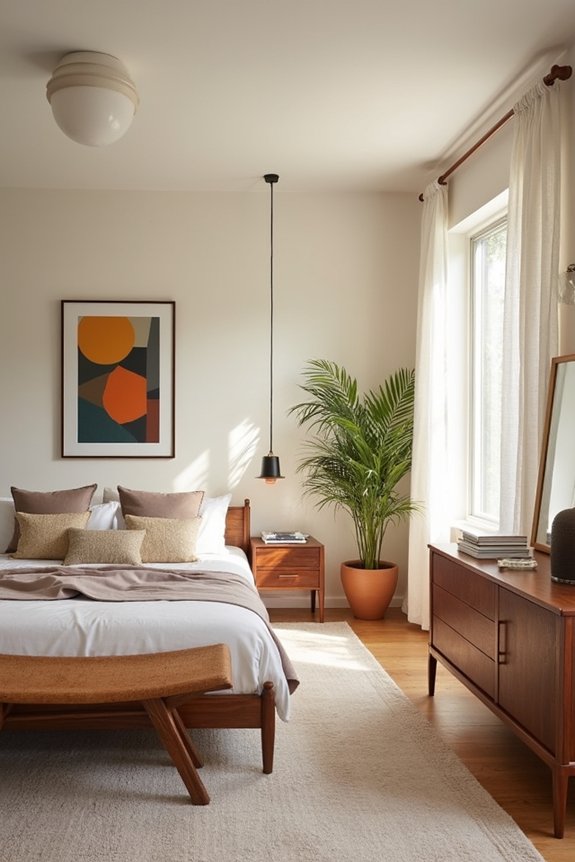
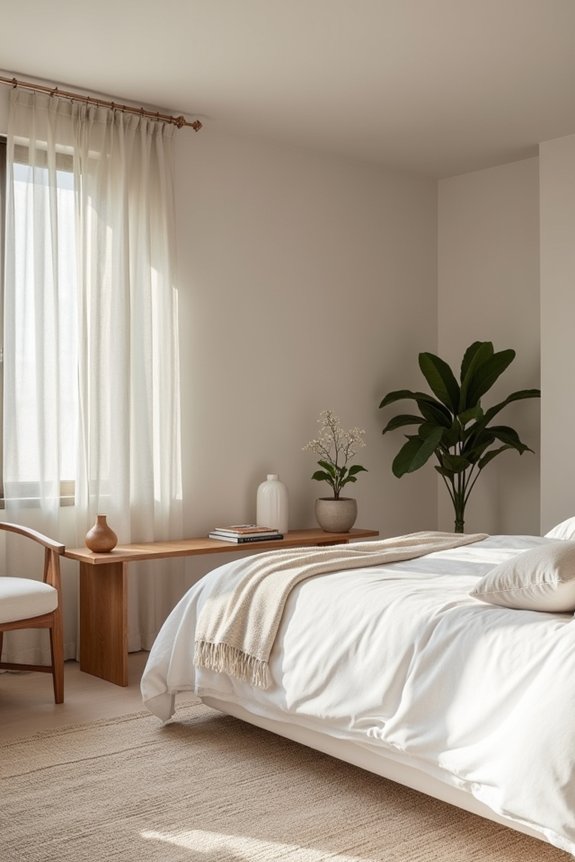
Start with warm neutrals like soft beige, gentle gray, and creamy white. These colors work beautifully together, creating a balanced backdrop that doesn’t feel cold or sterile.
You’ll find that warm neutrals reflect light wonderfully, making your space feel larger and more peaceful.
Layer these tones through your walls, bedding, and larger furniture pieces. This approach gives you incredible flexibility to add personal touches later with accessories, artwork, or accent colors that truly reflect your personality and style preferences. When selecting materials for your bedroom furnishings, prioritize fade-resistant materials that will maintain their color and integrity over time.
Layer Textures to Add Depth Without Visual Clutter
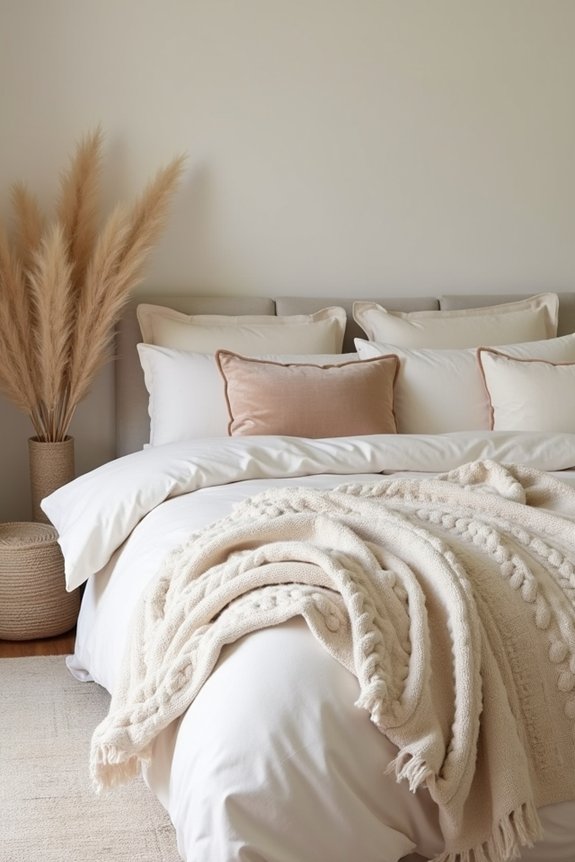
Once you’ve established your warm neutral palette, it’s time to bring your bedroom to life through texture—and you’ll discover that layering different textures is one of the most effective ways to create visual interest without making your space feel cluttered or overwhelming.
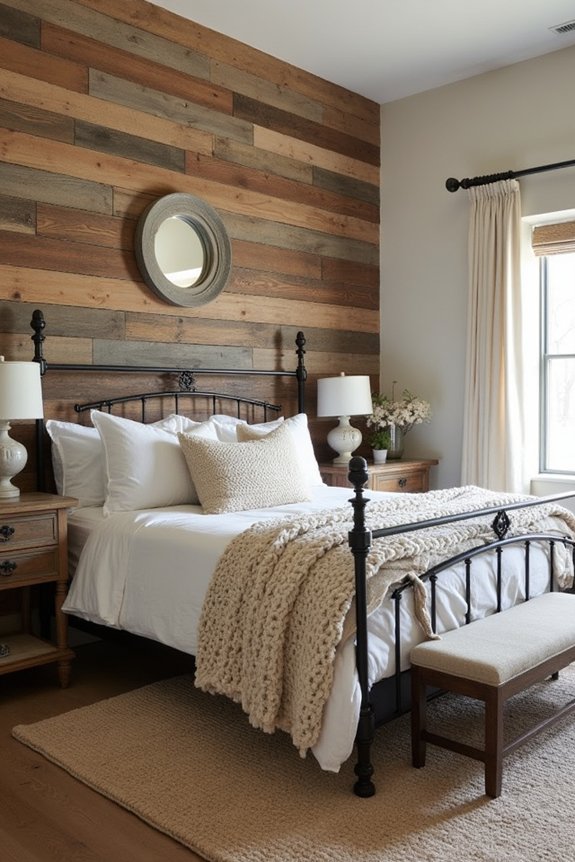
Consider mixing soft linens with a chunky knit throw, then add a smooth velvet pillow. Incorporate natural wood elements, woven baskets, and perhaps a plush area rug. For your bedding, choose double-brushed polyester microfiber or high-quality cotton duvet covers that offer both softness and durability while complementing your textural layers.
These varied textures work together harmoniously, inviting touch and comfort while maintaining the calm, balanced aesthetic you’re creating in your sanctuary.
Choose Transitional Furniture: Clean Lines and Classic Proportions
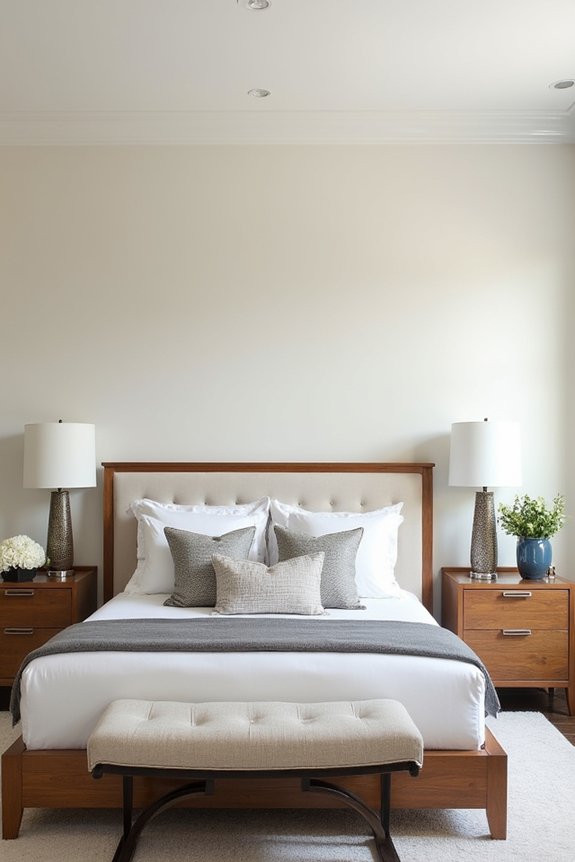
With your layers of texture now creating that inviting, tactile foundation, it’s time to select furniture pieces that’ll anchor your bedroom with timeless style and purpose.
Look for pieces featuring clean lines and balanced proportions—these characteristics define transitional design beautifully. Choose a bed with a simple headboard, perhaps upholstered in neutral fabric, paired with nightstands that offer both elegance and function.
Dressers and benches with straightforward silhouettes work wonderfully too. Avoid overly ornate details or ultra-modern angles; instead, embrace furniture that feels both classic and contemporary.
These thoughtful selections’ll create a cohesive, sophisticated space you’ll genuinely love spending time in.
Incorporate Statement Lighting That Works and Looks Good
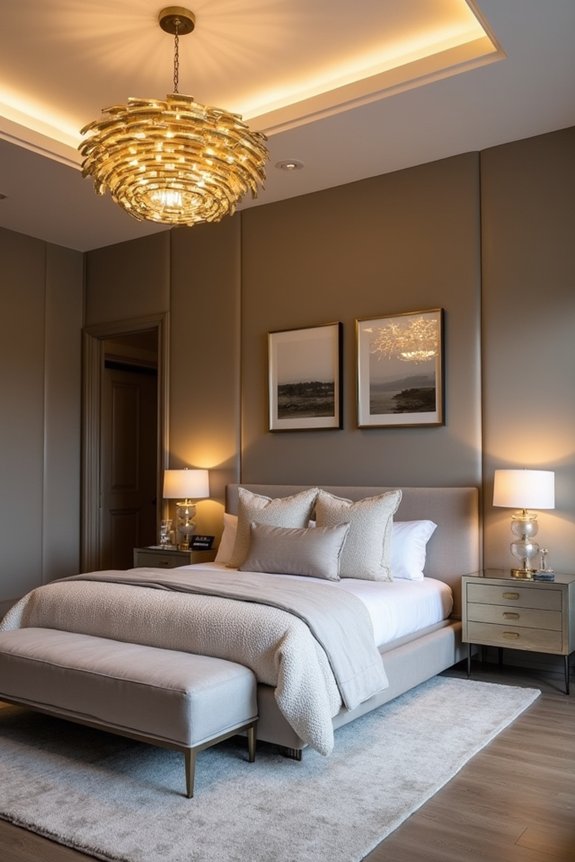
Lighting’s one of those magical elements that can totally transform your bedroom—it’s not just about brightness, it’s about creating the right mood and atmosphere.
Statement lighting pieces anchor your changing space beautifully. Consider these options:
- Chandelier or pendant light – Choose designs with clean lines and elegant finishes that blend classic and modern styles seamlessly.
- Bedside sconces – Install matching wall-mounted lights flanking your headboard for balanced, functional illumination.
- Floor lamp – Position a sculptural piece in a corner to add visual interest and layered lighting.
- Dimmer switches – Install these to control brightness levels, helping you customize ambiance throughout your day.
Source Intentionally: Mix Investment Basics With Artisan Accents
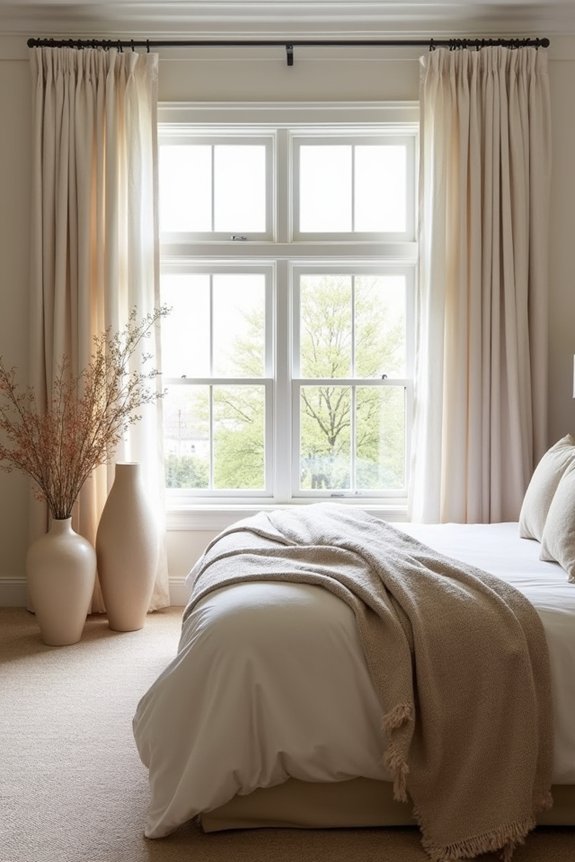
Now that you’ve got your lighting sorted, it’s time to think about what you’re bringing into your bedroom—and how you’re going to pay for it.
You don’t need expensive everything. Instead, invest in quality basics like a sturdy bed frame, comfortable mattress, and durable nightstands that’ll last years.
Then, balance those essentials with artisan accents—handmade pieces from local artists, vintage finds, or unique textiles that reflect your personality. Consider incorporating festive seasonal elements to add warmth and personality to your curated space throughout the year.
This approach gives you a sophisticated, curated space without breaking the bank.
You’re creating something genuinely yours, blending timeless foundations with meaningful details.
Display Art and Décor: Strategic Arrangement Avoids Visual Noise
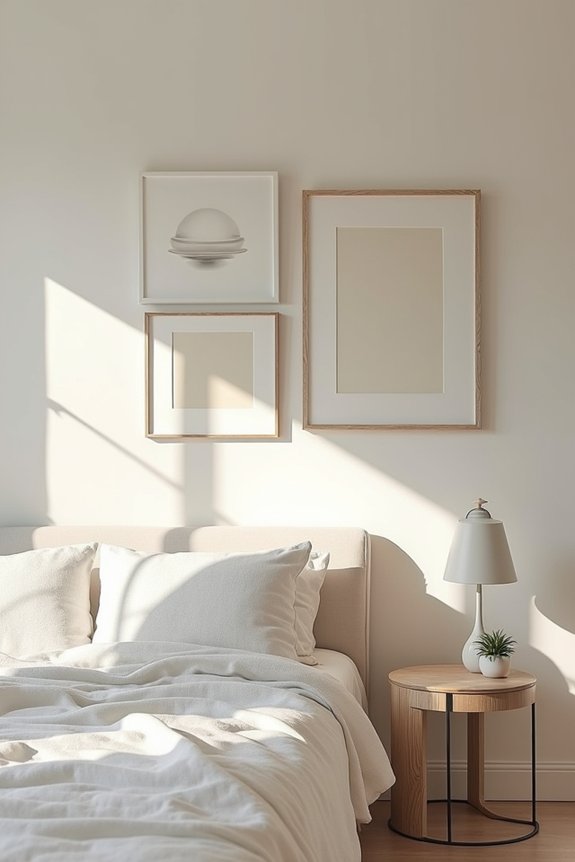
Once you’ve invested in quality basics and added meaningful artisan pieces, it’s time to think carefully about how you’ll display everything—because there’s a real difference between a curated bedroom and one that feels cluttered.
Strategic arrangement creates breathing room and lets each piece shine:
- Group items in odd numbers (three pillows, five framed photos) for visual interest
- Leave wall space open between artwork to prevent overwhelming your eyes
- Create focal points by anchoring displays around your bed or dresser
- Rotate seasonal décor to keep your space feeling fresh and intentional
Consider incorporating winter bookshelf decor elements into your bedroom displays for added warmth and texture during colder months. This thoughtful approach transforms your bedroom into a peaceful, welcoming retreat.
Balance Empty Space With Purposeful Décor
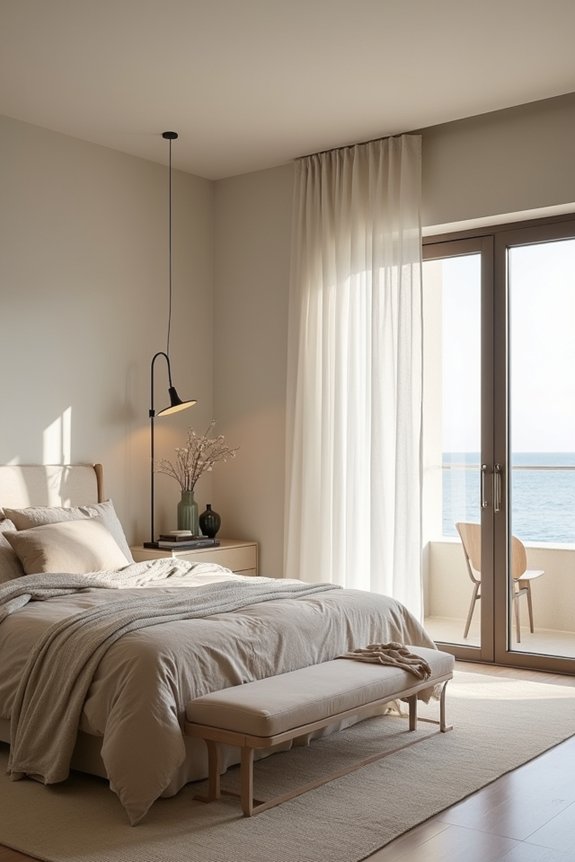
The secret to a bedroom that feels both serene and inviting isn’t filling every inch with stuff—it’s knowing when to leave space alone.
Strategic empty spaces actually make your room feel larger and more peaceful. Place a few meaningful pieces—like a beautiful nightstand lamp or framed photo—where they’ll stand out.
Leave your nightstands partially clear, allowing breathing room around essential items. This approach lets your eyes rest and creates visual calm.
You’re not being lazy; you’re being intentional. Each item you keep deserves attention and purpose, transforming your bedroom into a sanctuary that rejuvenates rather than overwhelms you daily.
Frequently Asked Questions
How Do I Transition My Master Bedroom Décor Without Replacing All Furniture at Once?
You’ll gradually introduce new pieces through bedding, accessories, and paint colors. Swap out curtains, add decorative pillows, and update lighting fixtures progressively. Layer in new furniture strategically as budget allows.
What’s the Ideal Master Bedroom Size for Implementing Transitional Design Principles?
You’ll find progression design works best in master bedrooms ranging from 120 to 200 square feet. This size gives you enough space to balance modern and traditional elements without feeling cluttered or sparse. Smaller rooms need careful editing; larger ones benefit from defined zones.
How Can I Incorporate Technology Into Transitional Master Bedroom Décor Seamlessly?
You’ll want to gently introduce modern conveniences through subtle placement. Conceal your tech toys within elegant wood cabinetry or behind neutral panels. Choose sleek, minimalist devices that won’t disturb your room’s balanced aesthetic between classic and contemporary styles.
What Window Treatments Work Best With Transitional Master Bedroom Design Styles?
You’ll want to choose neutral-toned roman shades or linen curtains that blend traditional and modern elements. Pair them with sleek hardware and layered treatments to create depth while maintaining your room’s balanced, sophisticated aesthetic.
How Do I Choose a Transitional Color Palette if I Prefer Bold Colors?
Who says transformative design demands muted tones? You’ll anchor bold colors with neutral walls, then layer jewel tones through accents like bedding and artwork, creating sophisticated balance that doesn’t sacrifice your vibrant personality.