Start with neutral colors like soft whites and warm grays to create a calm backdrop. Next, choose fixtures combining classic and modern styles—think brushed nickel with clean lines. Mix materials thoughtfully by pairing sleek chrome with warm wood or matte black with soft brass. Pick just one statement piece, like an ornate mirror or bold tile, to keep things focused. Finally, hide storage behind floating shelves and under-sink cabinets so your design stays serene. Discover how these five ideas work together to transform your space.
Design Highlights
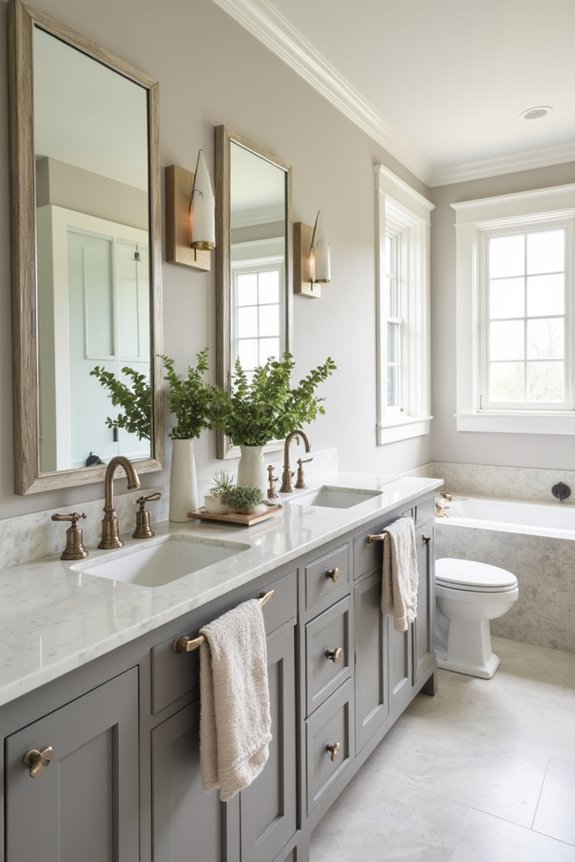
- Use neutral foundation colors like soft whites, warm grays, and gentle beiges to create a calm, welcoming bathroom atmosphere.
- Select fixtures combining clean lines with classic finishes like brushed nickel or oil-rubbed bronze for timeless appeal.
- Mix contrasting materials such as sleek chrome with warm wood or matte black with soft brass for visual depth.
- Feature one statement piece like a vintage vanity or ornate mirror while keeping supporting elements neutral and understated.
- Incorporate hidden storage through floating shelves, under-sink cabinets, and medicine cabinets to maintain a clutter-free, sophisticated design.
Choose Your Neutral Color Foundation
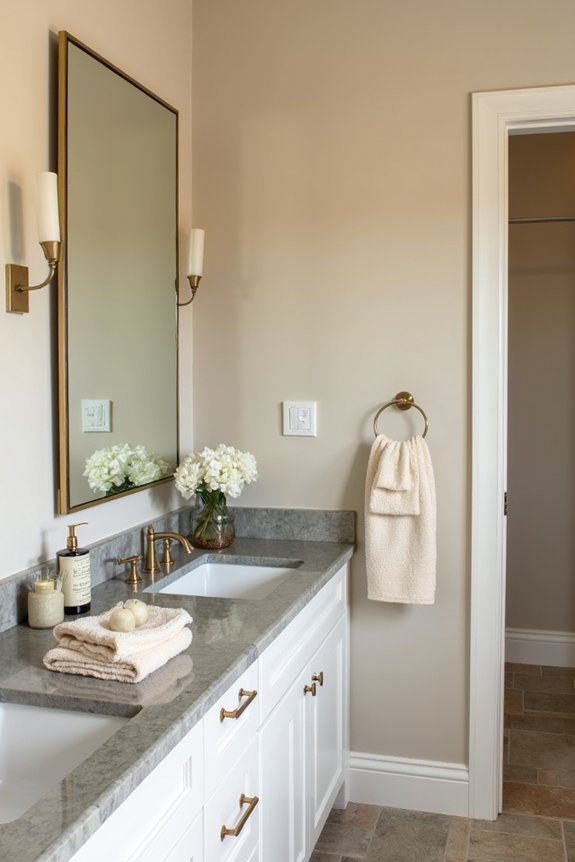
The foundation of any changing bathroom starts with selecting the right neutral colors, and you’ll find that these timeless shades create a calm, welcoming space that won’t feel dated in a few years.
Consider soft whites, warm grays, and gentle beiges as your base palette. These colors work beautifully together, allowing you to layer in textures and accent pieces without overwhelming the room.
You’re creating a blank canvas that feels sophisticated and soothing. Neutral foundations give you flexibility to update accessories seasonally or adjust your style as your taste evolves, making them a smart, practical choice for any bathroom renovation. Pairing your neutral palette with moisture-resistant materials like stainless steel fixtures and ceramic accessories ensures your transitional design remains both beautiful and durable in the humid bathroom environment.
Pick Fixtures That Blend Classic and Modern
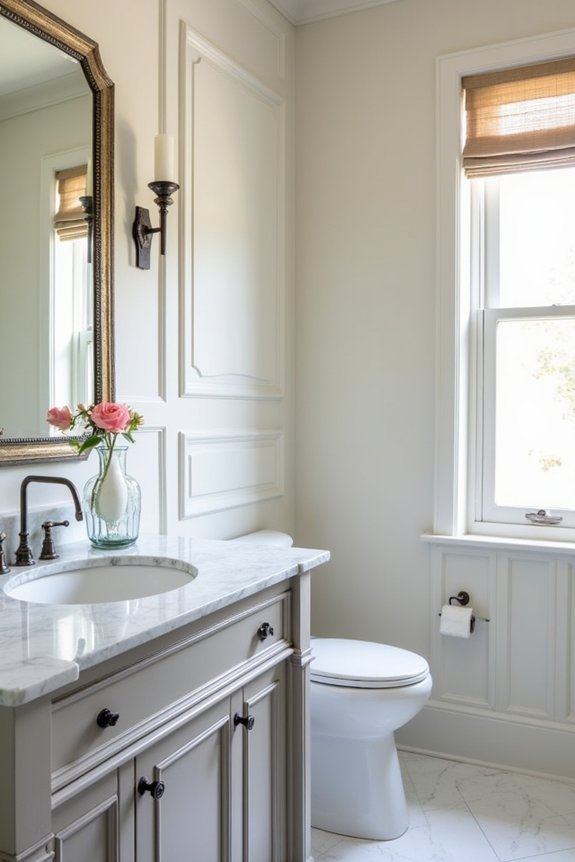
Once you’ve established your calm, neutral foundation, it’s time to choose fixtures that’ll serve as the beautiful anchors of your bathroom space.
Look for faucets with clean lines and timeless designs, combining sleek modern elements with classic touches like brushed nickel or oil-rubbed bronze finishes. Select vanities featuring traditional silhouettes paired with contemporary hardware.
Consider lighting fixtures that blend vintage charm with efficient LED technology. Your mirror frame can showcase ornate details while maintaining a streamlined overall look.
These thoughtfully chosen pieces create harmony, preventing your bathroom from feeling too trendy or outdated while celebrating both design eras beautifully.
Mix Materials and Finishes for Subtle Contrast
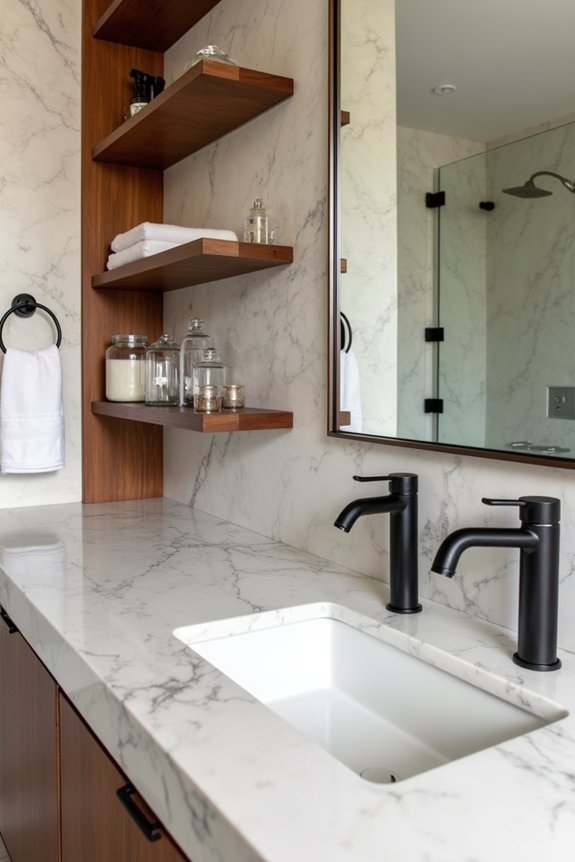
To truly nail that changeover style, you’ll want to thoughtfully blend different materials and finishes throughout your bathroom.
Consider pairing sleek chrome fixtures with warm wood accents, creating visual interest without clashing. You might combine brushed nickel with natural stone, or matte black with soft brass details.
These combinations honor both classic and contemporary aesthetics. Mixing finishes prevents your space from feeling too modern or too traditional, striking that perfect balance.
Varying textures—like pairing smooth ceramic with rough stone—adds depth and dimension. This layered approach transforms your bathroom into a sophisticated sanctuary that feels both timeless and current, inviting you to relax daily.
Limit Statement Pieces to Just One
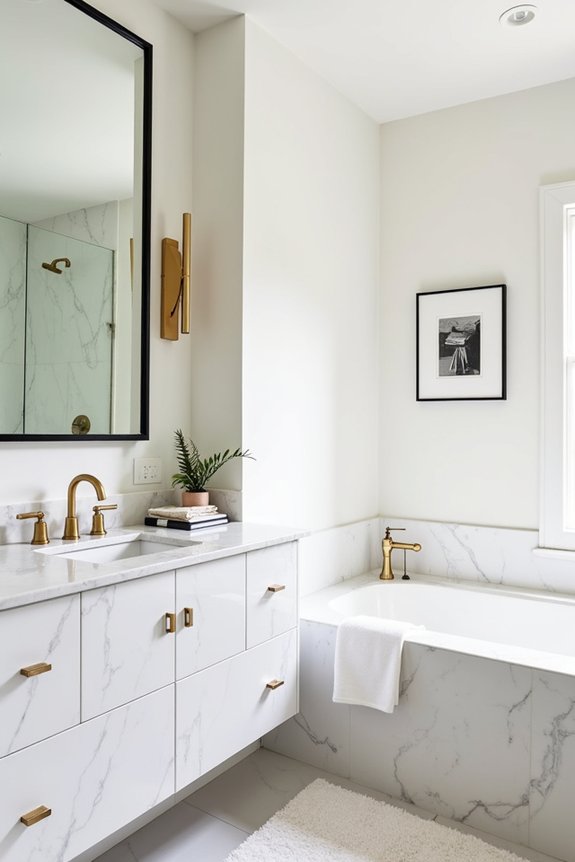
While mixing materials and finishes creates a beautiful foundation, you’ll want to resist the urge to fill your bathroom with multiple eye-catching pieces that compete for attention.
Instead, choose just one statement piece—perhaps a vintage vanity, an ornate mirror, or bold tile work—and let it shine as your bathroom’s focal point. This approach keeps your space from feeling cluttered or overwhelming.
Your other elements can be neutral and understated, supporting your star piece beautifully. When you give one feature the spotlight, you’re creating a sophisticated, intentional look that feels calm and collected.
Your bathroom becomes a thoughtfully designed retreat.
Hide Storage Where It Belongs in Your Design
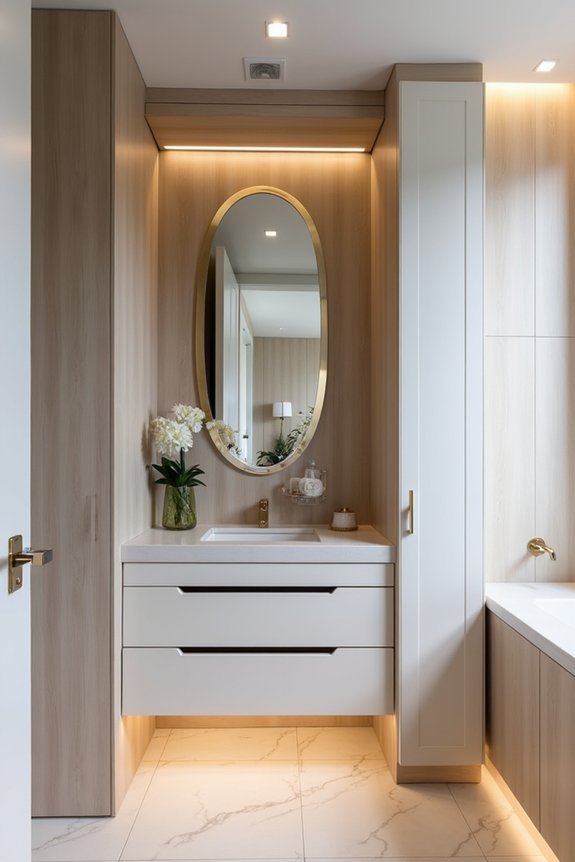
Because bathrooms are typically smaller spaces, you’ll want to be intentional about where you store your daily essentials so they don’t clutter your countertops or distract from your statement piece.
Consider installing floating shelves behind the toilet or within wall cavities for hidden storage that maintains your clean aesthetic. Under-sink cabinets work wonderfully for organizing products while keeping them out of sight.
Drawer dividers help contain smaller items neatly. Tall linen closets or medicine cabinets also serve dual purposes—they’re functional and blend seamlessly into your progressive design, allowing your beautiful bathroom to truly shine.
Frequently Asked Questions
What Lighting Options Work Best for Transitional Bathroom Designs?
You’ll achieve the best results with layered lighting combining recessed fixtures, vanity sconces, and pendant lights. Choose brushed nickel or oil-rubbed bronze finishes that blend traditional and modern elements seamlessly in your changing bathroom.
How Do I Choose the Right Size Mirror for a Transitional Bathroom?
You’ll balance bold and subtle proportions by measuring your vanity width—choose a mirror that’s slightly narrower, matching 75% of your sink’s span. This creates visual harmony while you’re maintaining shifting design’s understated elegance.
Can I Incorporate Plants and Natural Elements Into Transitional Decor?
You can absolutely incorporate plants and natural elements into changeable decor. Add potted plants, wooden accents, stone accessories, and natural textures to balance modern fixtures with classic design elements for a harmonious bathroom aesthetic.
What Window Treatments Complement a Transitional Bathroom Style?
You’ll want to choose neutral-colored Roman shades or simple roller blinds that blend traditional and modern elements. Linen or linen-blend fabrics work beautifully, while you can add layered looks with subtle patterns or soft textures for visual interest.
How Should I Arrange Bathroom Accessories in a Transitional Space?
Studies show 73% of homeowners prioritize bathroom organization. You’ll arrange accessories by grouping similar items together, balancing modern and traditional pieces on shelves, and creating negative space to avoid clutter while maintaining visual harmony.