You can transform your entryway into an organized, welcoming space with five practical DIY mudroom solutions. Wall-mounted cubbies offer designated spots for coats and bags, while shoe racks and boot storage keep footwear tidy and accessible. Pegboards provide customizable, affordable organization for keys and accessories. Repurposed furniture like old benches adds character and saves money. Finally, built-in bench seating with hidden storage combines comfort with functionality. Each solution works for any budget and skill level, and the details ahead will show you exactly how to create your perfect mudroom.
Design Highlights
- Wall-mounted cubbies provide customizable designated storage for coats, backpacks, and accessories while eliminating daily entryway clutter.
- DIY shoe racks using wooden shelves, plastic bins, or repurposed ladder shelving keep footwear organized and easily accessible.
- Pegboards offer affordable, rearrangeable storage solutions with hooks, baskets, and shelves for coats, keys, and small accessories.
- Repurposed furniture transformed into mudroom benches combines seating with under-storage using baskets or cubbies for eco-friendly functionality.
- Custom built-in benches with lift-top or drawer designs provide both comfortable seating and concealed storage for family items.
Wall-Mounted Cubbies for Coats and Bags
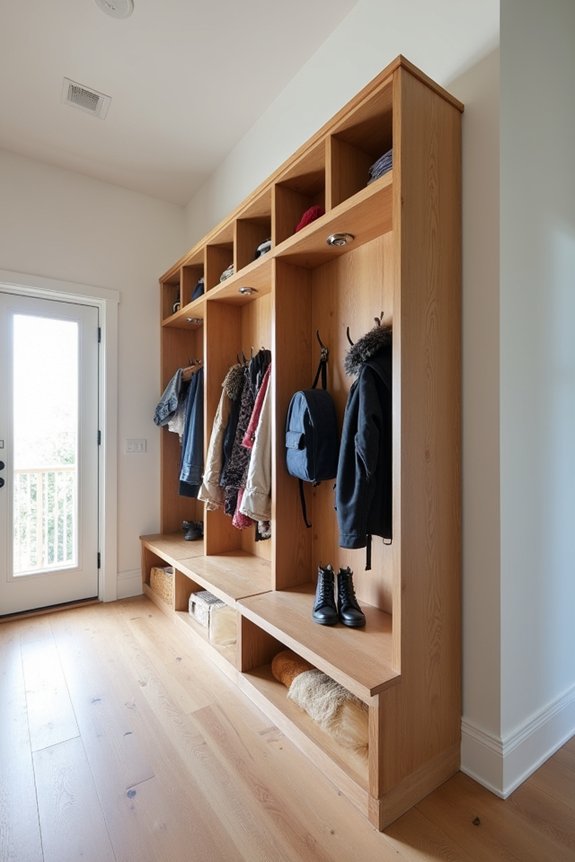
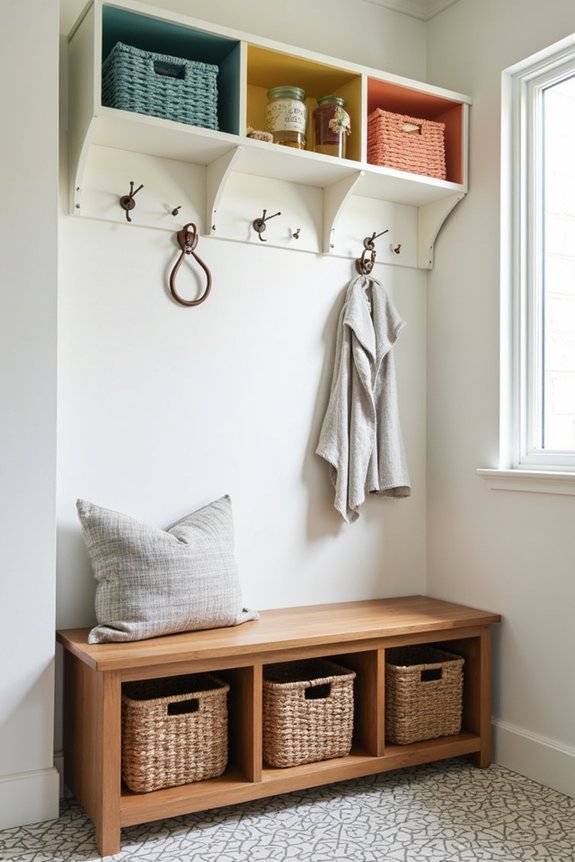
Wall-mounted cubbies are one of the smartest ways to transform your mudroom into an organized, functional space that actually works for your family.
You’ll love how these cubbies provide designated spots for each person’s coats, backpacks, and accessories, eliminating the daily clutter battle. They’re incredibly easy to install on any wall, requiring just basic tools and hardware.
You can customize the size and number of compartments to fit your family’s needs perfectly. Adding hooks inside each cubby gives you extra storage for smaller items.
Your mudroom becomes inviting and efficient, making mornings smoother and helping everyone stay accountable for their belongings.
DIY Shoe Racks and Boot Storage
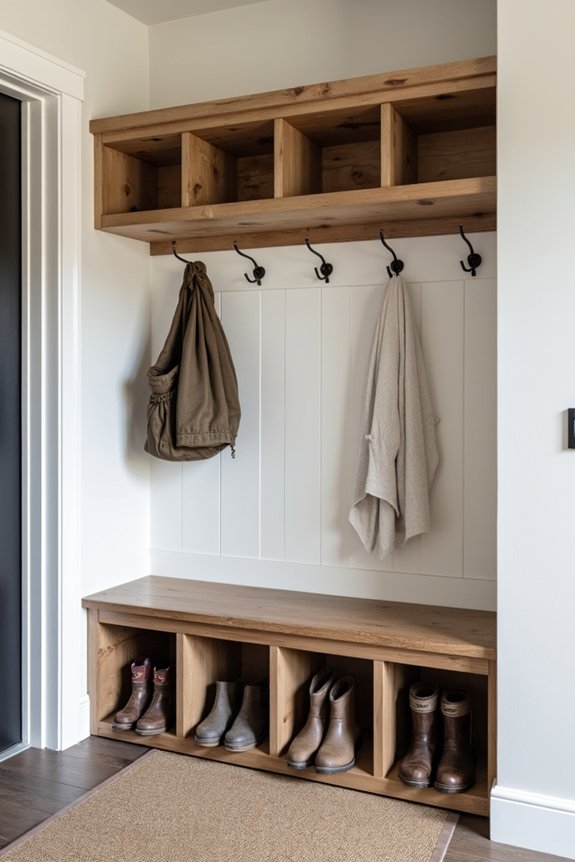
You’ll find that creating your own shoe storage solution is one of the most practical additions to your mudroom, and it doesn’t require advanced carpentry skills to pull off.
Consider building simple wooden shelves with lip edges that prevent shoes from sliding, or stack clear plastic bins for easy visibility.
Tiered racks work wonderfully for boots, keeping them upright and organized. You can repurpose old ladder shelving or install tension rods for hanging shoe organizers.
Adding labels helps everyone find their footwear quickly.
These DIY solutions protect your floors while keeping shoes accessible and your mudroom functional.
Pegboards for Coats, Keys, and Accessories
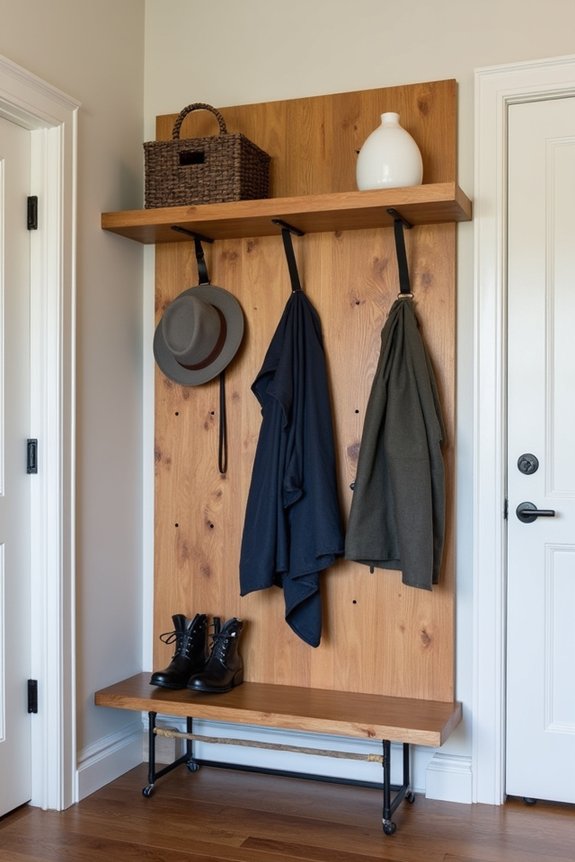
Once your shoes are sorted and stored neatly, it’s time to tackle the items that clutter your entryway—coats, keys, bags, and daily accessories.
Pegboards offer an excellent solution that’s both functional and visually appealing. You’ll mount a pegboard on your wall, then customize it with hooks, baskets, and shelves to fit your needs.
Hang coats on sturdy hooks, install a small shelf for keys, and add baskets for gloves and scarves. This system keeps everything accessible and visible, so you’ll always know where important items are.
Plus, pegboards are affordable, easy to install, and you can rearrange them whenever you’d like. For smaller items like keys and jewelry, consider pairing your pegboard with drawer organizer sets to maintain a cohesive and fully organized entryway system.
Repurposed Furniture as Mudroom Benches
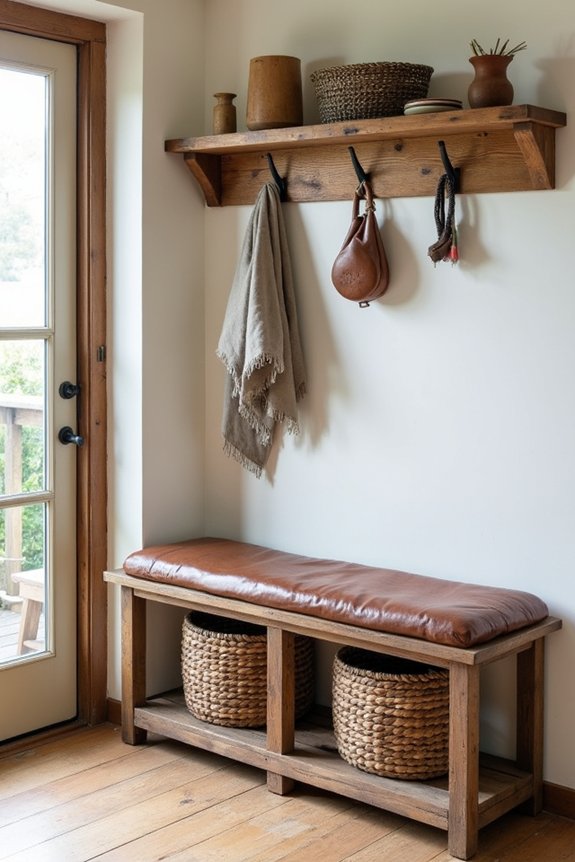
If you’ve got an old bench, wooden crate, or sturdy chair gathering dust in your garage or attic, it’s perfect for transforming into a functional mudroom piece.
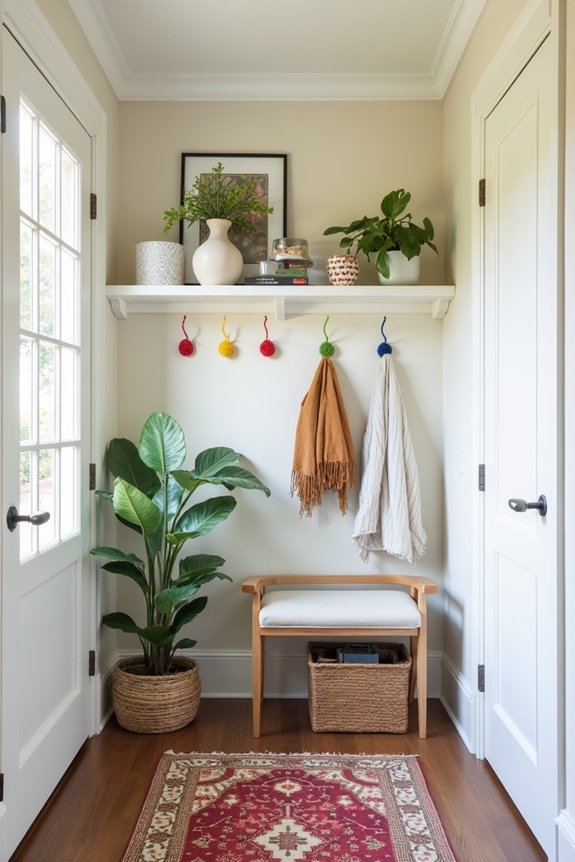
You can sand down the surface, add a fresh coat of paint, and install it near your entryway for seating. Consider adding storage underneath by attaching baskets or cubbies, which gives you space for shoes and accessories.
You’ll love how this approach saves money while creating a welcoming spot for your family. It’s an eco-friendly solution that adds character and practicality to your home’s entrance.
Built-In Bench Seating With Hidden Storage
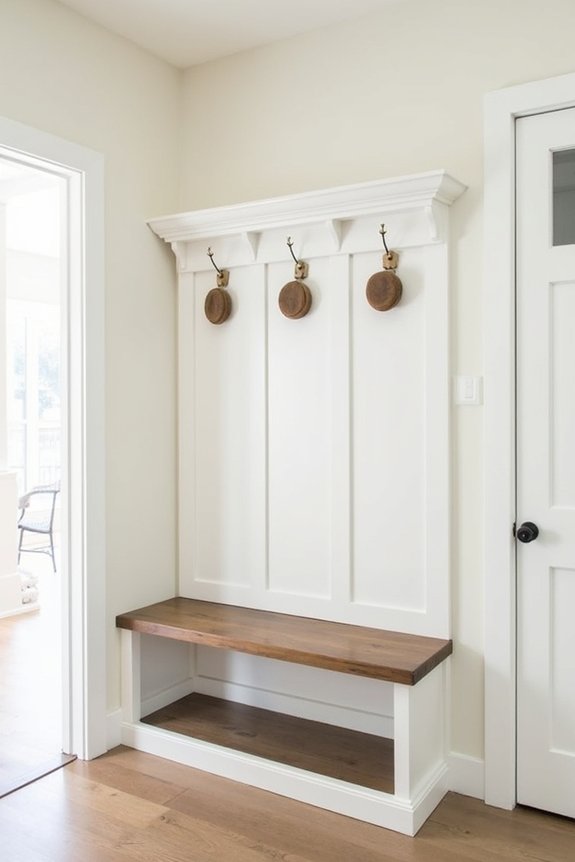
While repurposed furniture brings charm and savings to your mudroom, building a custom bench with hidden storage takes functionality to the next level.
You’ll create a space that’s both beautiful and practical for your family’s needs.
Here’s what you’ll need to take into account:
- Choose sturdy wood materials that withstand daily wear
- Plan lift-top or drawer designs for concealed storage
- Add cushioning for comfortable seating
- Install hooks above for coats and bags
This personalized bench transforms your mudroom into an organized hub.
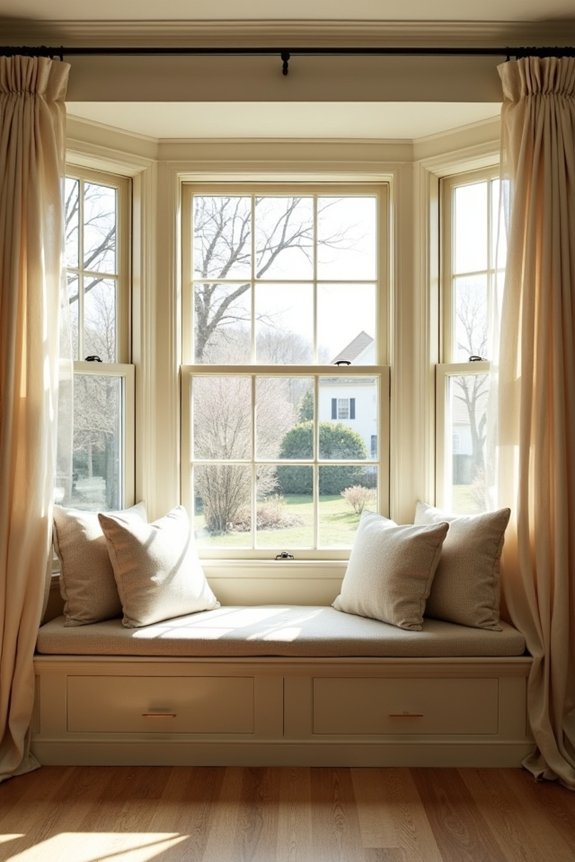
You’re investing in a solution that grows with your family, keeping shoes, gloves, and seasonal items neatly hidden while providing inviting seating for putting on outdoor gear.
Frequently Asked Questions
What’s the Best Flooring Material for Mudrooms That’s Easy to Clean?
You’ll find that porcelain tile and luxury vinyl plank work best for mudrooms. They’re waterproof, scratch-resistant, and you can easily wipe them clean. Both materials handle moisture and dirt without staining or warping.
How Can I Improve Lighting in My DIY Mudroom Space?
Light acts as your mudroom’s welcoming beacon. You’ll brighten your space by installing recessed ceiling fixtures, adding wall sconces near hooks, and incorporating a skylight if possible. Layer task lighting with ambient options for functionality.
What’s the Ideal Mudroom Size for an Average Family?
You’ll want a mudroom that’s roughly 4×8 feet for an average family. This size gives you enough room for coats, shoes, and storage without consuming too much of your home’s valuable square footage.
How Do I Prevent Mudroom Odors and Maintain Air Quality?
You’ll want to vigilantly ventilate your mudroom by installing vents and opening windows regularly. Place pretty potted plants strategically, use activated charcoal absorbers, and establish a dedicated drying zone for wet gear.
What Budget Should I Allocate for a Complete Mudroom Renovation?
You’ll typically allocate $500–$3,000 for a complete mudroom renovation, depending on size and materials. Budget more for custom built-ins and flooring, less for basic shelving and hooks. Your priorities determine spending.