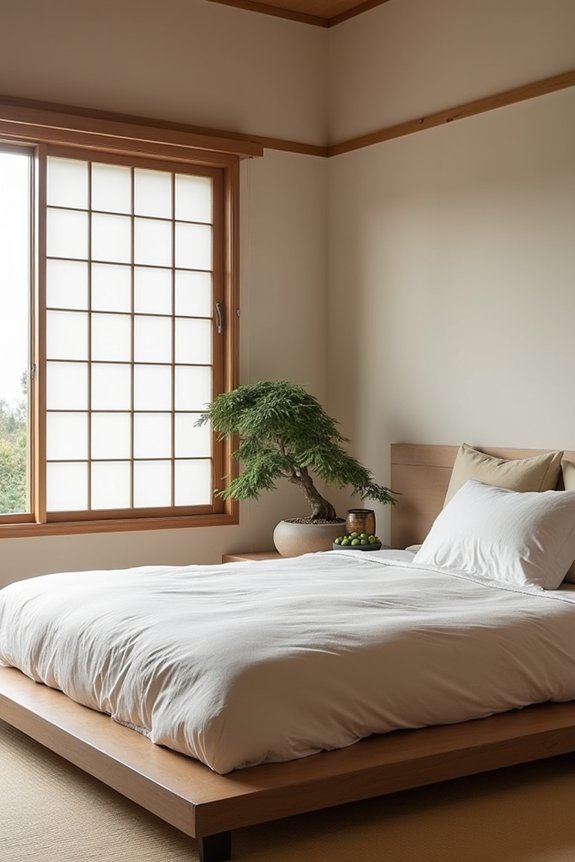
Transform your bedroom into a peaceful sanctuary with three essential zen elements. First, embrace minimalism by removing clutter and keeping only items that serve a purpose or bring you joy. Second, incorporate natural materials like wood furniture, stone accents, and soft fabrics in earthy tones to ground your space. Third, arrange your furniture asymmetrically—place your bed off-center and group items in odd numbers—to create visual harmony and encourage energy flow. These principles work together to calm your mind and nurture genuine well-being, with deeper insights waiting to enhance your understanding further.
Design Highlights
- Minimalism eliminates clutter and keeps only purposeful items, creating calm through strategic emptiness and reduced visual overwhelm.
- Natural materials like wood, stone, and organic fabrics ground the space in earthy tones for authentic tranquility.
- Asymmetrical balance positions furniture and decor unevenly, reflecting Zen philosophy while promoting energy flow throughout the bedroom.
- Muted color palettes featuring soft beiges, warm grays, and muted greens establish a soothing, peaceful atmosphere.
- Negative space enhances comfort by eliminating distractions and allowing the mind to settle into mindfulness and relaxation.
Minimalism: The Zen Principle of Strategic Emptiness
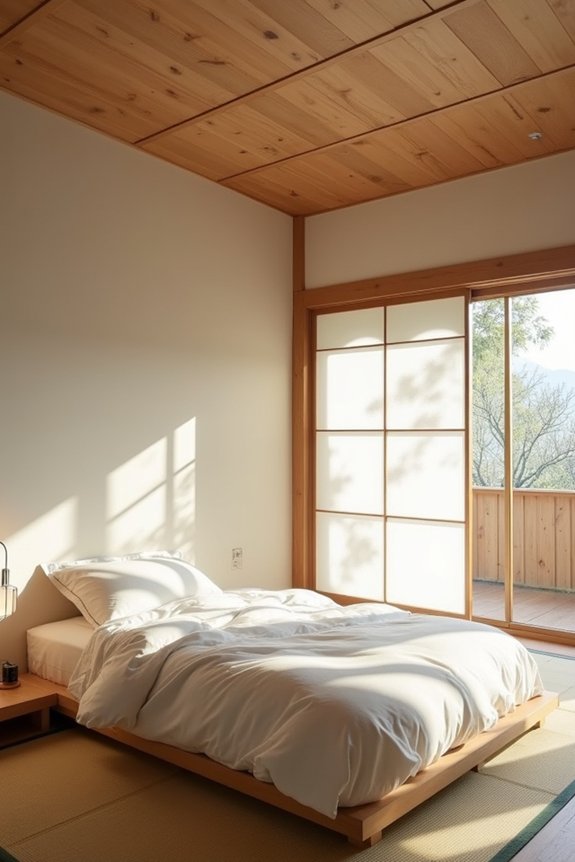
When you walk into a room filled with too many things, you might feel stressed or overwhelmed, and that’s exactly why minimalism matters so much in Zen bedroom design.
You’ll want to remove clutter, keeping only what serves a real purpose or brings you genuine joy. This strategic emptiness creates calm and peace, allowing your mind to relax completely.
Choose a few quality pieces instead of many mediocre ones. Let negative space breathe throughout your room, giving your eyes and thoughts room to settle.
You’re not removing comfort; you’re enhancing it by eliminating distractions that pull your attention in too many directions.
Natural Materials and Earthy Color Palettes
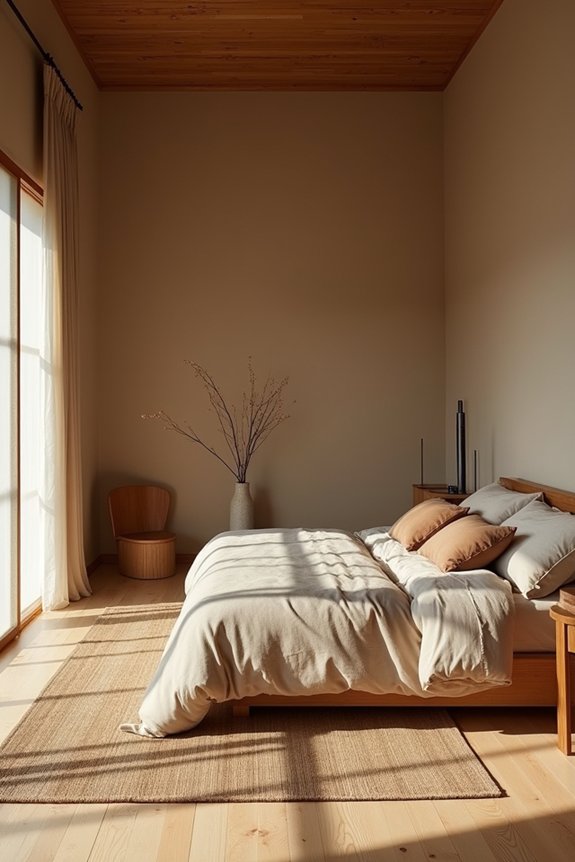
Your calm, clutter-free bedroom is now ready for the materials and colors that’ll truly make it feel like a sanctuary.
Natural materials connect you to the earth, creating warmth and authenticity in your space.
- Wood furniture – Choose light bamboo or dark walnut pieces that ground your room with organic beauty.
- Stone accents – Incorporate slate tiles or river rocks as decorative elements that evoke natural tranquility.
- Earthy tones – Use soft beiges, warm grays, and muted greens that soothe your mind and body.
- Natural fabrics – Select cotton, linen, or wool bedding that feels gentle against your skin.
These elements work together, transforming your bedroom into a peaceful retreat that honors nature’s calming influence. For durability in natural wood furniture, look for solid wood construction with reinforced cross-bracing that will withstand years of use while maintaining its aesthetic appeal.
Asymmetrical Balance: The Zen Approach to Spatial Harmony
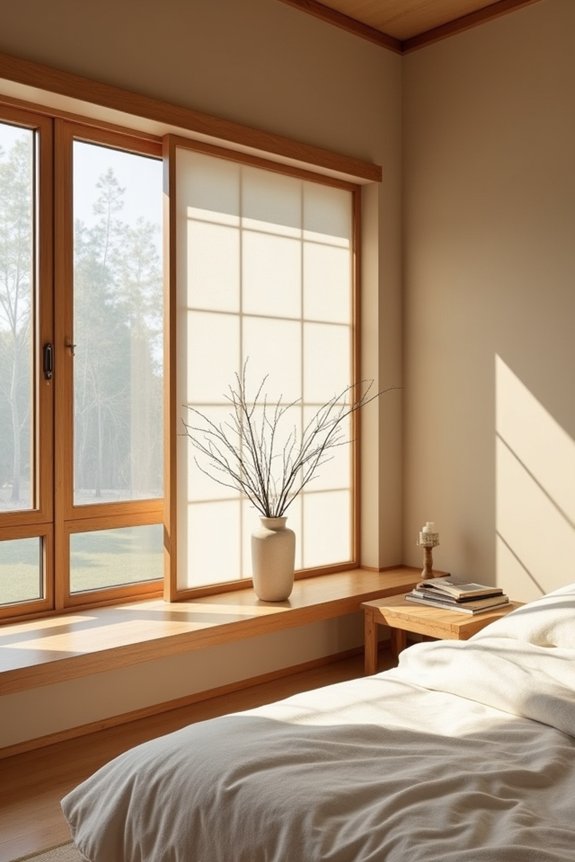
Unlike Western design that often centers everything perfectly in the middle, Zen philosophy embraces asymmetrical balance—a more natural, flowing approach to arranging your bedroom.
You’re creating harmony by positioning furniture and decor unevenly, which actually feels more restful to your eyes and mind.
Try placing your bed off-center or grouping items in odd numbers rather than pairs. This intentional imbalance reflects nature’s authentic beauty, where nothing’s perfectly symmetrical.
You’ll discover that asymmetrical arrangements encourage movement and energy flow throughout your space, making your bedroom feel genuinely peaceful and authentically balanced.
Frequently Asked Questions
How Do I Incorporate Lighting Into a Zen Bedroom Without Disrupting the Minimalist Aesthetic?
You’ll incorporate lighting by choosing warm, dimmable fixtures with natural materials like wood or rice paper. Install wall sconces or floor lamps that you can adjust, creating soft ambient light that won’t clutter your minimalist space.
What Specific Plants Are Best Suited for Asian Zen Bedroom Environments?
You’ll want to cultivate serenity like a gardener tending zen stones. Bamboo, peace lilies, and snake plants thrive in low light while purifying your air. Bonsai trees add sculptural grace to corners, embodying nature’s quiet wisdom in minimal space.
How Can I Soundproof My Bedroom to Enhance the Zen Atmosphere?
You’ll soundproof your bedroom by installing acoustic panels on walls, adding heavy curtains, sealing air gaps around doors, placing rugs on floors, and hanging fabric wall tapestries. These methods’ll create the peaceful, quiet sanctuary you’re seeking.
What Role Does Aromatherapy or Scent Play in Zen Bedroom Design?
You’ll transform your bedroom into an absolute sanctuary when you harness scent’s extraordinary power. Aromatherapy anchors your zen space by triggering deep relaxation through essential oils like lavender, sandalwood, and eucalyptus, creating an immersive sensory experience that magnifies tranquility.
How Should I Choose Between Traditional Japanese and Chinese Zen Bedroom Styles?
You’ll choose based on your personal preference. Japanese zen emphasizes minimalism and natural materials, while Chinese zen incorporates richer colors and symbolic elements. Consider which aesthetic resonates more with your lifestyle and comfort needs.