You can transform your home by starting with decluttering, keeping only what brings joy and purpose. Choose calming neutral colors like whites and grays to create a serene backdrop. Invest in smart storage solutions using vertical space and multi-functional furniture to eliminate clutter. Incorporate natural elements—wood, plants, and linen—for warmth and authenticity. Display meaningful items intentionally, not carelessly. Add low-maintenance plants for life and greenery. Keep your entryway minimal with essentials only, and refresh seasonally while staying committed to your intentional choices. Discover how these strategies work together for lasting results.
Design Highlights
- Declutter each room by sorting items into keep, donate, and discard piles to create a clean foundation.
- Establish a neutral color palette using whites, grays, and beiges to create a calm, spacious backdrop.
- Incorporate multi-functional furniture and wall-mounted organizers to maximize vertical space and minimize floor clutter.
- Display only meaningful items like photographs and artwork that reflect personal stories and values intentionally.
- Add natural elements such as plants, wooden shelves, and linen fabrics to enhance warmth and authenticity.
Start With a Decluttering Session
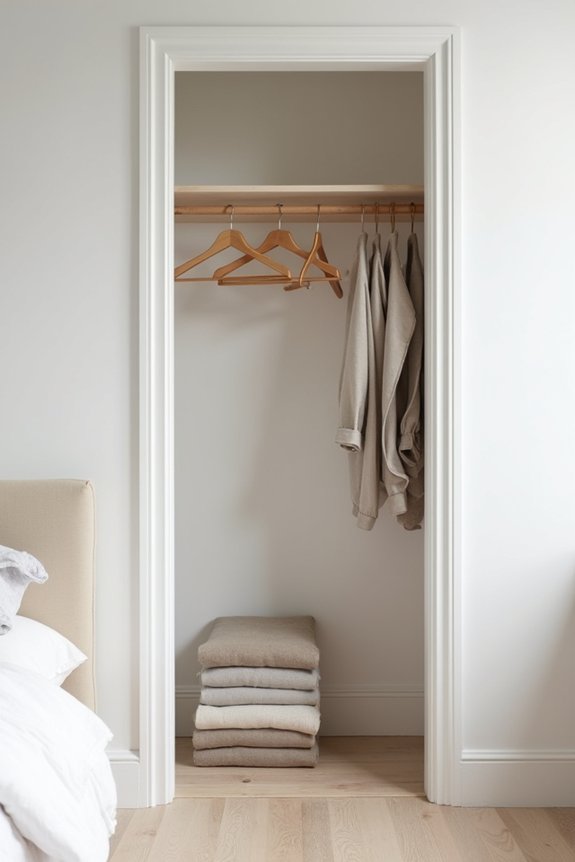
Before you can create a beautiful minimalist space, you’ve got to clear out what’s weighing you down.
Start by going through each room, picking up items and honestly asking yourself if they bring you joy or serve a purpose.
Don’t keep things out of guilt or obligation. Be honest about what you actually use and love.
Sort items into piles: keep, donate, and discard.
This process feels invigorating and empowering.
You’re not just removing clutter; you’re making space for what truly matters.
This foundation prepares your home for meaningful, intentional decor that genuinely reflects who you are.
Choose a Neutral Color Palette
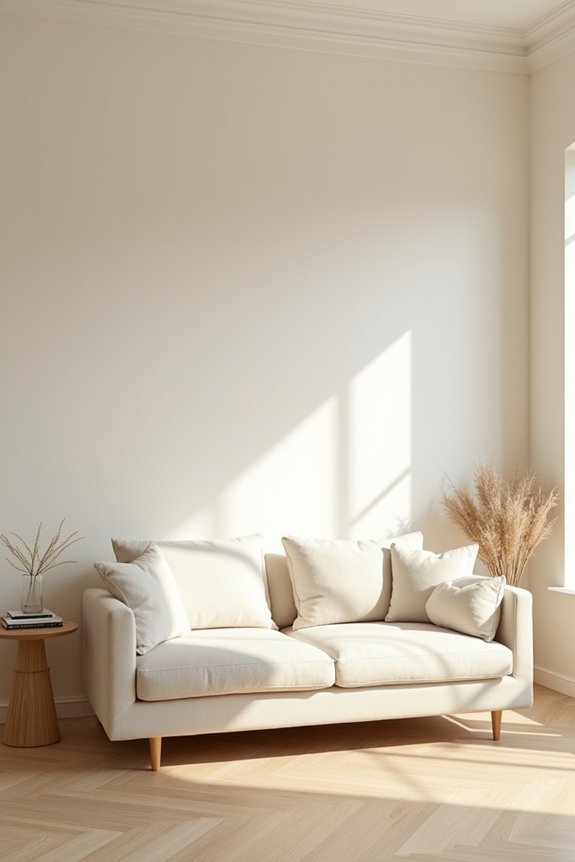
Once you’ve cleared away the clutter, it’s time to establish the visual foundation of your minimalist space—and that foundation starts with color.
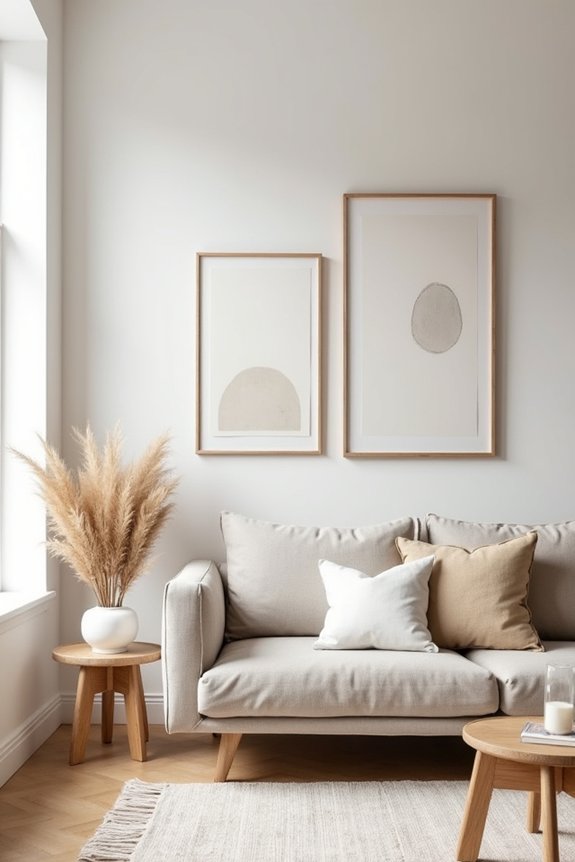
Neutral tones like whites, grays, beiges, and soft blacks create a calming backdrop that makes your home feel spacious and peaceful. These versatile colors work beautifully together, allowing you to layer textures and materials without visual chaos.
You’ll find that neutrals naturally highlight the few meaningful items you’ve chosen to keep, drawing attention to quality over quantity. This thoughtful approach transforms your space into a serene sanctuary that feels both inviting and intentionally designed.
Swap Decorative Clutter for Smart Storage Solutions
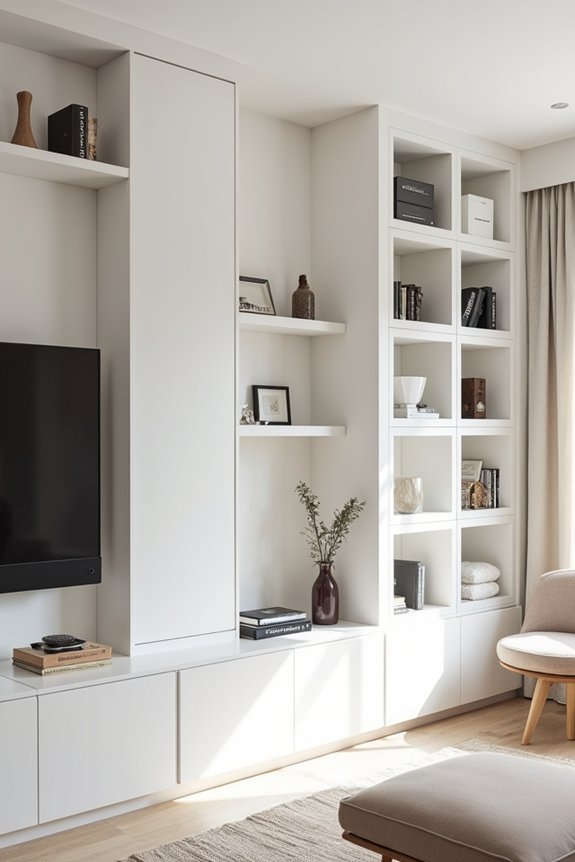
As your neutral palette creates the perfect backdrop, it’s time to think strategically about what you display and where you store it.
You’ll find that smart storage solutions transform your space while keeping it beautifully organized. Consider investing in multi-functional furniture like ottomans with hidden compartments or shelving units that serve double duty.
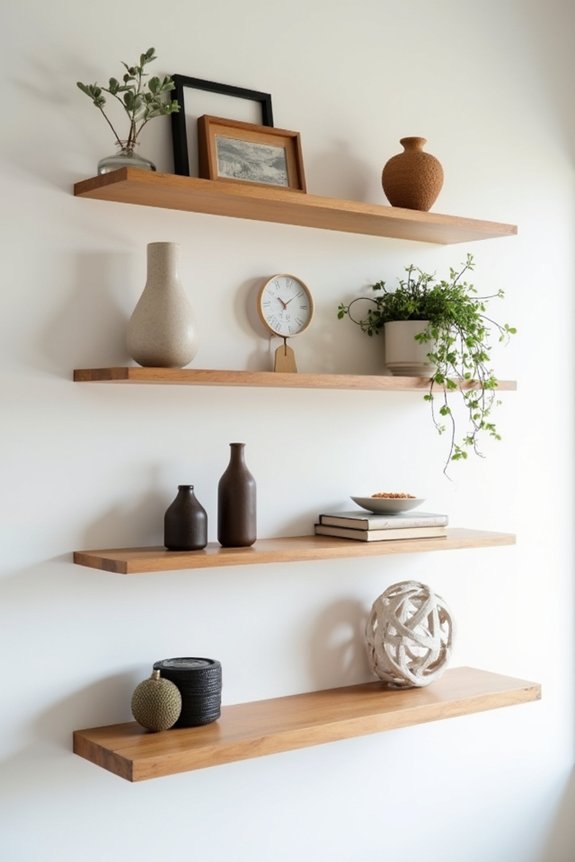
Wall-mounted organizers and floating shelves maximize vertical space without crowding your rooms. Label everything clearly so you know exactly what’s stored where.
Use Empty Space as Part of Your Design
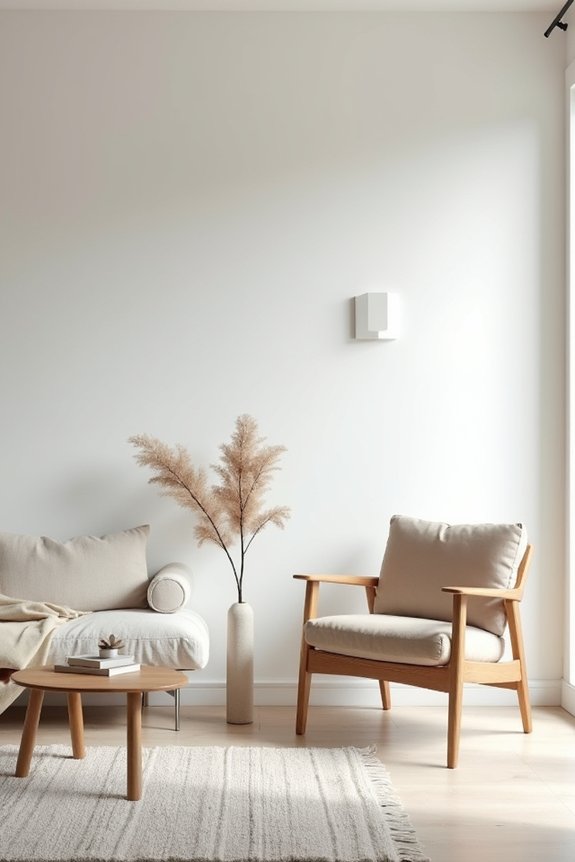
Many people feel like they need to fill every corner of their home with something—a decoration, a piece of furniture, or an accessory—but here’s the beautiful truth: empty space is actually one of your most powerful design tools.
When you embrace negative space, you’re creating breathing room that makes your home feel calm and intentional. This openness lets your eyes rest and draws attention to items you truly love.
Try leaving walls partially bare, spacing furniture farther apart, or keeping shelves uncluttered. You’ll discover that less really does feel like more, transforming your space into a peaceful sanctuary that reflects your minimalist values. To maintain this clean aesthetic, prioritize moisture-resistant materials like stainless steel and ceramic that support both durability and your minimalist vision without requiring excessive maintenance or visual clutter.
Incorporate Natural Textures and Materials
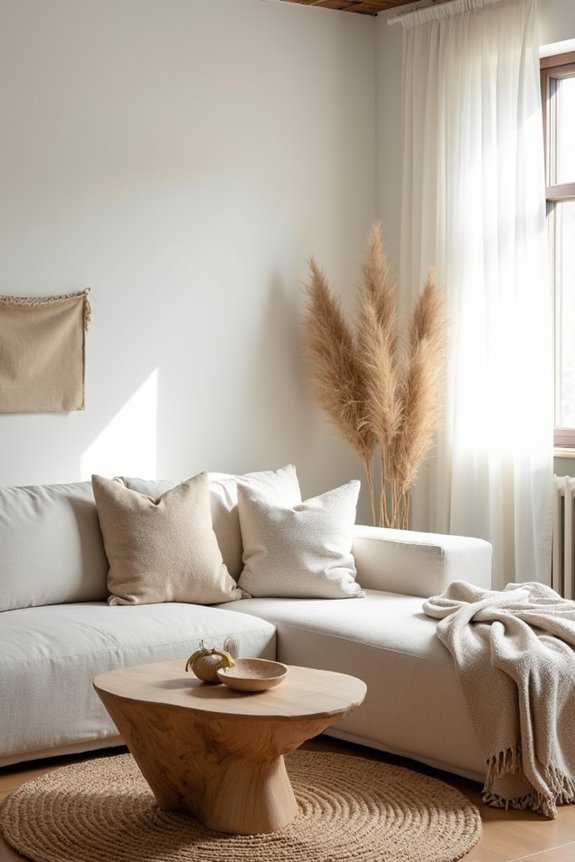
While empty space gives your home room to breathe, what you do fill that space with matters just as much.
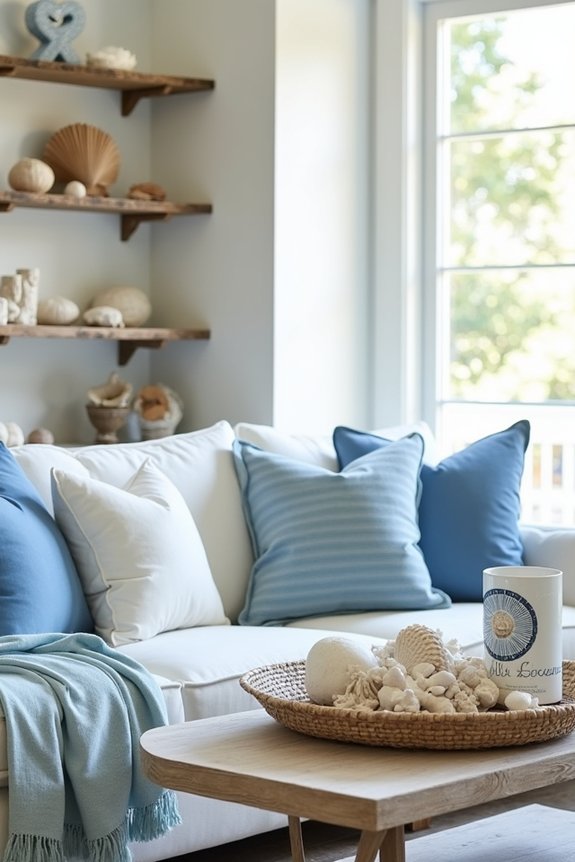
Natural textures and materials bring warmth and authenticity to your minimalist design. They connect you to the earth and create spaces that feel genuinely inviting.
Consider these beautiful additions:
- Wooden shelves or furniture pieces that showcase natural grain
- Linen or cotton fabrics for soft, breathable textures
- Stone or clay decorative items for organic appeal
- Plants that add life and natural greenery
These elements work together harmoniously, creating depth without clutter. A console table with natural wood construction can serve as a functional yet minimal focal point that combines storage solutions with aesthetic appeal.
You’re building a home that feels calm, grounded, and authentically yours, where simplicity meets natural beauty in perfect balance.
Organize Vertically to Free Up Floor Space
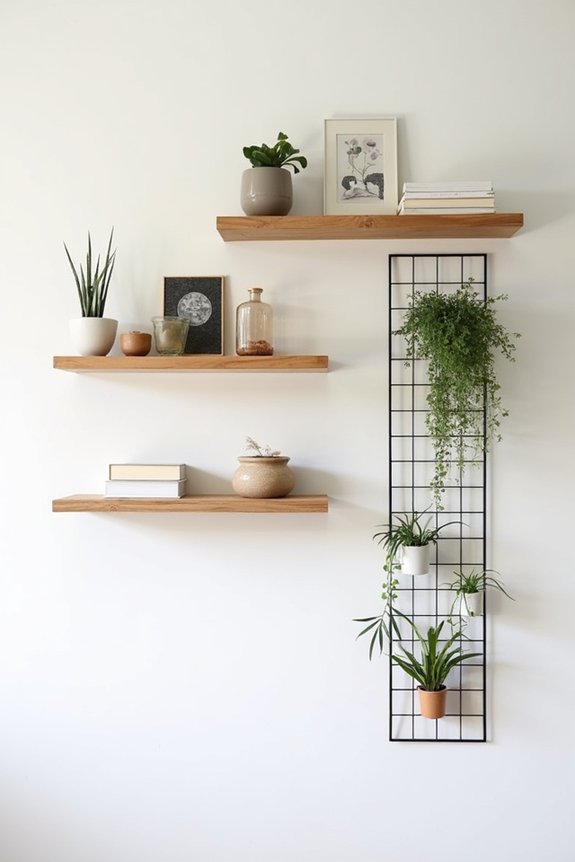
Going vertical is one of the smartest moves you can make in a minimalist home, and it’ll transform how you think about storage and space. By using wall-mounted shelves, hanging organizers, and tall cabinets, you’re creating valuable storage without cluttering your floors.
This approach opens up your rooms, making them feel larger and more peaceful. You can display meaningful items on shelves while keeping everyday essentials tucked away neatly. Wall space is often underutilized, so take advantage of it.
Install floating shelves at different heights, use pegboards for tools or supplies, and hang baskets for soft items. Going vertical helps you maintain that calm, uncluttered feeling you’re seeking.
Display Less, but Display Meaningfully
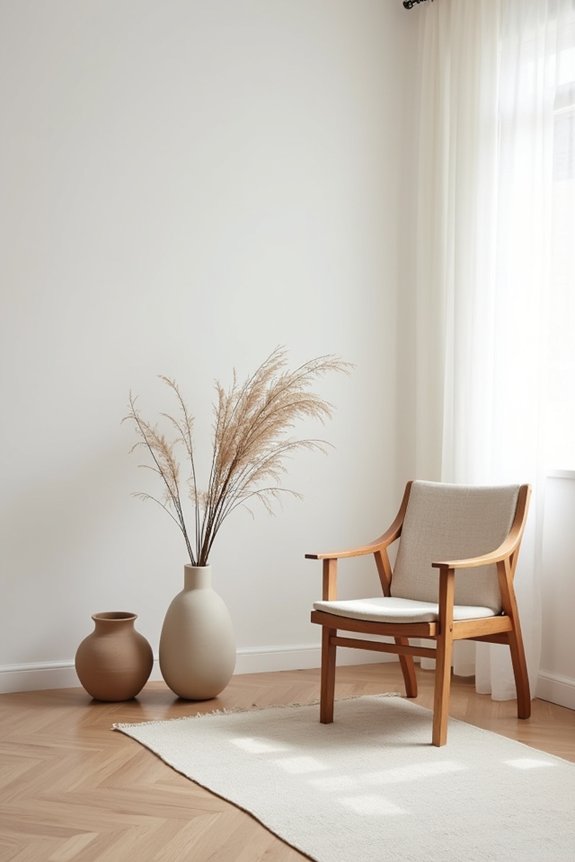
Now that you’ve created smart storage with vertical displays, it’s time to think carefully about what you actually show.
You’re building a home that reflects who you are, and that’s wonderful. Instead of filling every shelf, choose items that genuinely matter to you:
- Meaningful photographs capturing cherished moments
- Objects representing your hobbies and passions
- Plants bringing life and freshness to spaces
- Artwork that sparks joy when you see it
Each piece you display tells your story.
This intentional approach transforms your home into something personal and peaceful, rather than cluttered and overwhelming. Consider how seasonal porch decor can enhance your entryway while maintaining this minimalist philosophy.
You’re creating spaces that truly feel like yours.
Add Low-Maintenance Plants for Life
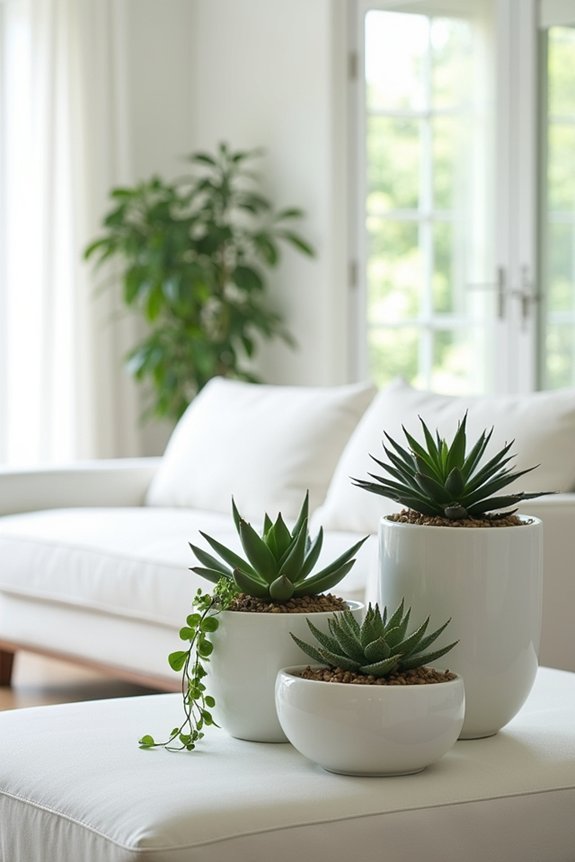
How can you bring nature into your minimalist home without adding stress or clutter? Low-maintenance plants are your answer. Choose hardy varieties like pothos, snake plants, or succulents that thrive with minimal care.
Place them strategically in empty corners or on simple shelves to create visual interest without overwhelming your space. These green additions purify your air, boost your mood, and connect you to nature beautifully.
Water them occasionally, provide indirect light, and watch them flourish. Plants transform your minimalist rooms into living, breathing spaces that feel welcoming and alive while maintaining the calm simplicity you’ve worked hard to achieve.
Craft a Minimal Entryway You’ll Love
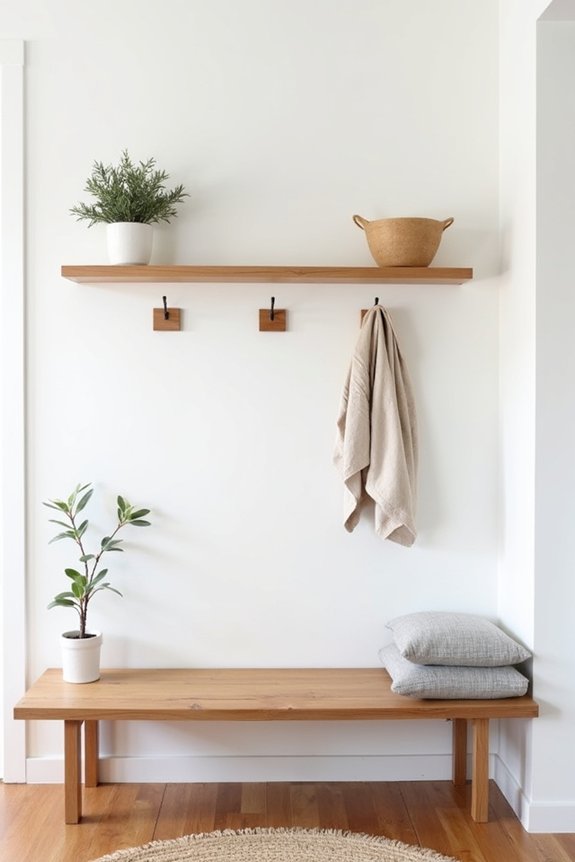
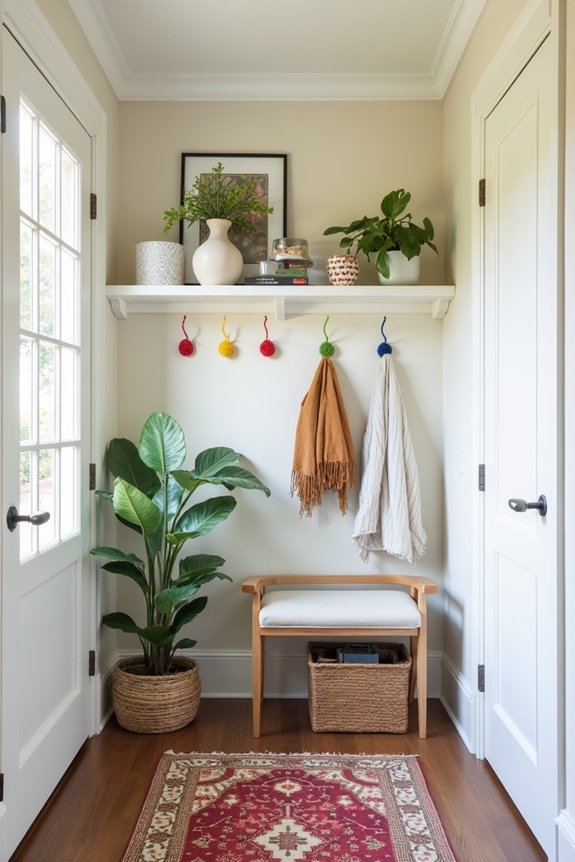
Your entryway is the first thing you see when you come home, so it’s worth making it count. You’ll create a welcoming space by keeping things simple and intentional. Consider these essential elements:
- Install floating shelves for keys and small items
- Place a simple mirror to brighten the space
- Add a narrow console table for daily necessities
- Choose one statement piece like a minimal coat rack
You’ll find that removing clutter makes your entryway feel calm and organized.
Stick with neutral colors and clean lines to establish a peaceful atmosphere. For seasonal updates, consider incorporating spring mantel decor principles that emphasize natural light and fresh elements. This thoughtful approach transforms your entry into a space that genuinely welcomes you home each day.
Keep Your Space Intentional Every Day
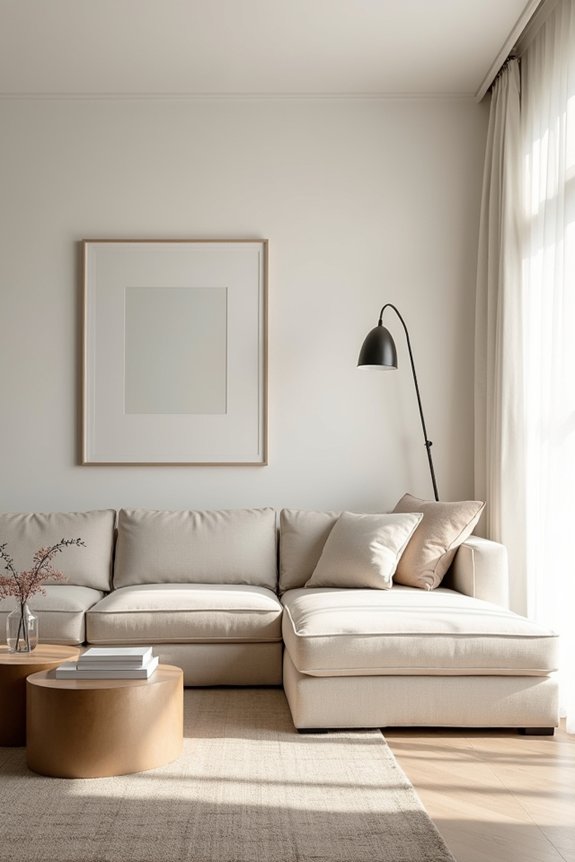
Creating that peaceful entryway is just the beginning—the real magic happens when you commit to keeping your whole home intentional every single day.
You’ll find that maintaining minimalism requires consistent choices and mindful habits. Each morning, take a few minutes to notice what you’ve brought into your space, and ask yourself if it truly serves you.
Remove items that’ve accumulated without purpose, donate duplicates, and organize what remains with care. Consider incorporating spring-inspired decor elements that align with your minimalist aesthetic while refreshing your space seasonally. By staying present and purposeful daily, you’re protecting the calm environment you’ve worked hard to create.
Your intentional choices ripple through every room, reinforcing the peaceful home you deserve and genuinely cherish.
Frequently Asked Questions
How Much Does a Minimalist Home Makeover Typically Cost?
You’ll transform your space into a million-dollar minimalist haven without spending a fortune. DIY makeovers typically cost $500–$3,000, depending on your room size and existing furniture. You’re controlling expenses by doing the work yourself.
Can Minimalist Decor Work in Small Apartments or Studios?
Yes, minimalist decor works brilliantly in small apartments or studios. You’ll find that you’ve got less clutter, more breathing room, and your space feels larger. You’re maximizing functionality while creating a calm, organized environment that suits compact living perfectly.
What’s the Best Way to Involve Family Members in Decluttering?
You’ll get better results by setting clear goals together, assigning each family member specific areas, and making it fun with music or rewards. You’re more likely to succeed when everyone understands why you’re decluttering and feels ownership in the process.
How Do You Maintain Minimalist Style With Children and Pets?
You’ll designate special storage zones for your children’s belongings and establish pet-friendly furniture that’s easy to clean. You’re maintaining order by regularly purging items, implementing daily tidying routines, and choosing durable, washable décor pieces.
Where Can You Donate or Sell Items During Decluttering?
You can donate items to Goodwill, Salvation Army, or local charities. You’ll sell them through Facebook Marketplace, eBay, or Craigslist. Consignment shops accept gently used furniture and clothing. You’re supporting others while decluttering your space efficiently.