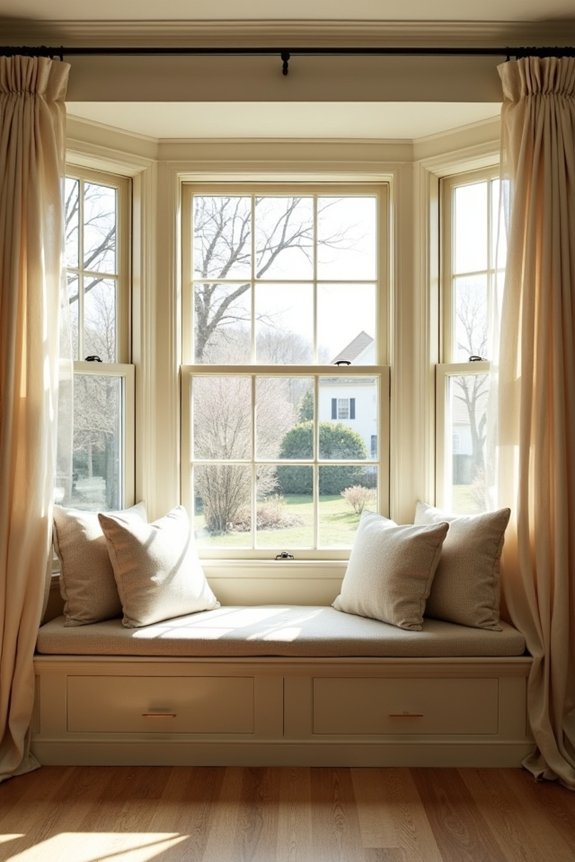
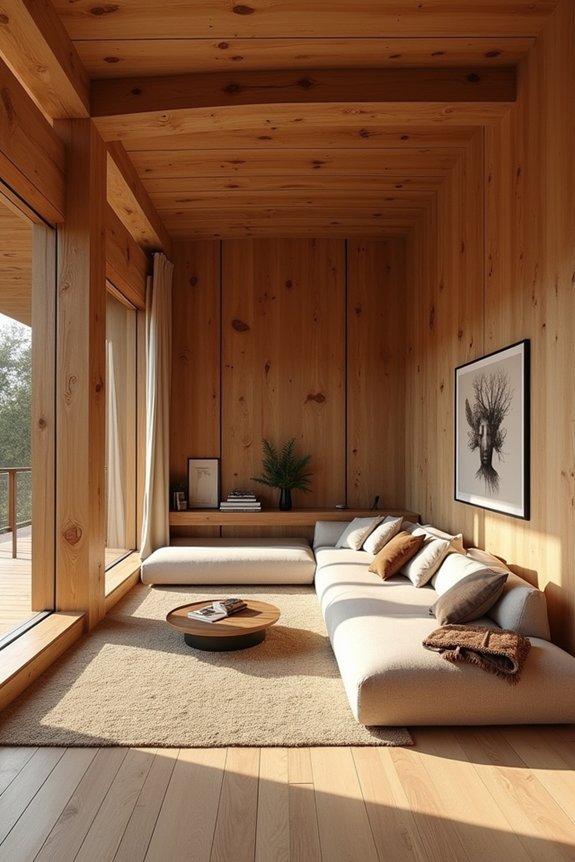
You can create stunning benches that transform any room into a more functional, stylish space. A reclaimed wood storage bench welcomes guests in your entryway while holding shoes and bags. You’ll love an upholstered cushion bench‘s cozy comfort in your living room. For modern spaces, try a concrete and metal industrial bench. Outdoor enthusiasts adore easy pallet benches with backrests for patios. Finally, a low-profile platform bench maximizes small bedrooms perfectly. Each project offers unique benefits tailored to your home’s specific needs and style.
Design Highlights
- Reclaimed wood storage benches add rustic charm while providing functional entryway storage for shoes, bags, and jackets.
- Upholstered cushion benches create cozy living room gathering spaces with foam padding and decorative nailhead trim finishes.
- Concrete and metal industrial benches combine durability with modern style, perfect for contemporary entryways or living areas.
- Pallet benches with backrests offer budget-friendly outdoor seating using minimal tools and weather-resistant stain applications.
- Low-profile platform benches maximize small bedroom functionality by providing seating and storage without consuming visual space.
DIY Reclaimed Wood Storage Bench for Entryways
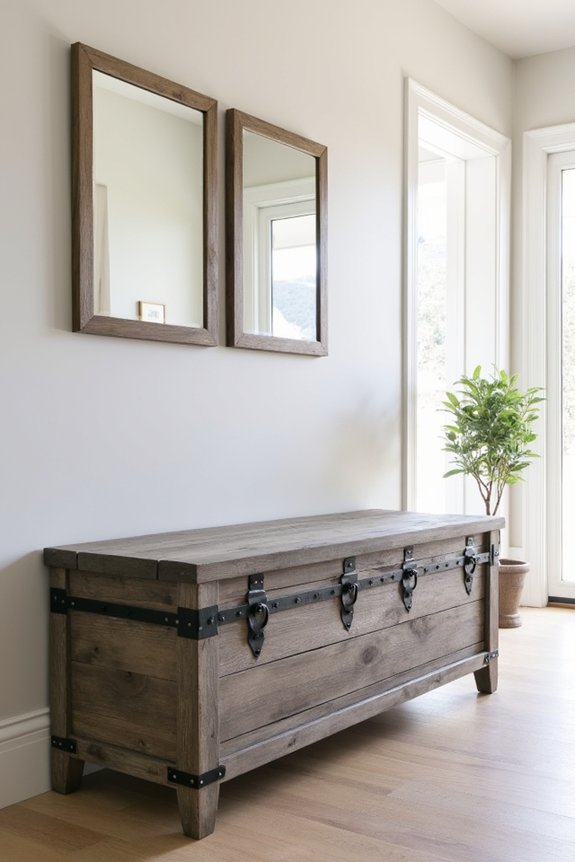
A welcoming entryway sets the tone for your entire home, and a reclaimed wood storage bench does exactly that while solving a real problem you’re probably facing right now—where do you put shoes, bags, and jackets when people walk through the door?
You’ll love how reclaimed wood brings rustic charm and character to your space. Building one yourself means you can customize the size, finish, and storage compartments to fit your needs perfectly.
The sturdy construction supports daily use, while the natural wood’s weathered texture adds warmth. You’re creating both function and beauty that genuinely welcomes everyone entering your home.
Build an Upholstered Cushion Bench for Living Rooms
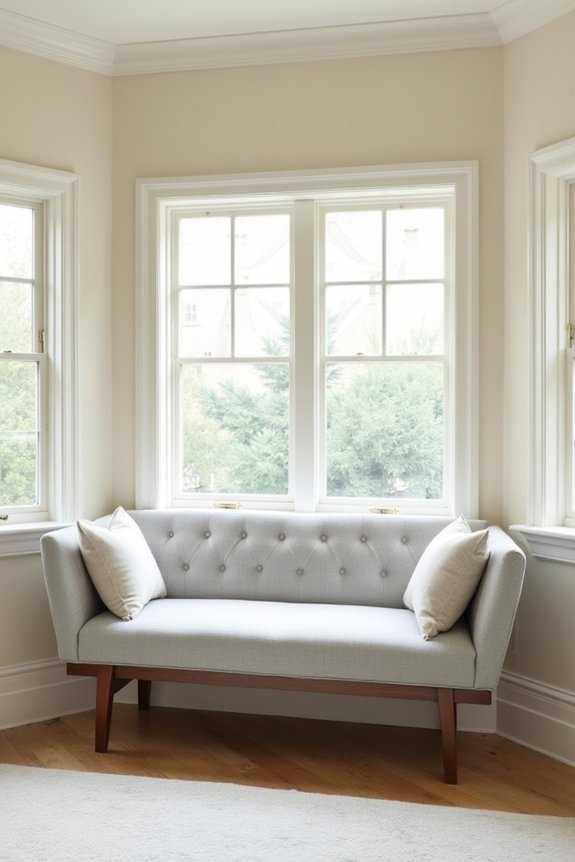
While your entryway bench serves as a practical greeting spot, your living room deserves equally thoughtful seating that invites relaxation and comfort.
You’ll create a cozy gathering place by building an upholstered cushion bench. Start with a sturdy wooden frame, then add plywood support and foam padding. Choose fabric that complements your décor and feels soft against your skin.
Upholster carefully, stretching fabric evenly and securing it beneath with staples. Add decorative nailhead trim for polish.
This bench becomes a perfect spot for reading, conversation, or simply unwinding after busy days.
Concrete and Metal Industrial Bench for Modern Spaces
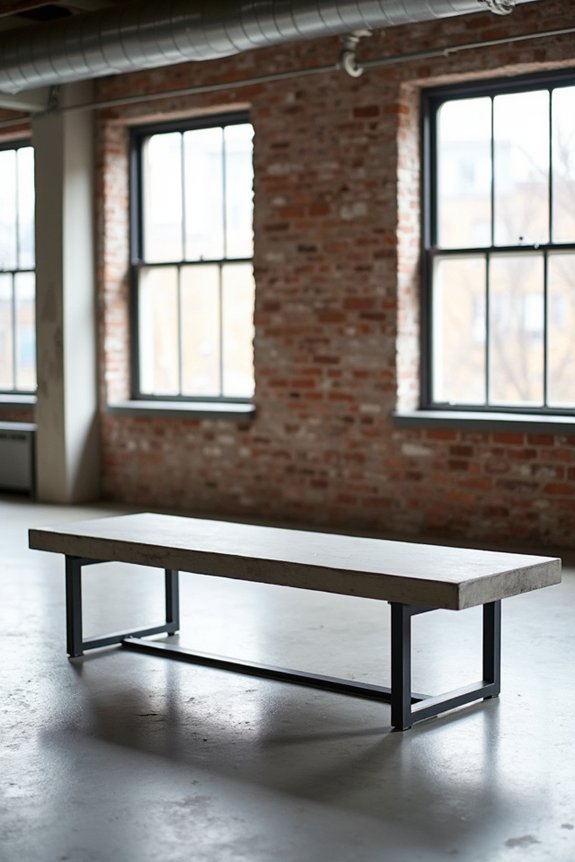
Industrial style brings bold character to modern spaces, and you can create that striking look with your own concrete and metal bench.
Start by building a sturdy wooden frame, then pour concrete over it for a solid, modern seat. Once it’s cured, add metal legs or frame elements using steel or iron components.
You’ll love how the contrasting textures work together beautifully. This bench is incredibly durable, perfect for entryways or living areas.
The cool aesthetic fits seamlessly into contemporary designs. You’ll feel proud displaying your handmade creation, knowing it’s both functional and stylish.
When positioning your industrial bench, consider dimension and space considerations to ensure it complements your room’s layout without overwhelming the area.
It’s a rewarding project that transforms any room’s appearance.
Easy Pallet Bench With Backrest for Patios
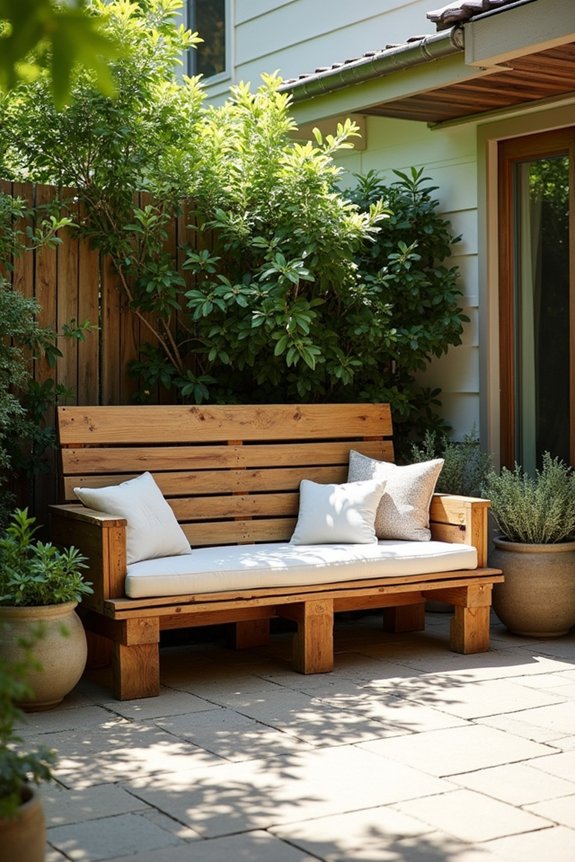
If you’re ready to move beyond sleek indoor pieces, you’ll discover that reclaimed wooden pallets offer a wonderfully accessible way to build outdoor seating that’s both practical and charming.
You’ll start by stacking two pallets as your base, then securing a third vertically for the backrest. Sand everything smooth, apply weather-resistant stain, and add cushions for comfort.
This project requires minimal tools and costs very little, making it perfect for beginners. Your patio’ll transform into an inviting retreat where friends gather and relaxation happens naturally, all from materials you might find free or inexpensively.
Low-Profile Platform Bench for Small Bedrooms

When you’re working with limited bedroom space, a low-profile platform bench offers the perfect solution for adding both style and function without overwhelming your room.
You’ll love how this design sits close to the ground, creating an open, airy feeling that makes your bedroom feel larger. The bench works wonderfully at the foot of your bed or along a wall, providing extra seating and storage opportunities.
You can customize it with cushions, upholstery, or paint colors that match your décor perfectly. Building one yourself saves money while giving you a practical piece that transforms your cozy bedroom into a more functional, inviting retreat.
Frequently Asked Questions
How Much Does It Typically Cost to Build a DIY Bench Versus Buying One?
You’ll find that building your own bench won’t break the bank—it typically costs 30-60% less than buying one. You’re looking at $100-$300 in materials versus $300-$800 for store-bought options, though your effort’s the real investment.
What Tools Do Beginners Need to Safely Construct Their First DIY Bench?
You’ll need a tape measure, saw, drill, level, clamps, sandpaper, and safety gear like goggles and gloves. You’ll also want a pencil, square, and screwdriver to complete your first bench safely.
How Long Does It Take to Complete a Basic DIY Bench Project?
You’ll typically complete a basic DIY bench in 4-8 hours, depending on design complexity and your experience level. Simple designs take less time, while projects involving detailed joinery or finishing work require more hours spread across multiple days.
Which DIY Bench Style Requires the Least Maintenance Over Time?
You’ll find that concrete benches are like set-it-and-forget-it appliances. They’re your lowest-maintenance option because you won’t need refinishing, staining, or regular sealing. Just occasional cleaning keeps them looking fresh for years.
Can DIY Benches Support the Same Weight as Store-Bought Furniture Pieces?
You can build DIY benches that support equal weight to store-bought furniture if you’re using quality materials and proper construction techniques. However, you’ll need sturdy wood, strong joinery, and appropriate support structures to achieve comparable weight capacity.